Posted on — Leave a comment

Wall Sits for Golf: Why This Simple Isometric Hold Belongs in Your Golf Workout

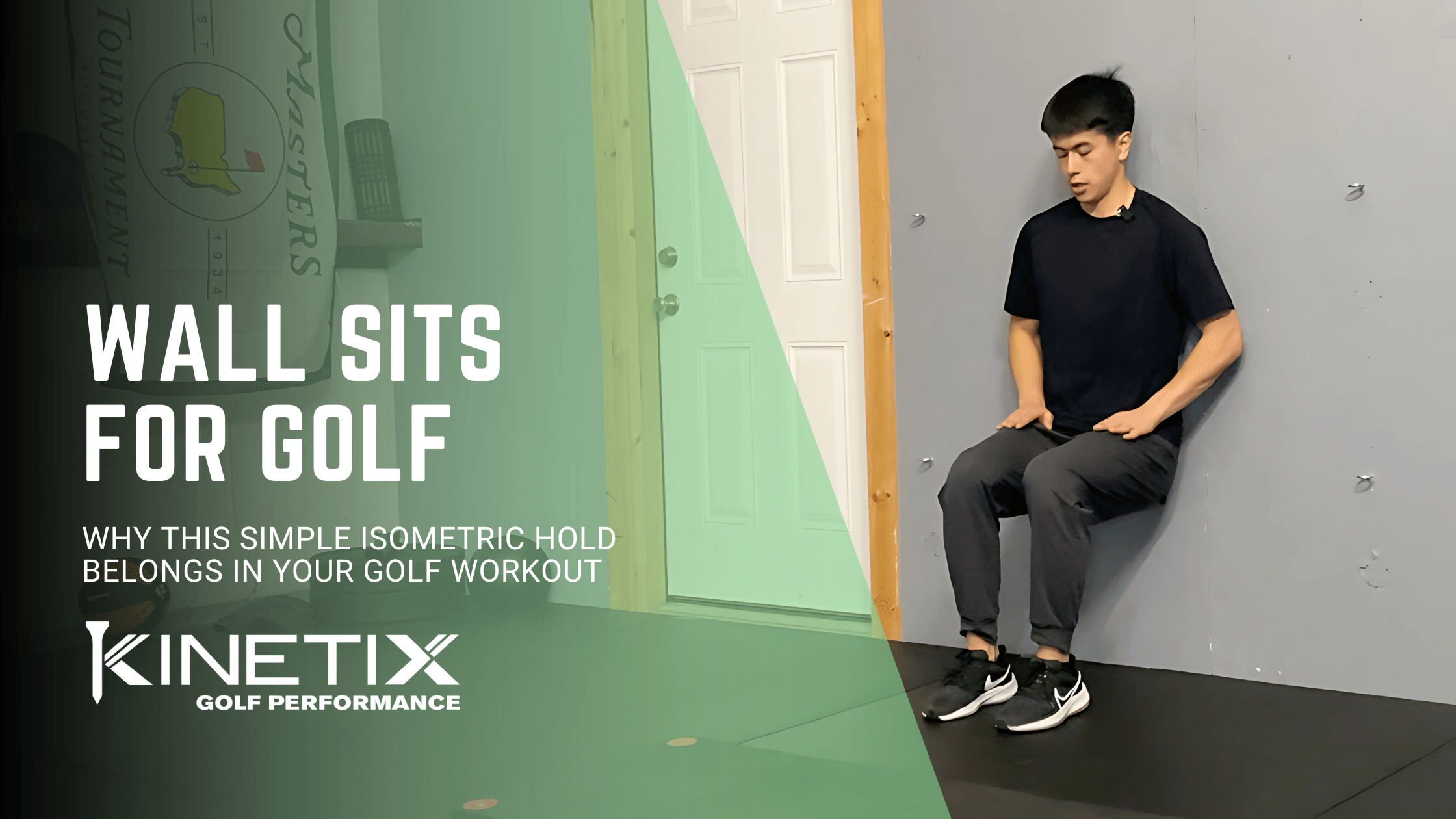
Golfer performing wall sit exercise to build lower body strength and muscular endurance for stable golf swing

When golfers think of “golf-specific” training, flashy exercises like med ball throws, banded punch-throughs, or twist jumps come to mind—and for good reason. These moves develop rotational speed and transverse plane power that directly impact clubhead velocity and swing consistency.

But what about something as simple as the wall sit?

It may not scream “golf-specific,” but wall sits are a foundational isometric exercise that builds the lower-body strength and muscular endurance every golfer needs.

At Kinetix Golf Performance, we regularly program wall sits into our A block warm-up/movement prep phase, especially on leg-focused days. They’re easy to perform, brutal on the quads, and incredibly effective at improving your ability to stay grounded, stable, and strong through the swing.


Why Wall Sits Matter for Golfers

Golf is a rotational sport—but that rotation must be built on a rock-solid base. Your ability to anchor into the ground, load into your hips, and drive power up the chain all starts from the legs.

Wall sits help by:

  • Increasing isometric strength and muscular endurance in the quads, glutes, and calves
  • Teaching your body to hold tension under fatigue, especially in a static posture
  • Building resilience in the muscle tissue—reducing risk of fatigue-related breakdown during the back nine
  • Supporting postural control throughout the entire swing sequence

What Makes a Golf Exercise “Golf Specific”?

We get this question a lot.

The truth is, many exercises become golf-specific not by what they are, but how and why they’re used. Traditional lifts like squats, RDLs, and deadlifts? They’re not “golf” movements per se—but they create the strength, stability, and joint control every powerful golfer needs.

Then, to round out a truly golf-specific program, we integrate:

Wall sits fall into that last category—building grit and strength endurance in the lower body so you’re more explosive later in your workout and more stable throughout your swing.


How to Perform Wall Sits for Golf Strength

Instructions:

  1. Stand with your back against a wall
  2. Slide down until your thighs are parallel to the ground, like sitting in an invisible chair
  3. Knees should be directly over the ankles, not past the toes
  4. Keep your core engaged and your back flat against the wall
  5. Hold for :20–:30 seconds, rest, repeat for 2–4 sets

Pro Tips:

  • Add a med ball or kettlebell to your lap to increase intensity
  • Squeeze a foam roller or yoga block between your knees to activate adductors
  • Stack with exercises like Hip CARs or Adductor Rocks for complete lower-body activation

How Wall Sits Fit Into Your Golf Program

At Kinetix Golf Performance, we place wall sits in the A Block—our dynamic warm-up and activation phase. This primes the body for the more intense traditional lifts or ballistic training coming later.

Example pairing:

Wall sits help you stay disciplined in your setup, resilient under fatigue, and ready to transfer ground force more efficiently into rotational speed.


Final Thoughts: The Hidden Power of Simple Movements

Just because wall sits are simple doesn’t mean they’re easy—or unimportant.

If you’re serious about improving your golf performance, you can’t skip over the basics of leg strength and muscular endurance. Exercises like wall sits serve as the bedrock of stability and posture, which lets all the fun, flashy golf-specific moves actually work the way they should.

Want to take your golf performance to the next level?

This exercise is just one of the dozens of targeted golf exercises in our PinSeeker Performance Program—a 6-week, lifetime-access golf workout program designed to build mobility, strength, and power exactly where you need it.

🏌️‍♂️ Swing with more rotation and less pain
🏋️‍♀️ Improve strength, flexibility, and balance
⛳️ Play more consistently, regardless of age or experience

✅ One-time purchase
✅ Lifetime access
✅ Golf-Specific workouts you can do anywhere

Train smarter, swing stronger, and see real gains on the course with PinSeeker!

our 6-week pinseeker performance program is the best online golf fitness program

Posted on — Leave a comment

Box Jumps for Golf: Build Explosive Power from the Ground Up

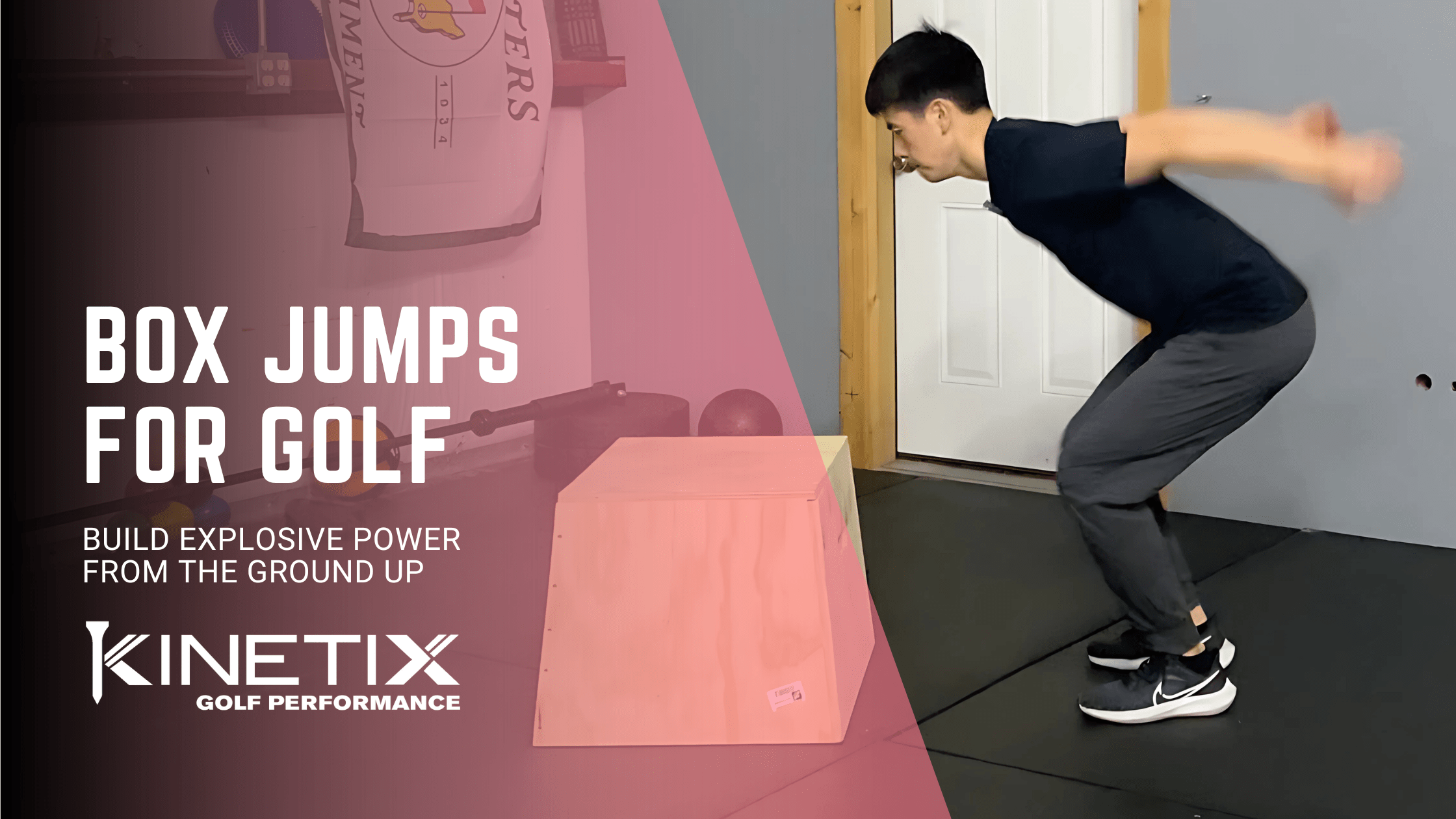
box jumps area great way to improve your power from the ground up.

One of the biggest power leaks in a golfer’s swing? A weak lower body.

That’s why box jumps are one of the most effective—and underutilized—golf fitness exercises to build explosive lower body strength, improve ground force production, and ultimately increase clubhead speed.

Contrary to what many golfers think, power doesn’t start in the hands or arms. It starts from the ground, and your body’s ability to transfer that force up through the kinetic chain is what creates efficient speed.

In this post, we’ll break down:

  • Why box jumps are essential for golfers
  • How they translate to swing speed and control
  • The best box jump variations for golf
  • How to safely implement them at any fitness level

Why Golfers Need Box Jumps

The golf swing is a rotational ballistic movement—you generate power through the ground and transfer it explosively through your hips, torso, and upper body. Box jumps develop the vertical force production needed to drive the swing, stabilize impact, and maintain posture.

Benefits of Box Jumps for Golf:

  • Increase clubhead speed through ground force development
  • Improve vertical jump and lower body reaction time
  • Enhance balance and coordination under load
  • Strengthen quads, hamstrings, glutes, and calves—critical for swing stability
  • Reinforce triple extension (ankle, knee, hip)—vital for hip clearance and rotation

And the best part? You don’t need a fancy plyometric box. A sturdy bench, step, or ledge works just as well.


How Box Jumps Translate to the Golf Swing

Let’s break it down simply:

  • Ground Force Reaction: Golfers with the fastest swings apply more vertical force into the ground. Box jumps teach you how to explode from the floor.
  • Posture & Balance: Landing softly on the box builds eccentric control, helping maintain balance through impact.
  • Rotational Speed: When combined with rotation (like in 90° jumps), box jumps teach sequenced power through the hips—just like your downswing.

Whether you’re a weekend warrior or a competitive golfer, integrating box jumps will improve your ability to create and control speed.


7 Golf-Specific Box Jump Variations

Here are some variations to challenge power, balance, rotation, and athleticism—all essential for golf performance.

1. Standard Box Jump

Jump from a standing position onto a sturdy box or surface.

  • Focus on quick, explosive takeoff
  • Land softly with knees slightly bent
  • Great baseline for all athletes

2. Seated Box Jump

Start seated on a bench, then explode up onto a box.

  • Removes the preload or countermovement
  • Builds pure concentric power
  • Great for golfers who tend to “muscle” the swing with arms

3. Deficit Box Jump

Stand on a lower platform or step, and jump onto a higher box.

  • Increases range of motion
  • Builds strength through a greater load
  • Excellent for golfers who need more hip mobility and power

4. Weighted Box Jump

Hold light dumbbells or a medicine ball as you jump.

  • Increases load and demand on the body
  • Improves rate of force development
  • Ideal for offseason golf training blocks

5. Rotational (90°) Box Jump

Start facing forward, but as you jump, rotate 90 degrees mid-air and land on the box.

  • Mimics the rotational dynamics of a golf swing
  • Improves coordination and mid-air control
  • Use both directions to simulate back and downswing patterns

6. Split-Stance Box Jump

Begin in a lunge or staggered stance, then jump onto the box and land in the same position.

  • Challenges unilateral power production
  • Builds strength for the transition and follow-through in the golf swing
  • Improves leg-to-leg transfer of force

7. Single-Leg Box Jump

Jump and land using only one leg (advanced).

  • Trains high-level stability and power on each side
  • Identifies asymmetries that can affect your swing
  • Use low height and focus on control over distance

Safety First: Smart Programming for Golfers

Just because it’s explosive doesn’t mean it needs to be risky. A few tips:

  • Always warm up first with dynamic mobility work (think adductor rock backs, 90/90s, or hip bridges)
  • Start with lower heights and progress gradually
  • Keep the reps low and explosive (3–6 reps x 3–4 sets)
  • Focus on quality, not quantity—form and intent matter more than volume
  • Avoid box jumps if you’re recovering from knee, ankle, or hip injury

Final Thoughts: Jump Higher, Swing Faster

Box jumps are one of the most effective tools to train golf-specific power. Whether you’re prepping for a tournament or just trying to finally break 80, adding a few explosive elements to your training like the ones listed above can help unlock real distance and consistency in your game.

At Kinetix Golf Performance, we’ve integrated plyometrics like box jumps into our golf-specific programming to help golfers of all skill levels:

  • Move better
  • Hit farther
  • Play longer

Want to Build Explosive Golf Power?

This exercise is just one of the dozens of targeted golf exercises in our PinSeeker Performance Program—a 6-week, lifetime-access golf workout program designed to build mobility, strength, and power exactly where you need it.

🏌️‍♂️ Swing with more rotation and less pain
🏋️‍♀️ Improve strength, flexibility, and balance
⛳️ Play more consistently, regardless of age or experience

✅ One-time purchase
✅ Lifetime access
✅ Golf-Specific workouts you can do anywhere

Train smarter, swing stronger, and see real gains on the course with PinSeeker!
our 6-week pinseeker performance program is the best online golf fitness program