Posted on — Leave a comment

Kettlebell Single-Leg RDL: The Ultimate Golf Exercise for Lower Body Stability and Power

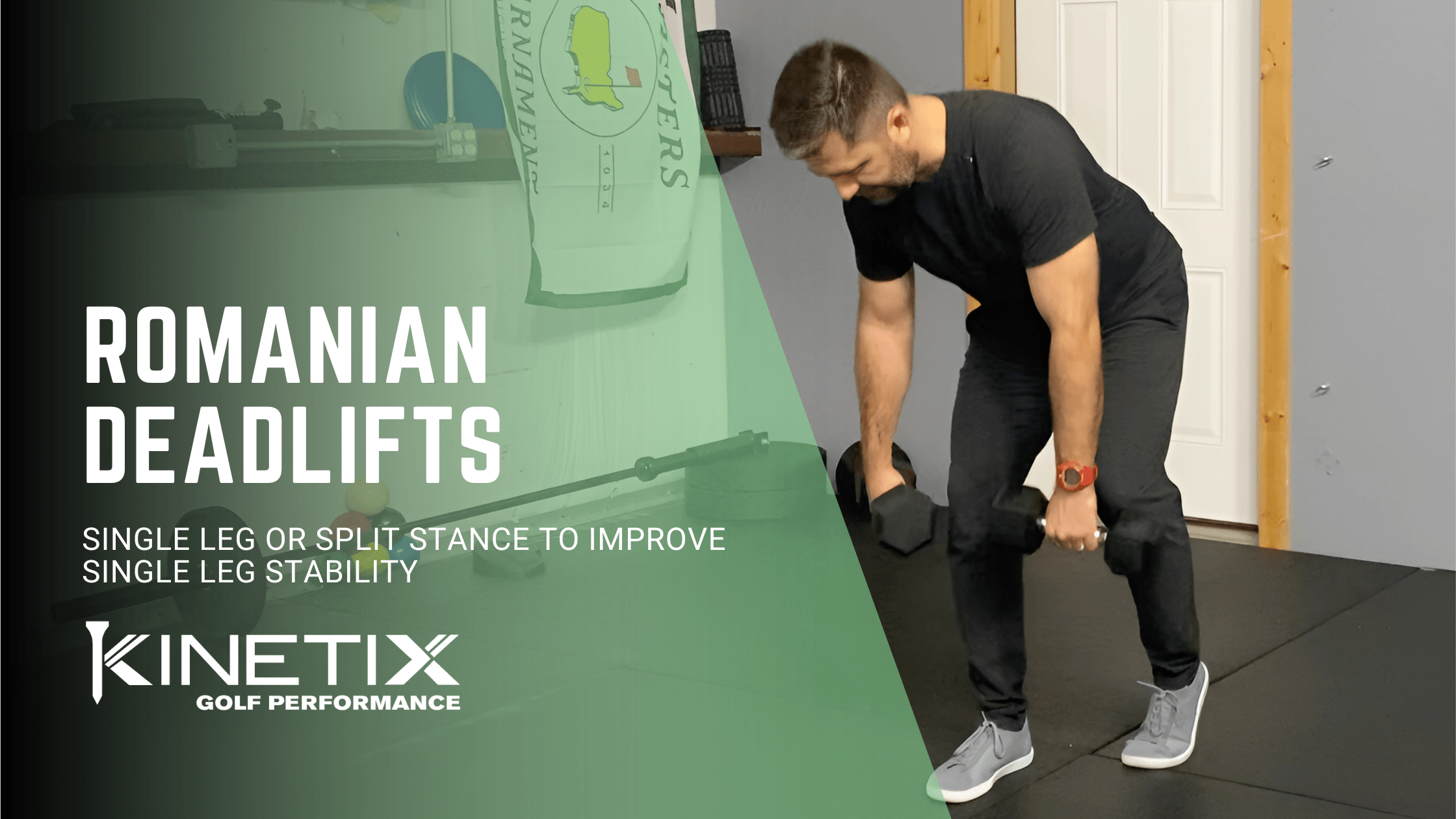
The romanian deadlift is a great golf exercise to build single leg stability in split stance or single leg stance.

Why the Kettlebell Single-Leg RDL Belongs in Every Golfer’s Program

Golf is a single-leg dominant sport. You shift weight, rotate, and generate power off of one leg more often than not—especially during the transition and follow-through of your swing. That’s why training single-leg strength and stability is essential if you want to:

  • Improve your swing balance
  • Build stronger hips and glutes
  • Increase lower body power
  • Avoid swing faults caused by poor motor control or instability

The Kettlebell Single-Leg Romanian Deadlift (RDL) is one of our go-to golf exercises to build posterior chain strength (glutes, hamstrings, low back) and improve unilateral control—which directly translates to better swing mechanics and more clubhead speed.


What Is the Kettlebell Single-Leg RDL?

This movement targets the glutes, hamstrings, and stabilizers of the hips and feet, while also challenging core control and balance.

We start with a “B-stance” or kickstand version, where the back foot is lightly planted behind for support—making this version more accessible without sacrificing activation. Once you’ve mastered this, you can progress to floating the back leg for a full single-leg RDL.


How to Perform the KB Single-Leg RDL (B-Stance)

Setup:

  1. Hold a kettlebell in the opposite hand of your plant leg (e.g., standing on left leg = kettlebell in right hand).
  2. Back foot should be slightly behind you, just the toes touching down for balance—not bearing weight.
  3. Keep a soft bend in the front knee, brace your core, and set your lats (think: pack the shoulder).

Execution:

  1. Hinge at the hips, sending them back as the kettlebell lowers in front of your shin.
  2. Maintain a neutral spine throughout—no rounding.
  3. Once you feel a stretch in your hamstring, drive through the heel to return to the top.
  4. Squeeze your glutes at the top and maintain intra-abdominal pressure (IAP) the entire time.

Reps: 8–10 per leg, slow and controlled.


Progression: Full Floating Single-Leg RDL

Once you’ve mastered the B-stance:

  • Lift your trail leg off the ground
  • Keep the back leg extended and aligned with your torso as you hinge
  • Avoid hip hiking—a common fault where the lifted leg rotates or raises unevenly

👎 Hip hiking is often a sign of weak glute medius and stabilizers on the plant leg side, which can lead to swing inconsistencies or even low back issues.


Why This Exercise Matters for Golfers

The single-leg RDL mimics the weight shift and rotational loading phase of your swing, especially into your lead leg during the downswing.

It’s one of the most direct exercises for improving:

  • Lead leg stability at impact
  • Hip hinge mechanics for posture and spine angle
  • Rotational power transfer from the ground up

And remember: training single-leg also boosts motor recruitment far more than bilateral movements, which means you’re building more strength with less load—a great win for joint longevity.


Golf Exercises for Seniors – This Still Applies!

The B-stance version of this exercise is extremely safe and effective for golfers over 55+. You can also use a foam roller as a post to develop an extra point of contact for stability.

Benefits for seniors:

  • Promotes hip stability to reduce fall risk
  • Strengthens glutes and hamstrings, critical for walking and posture
  • Encourages better golf swing control without heavy loading

We include this movement in nearly all our senior golf training programs at Kinetix.


Where It Fits in Your Training Plan

✅ Use this in your:

  • Strength block for lower body
  • Warm-up with light weight to prime glutes
  • Recovery day to reinforce balance and control

Final Thought

If you want a more balanced, powerful, and efficient golf swing, adding the Kettlebell Single-Leg RDL to your training is non-negotiable. It checks all the boxes for:

  • Strength
  • Stability
  • Power
  • Longevity

Get Our 6-Week Online Golf Workout Program Today!

This exercise is just one of the dozens of targeted golf exercises in our PinSeeker Performance Program—a 6-week, lifetime-access golf workout program designed to build mobility, strength, and power exactly where you need it.

🏌️‍♂️ Swing with more rotation and less pain
🏋️‍♀️ Improve strength, flexibility, and balance
⛳️ Play more consistently, regardless of age or experience

✅ One-time purchase
✅ Lifetime access
✅ Golf-Specific workouts you can do anywhere

Train smarter, swing stronger, and see real gains on the course with PinSeeker!

our 6-week pinseeker performance program is the best online golf fitness program

Posted on — Leave a comment

Golf Exercises: Glute Bridge with March for Core & Hip Strength

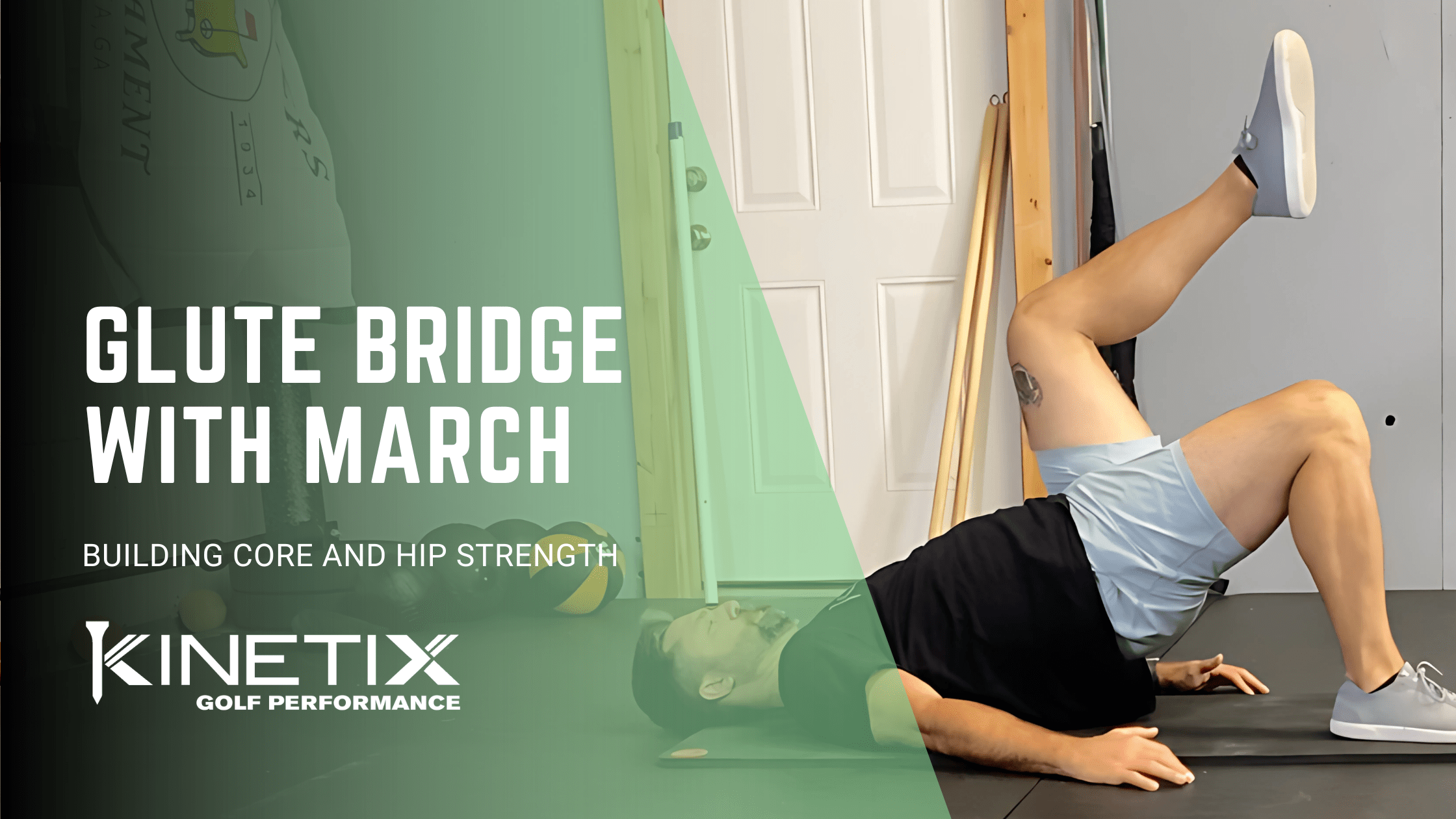
glute bridges with march are a great golf exercise to develop your core and hip strength for your golf swing.

Why Glute Bridge with March Belongs in Your Golf Routine

Strong glutes and a stable core aren’t just for athletes in their 20s — they’re essential for golfers of all ages, especially those in the 55+ category. The glute bridge with march is a simple yet highly effective golf exercise that targets your posterior chain, enhances core stability, and improves hip extension — all of which translate directly to a more powerful, pain-free golf swing.

For seniors, maintaining hip strength and core control is vital to preserving mobility, reducing back strain, and generating clubhead speed without relying on compensatory movement patterns. Incorporating this movement into your golf exercises for seniors routine can help you keep playing stronger and longer.


Key Benefits for Golfers

  1. Glute Activation & Hip Extension
    • Prevents over-recruitment of hamstrings (common when the glutes are weak)
    • Promotes a strong hip hinge and stable pelvis
    • Translates to improved weight shift and drive through impact
  2. Core Stability with Intra-Abdominal Pressure (IAP)
    • Builds tension in the deep abdominal and pelvic floor muscles
    • Protects the low back from over-arching during swing transition
    • Teaches you to brace effectively under load, improving posture and spinal alignment
  3. Single-Leg Stability & Balance
    • The marching component isolates one side at a time, enhancing unilateral control
    • Mimics the single-leg support demands of your golf stance, especially at impact
    • Reduces fall risk and improves proprioception for older adults
  4. Low-Impact, Joint-Friendly
    • Gentle on knees and hips, ideal for golfers with osteoarthritis or lower-back discomfort
    • Can be modified with a light band to increase glute recruitment without heavy loading

How to Perform the Glute Bridge with March

Setup:

  1. Lie flat on your back with knees bent (~90°) and feet hip-width apart, resting on the floor.
  2. Place a light resistance band just above your knees (optional but recommended) to cue hip abduction.
  3. Rest your arms by your sides, palms down.

Execution:

  1. Engage Your Core & Glutes
    • Hinge at the hips and press through your heels to lift your hips into a full bridge, creating a straight line from shoulders to knees.
    • Brace your core by drawing your belly button toward your spine and creating intra-abdominal pressure (IAP).
  2. Activate the Glutes & Maintain Neutral Spine
    • Squeeze your butt cheeks at the top of the bridge—avoid overarching your low back.
    • Keep weight distributed evenly through both heels and feet.
  3. Begin the March
    • Slowly lift your right foot off the ground, drawing your knee toward your chest.
    • Keep hips level: don’t let the left hip drop or rotate.
    • Lower your right foot back to the floor, then repeat on the left side.
  4. Repetitions & Tempo
    • Perform 3 sets of 8–10 controlled marches per side.
    • Focus on holding the hip bridge firmly (isometric glute contraction) throughout each single-leg lift.
    • Pause 1–2 seconds at the top of each march to maximize glute and core engagement.

Form Tips:

  • Avoid Overarching: Keep a slight posterior pelvic tilt; imagine tucking your tailbone under to protect the low back.
  • Prevent Hamstring Dominance: If your hamstrings are taking over, think “squeeze the glutes” and drive through your heels.
  • Band Cues: The resistance band encourages knees to push outward, ensuring your glute medius engages.
  • Breathing: Inhale to set IAP before the bridge; exhale during each march while maintaining core brace.

Modifications for Seniors & Beginners

  • Start Without Marching: Master the basic glute bridge with IAP first, holding for 10–15 seconds, before adding the march.
  • Use a Thinner Band: If the resistance band feels too challenging at first, switch to a lighter loop or no band until you build hip strength.
  • Decrease Range of Motion: If full hip extension is painful, lift just halfway and still focus on glute engagement and IAP.

How This Translates to a Better Golf Swing

  1. Improved Hip Drive & Weight Shift
    • Strong, stable glutes allow you to shift weight efficiently onto your front side during the downswing, generating more ground reaction force and clubhead speed.
  2. Enhanced Posture & Low-Back Protection
    • Core stability with IAP prevents excessive lumbar extension in your finish, reducing back strain—especially important for golfers over 55.
  3. Single-Leg Balance at Impact
    • The march component trains the same unilateral stability your trail leg demands at the top of the backswing and your lead leg requires at impact.
  4. Reduced Injury Risk
    • Strengthening hip abductors and glute max helps protect knees and lower back, common areas of concern for aging golfers.

Why Seniors Should Prioritize This Exercise

As we age, glute strength and hip mobility naturally decline—leading to reduced swing power, poor posture, and greater injury risk. The glute bridge with march is one of the most joint-friendly golf exercises for seniors because it:

  • Reinforces hip extension without heavy loads
  • Builds core control through IAP, decreasing back pain
  • Offers a functional movement that transfers directly to golf stance and posture
  • Can be performed at home with minimal equipment

By maintaining strong glutes and a stable core, golfers 55+ can sustain mobility, play more rounds, and keep their swing mechanics sound.


Ready to Strengthen Your Hips & Core?

This exercise is just one of the dozens of targeted golf exercises in our PinSeeker Performance Program—a 6-week, lifetime-access golf workout program designed to build mobility, strength, and power exactly where you need it.

🏌️‍♂️ Swing with more rotation and less pain
🏋️‍♀️ Improve strength, flexibility, and balance
⛳️ Play more consistently, regardless of age or experience

✅ One-time purchase
✅ Lifetime access
✅ Golf-Specific workouts you can do anywhere

Train smarter, swing stronger, and see real gains on the course with PinSeeker!
our 6-week pinseeker performance program is the best online golf fitness program