Posted on — Leave a comment

Golf Stretches: Hip CARs (Controlled Articular Rotations) for Personalized Hip Mobility

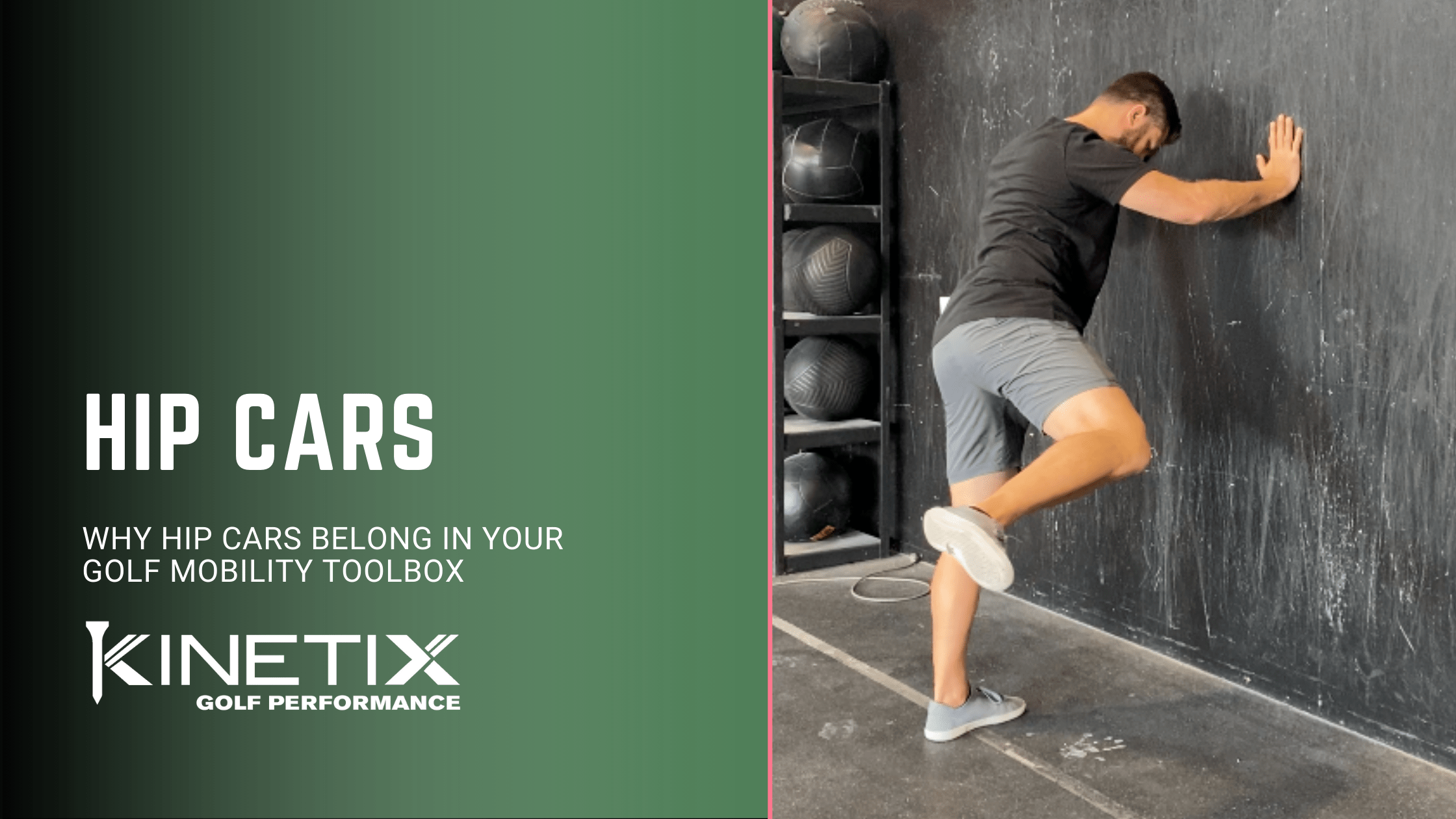
HIP CAR exercises are great for golf mobility to open and control hip mobility.

Why Hip CARs Belong in Your Golf Mobility Toolbox

Golfers rely heavily on hip rotation to generate torque, transfer weight, and maintain posture through the swing. Yet not every golfer can—or should—force a “textbook” range of motion. Because hip anatomy varies from person to person, trying to push past your structural limits can lead to discomfort, blocked movement, or even bone-on-bone contact.

This is where Hip Controlled Articular Rotations (CARs) shine. Rather than aggressively stretching into positions you may not structurally achieve, Hip CARs help you groove the movement pattern within your unique anatomic range—improving functional mobility, joint health, and, ultimately, your golf swing.


Understanding Hip Anatomy & Individual Variation

Before diving into the exercise, it’s critical to recognize that each golfer’s hip joint is built differently:

  • Anteverted Hips: The femoral neck is rotated slightly forward, allowing greater internal rotation (IR) but less external rotation (ER).
  • Retroverted Hips: The femoral neck is rotated backward, offering more ER but limiting IR.
  • Normal (Neutroverted) Hips: Balanced IR and ER within a typical anatomic range.

Because we’re each born with different acetabular (socket) depth, femoral head angles, and joint architectures, there is no one-size-fits-all “normal” for hip rotation. If your hip is naturally retroverted, forcing deep internal rotation can cause impingement (bone on bone contact) and pain. Conversely, a highly anteverted hip may struggle to externally rotate without compensating elsewhere (lumbar spine or knees).

Key Takeaway:

  • Assess your own starting point—don’t assume “everyone should get 45° IR.”
  • Use hip CARs to explore and expand your personal ROM, not someone else’s.

How to Perform Hip CARs for Golfers

Controlled Articular Rotations are slow, end-range–driven movements that maintain joint compression while mobilizing the entire hip capsule. Here’s how to do them safely:

  1. Starting Position:
    • Stand next to a wall or use a chair for light support.
    • Shift your weight onto your right leg, keeping a slight bend in the knee.
    • The left leg (working hip) is lifted slightly off the ground.
  2. Engage Your Core & Set the Hip:
    • Create intra-abdominal pressure (IAP) by bracing your core gently—imagine preparing for a punch.
    • Keep the right pelvis stable; avoid hiking or shifting.
  3. Initiate the CAR (First Rep):
    • Reach your left knee forward into your chest as far as your hip allows without pain. Pause briefly at end range.
    • Rotate the thigh outward (external rotation) until you feel tension. Keep compressing the head of the femur into the acetabulum.
    • Move the left foot posteriorly, extending the hip back and slightly abducting (moving it away from midline) as far as comfortable.
    • Complete the circle by returning to the start position: rotate back inward (internal rotation) and bring the knee under the hip.
  4. Control the Entire Circle:
    • Move slowly—each full rotation (front → out → back → in → start) should take 4–6 seconds.
    • Perform 3–5 reps per side, focusing on maintaining compression (no “loose” or “sloppy” end ranges).
  5. Switch Sides:
    • After finishing on the left, shift weight and repeat on the right hip.

Coaching Tips:

  • Maintain a neutral spine—avoid overarching or rounding.
  • Keep the standing leg soft (slight knee bend) to absorb movement.
  • Do not force movement into pain—stop AS SOON AS you feel joint pinch or sharp discomfort.
  • Breathe throughout, exhaling at each end range to help “find” more mobility over time.

Why Hip CARs Translate to a Better Golf Swing

  1. Respects Your Structural Limits:
    • By moving slowly through YOUR anatomic ROM, you avoid impingement and improve quality of movement.
  2. Enhances Functional Hip Rotation:
    • Rather than static stretching in one plane, you’re mobilizing the hip in all directions—mirroring the demands of a golf swing.
  3. Preserves Joint Health:
    • Gentle compression throughout each arc encourages synovial fluid flow, nourishing cartilage and improving long-term joint resilience.
  4. Improves Weight Shift and Sequencing:
    • Better hip rotation allows for smoother coil and uncoil, reducing compensations through the lower back and knees.
  5. Builds Awareness & Control:
    • You train your nervous system to sense where your limits are, which improves balance and coordination under load.

Golf Exercises for Seniors & Those with Hip Concerns

For golfers over 55 or anyone with known hip restrictions, CARs are a foundational mobility drill:

  • You’re not forcing range beyond your architecture.
  • You’re building safe movement patterns that gradually increase functional ROM.
  • CARs help counteract decades of sitting, which often stiffens the hip capsule.

Ready To Level Up Your Golf Game?

This exercise is just one of the dozens of targeted golf exercises in our PinSeeker Performance Program—a 6-week, lifetime-access golf workout program designed to build mobility, strength, and power exactly where you need it.

🏌️‍♂️ Swing with more rotation and less pain
🏋️‍♀️ Improve strength, flexibility, and balance
⛳️ Play more consistently, regardless of age or experience

✅ One-time purchase
✅ Lifetime access
✅ Golf-Specific workouts you can do anywhere

Train smarter, swing stronger, and see real gains on the course with PinSeeker!

our 6-week pinseeker performance program is the best online golf fitness program

Posted on — Leave a comment

Single-Arm Pulldowns: Build Golf-Specific Strength Through Unilateral Control

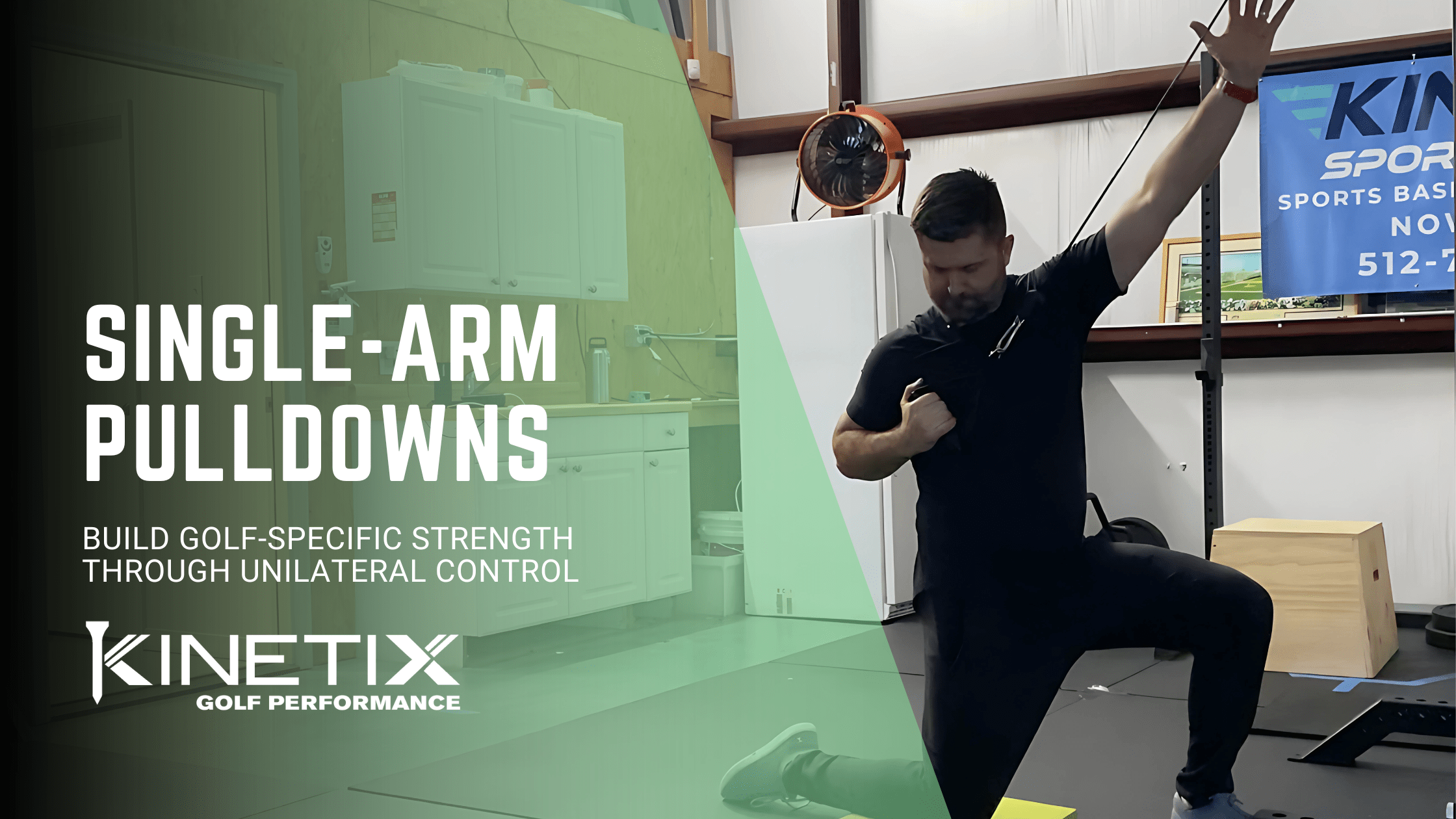
Golfer performing single-arm cable pulldown exercise to build unilateral pulling strength and core stability for golf swing

A strong, efficient golf swing doesn’t come from doing everything bilaterally. In fact, unilateral movements like the single-arm pulldown are essential for golfers because the swing itself is asymmetrical. This exercise helps build strength, motor control, and mobility one side at a time—perfect for unlocking balanced rotation and improving overall performance on the course.

Whether you’re new to strength training, a seasoned golfer, or a senior athlete looking to regain foundational strength, single-arm pulldowns should absolutely be part of your golf fitness routine.


Why Unilateral Pull Strength Matters for Golfers

The golf swing is inherently unilateral. You load on one side, explode through the other, and require controlled rotation throughout. This means you need to train muscles in a way that:

  • Challenges one side at a time
  • Builds asymmetrical control
  • Improves lat and lower trap activation
  • Strengthens the core and stabilizers

That’s exactly what single-arm pulldowns deliver.

Bonus: Research shows unilateral pulls recruit more motor units on the working side than bilateral pulls. That means greater neural demand, more muscle activation, and ultimately more functional strength where it counts.


What Are Single-Arm Pulldowns?

This movement is typically performed using a cable machine with a single handle or a resistance band anchored overhead.

You can perform it in:

  • A seated position for maximal support
  • A half-kneeling position to engage the hips and core
  • A split-stance or standing position as progression

All are effective—just pick the one that suits your current strength and balance level.


How to Perform the Single-Arm Pulldown

Setup:

  • Anchor a cable or band above shoulder/head height
  • Get into a seated or half-kneeling position
  • Grab the handle with a neutral grip (thumb up, palm facing inward)

Execution:

  1. Brace your core (think: ribs down, abs on)
  2. Initiate the pull with your lat and lower trap
  3. Pull the handle down toward your ribcage while keeping the elbow tucked
  4. Control the return and avoid shrugging or rotating excessively
  5. Perform reps, then switch sides

✅ Avoid leaning back
✅ Keep your neck relaxed
✅ Stay stacked through your core


Progressions & Variations

Once you’ve dialed in your technique, try:

Standing or Split-Stance Pulldowns

Adds a balance and postural control element—great for simulating golf swing posture.

Pulldown with Rotation

Incorporate trunk rotation as you pull to mimic the downswing motion.

Band-Resisted Step-Back Pulldowns

Step back as you pull to train separation between upper and lower body.


Perfect for Seniors—But Not Just for Seniors

While the seated or half-kneeling versions are great for senior golfers or anyone recovering from injury, the truth is: everyone benefits from unilateral training.

For seniors in particular:

  • Seated pulldowns build confidence and foundational pulling strength
  • Half-kneeling positions develop core engagement and balance
  • Controlled reps help reinforce joint health and stability

That’s why we often include single-arm pulldowns in early blocks of golf workouts, where we focus on stability and neuromuscular control before layering on complexity.


Golf Application: Why This Pull Matters

Strong lats and lower traps contribute to:

  • Postural control throughout the swing
  • Downswing acceleration and sequencing
  • Shoulder health by reducing compensations
  • Rotational strength and deceleration

You’re not just training muscles—you’re training motion. Pulling movements are the engine of the upper body’s contribution to the golf swing. This exercise is your ticket to more controlled, powerful, and repeatable ball-striking.


Sample Programming for Golf Fitness

  • 3–4 sets per arm
  • 8–12 reps
  • Tempo: 2-1-2 for strength and motor control
  • Rest: 30–45 seconds between sides

We like to pair this with a core movement like dead bugs, wall press breathing, or bird dogs for complete trunk activation.


Build Pulling Strength That Shows Up in Your Swing

You don’t need gimmicky “golf-only” exercises. You need purposeful, foundational strength training that supports your swing—and the single-arm pulldown delivers.

So the next time you’re in the gym, ditch the one-size-fits-all bilateral pulls. Go unilateral. Go intentional. And go build a body that supports your best swing yet.


Train Like You Swing—With Intentional Asymmetry

Looking to follow a proven training plan that combines strength, rotation, balance, and power for golf performance?

This exercise is just one of the dozens of targeted golf exercises in our PinSeeker Performance Program—a 6-week, lifetime-access golf workout program designed to build mobility, strength, and power exactly where you need it.

🏌️‍♂️ Swing with more rotation and less pain
🏋️‍♀️ Improve strength, flexibility, and balance
⛳️ Play more consistently, regardless of age or experience

✅ One-time purchase
✅ Lifetime access
✅ Golf-Specific workouts you can do anywhere

Train smarter, swing stronger, and see real gains on the course with PinSeeker!
our 6-week pinseeker performance program is the best online golf fitness program

Posted on — Leave a comment

Single Leg Step-Ups: The Underrated Power Move for Golfers

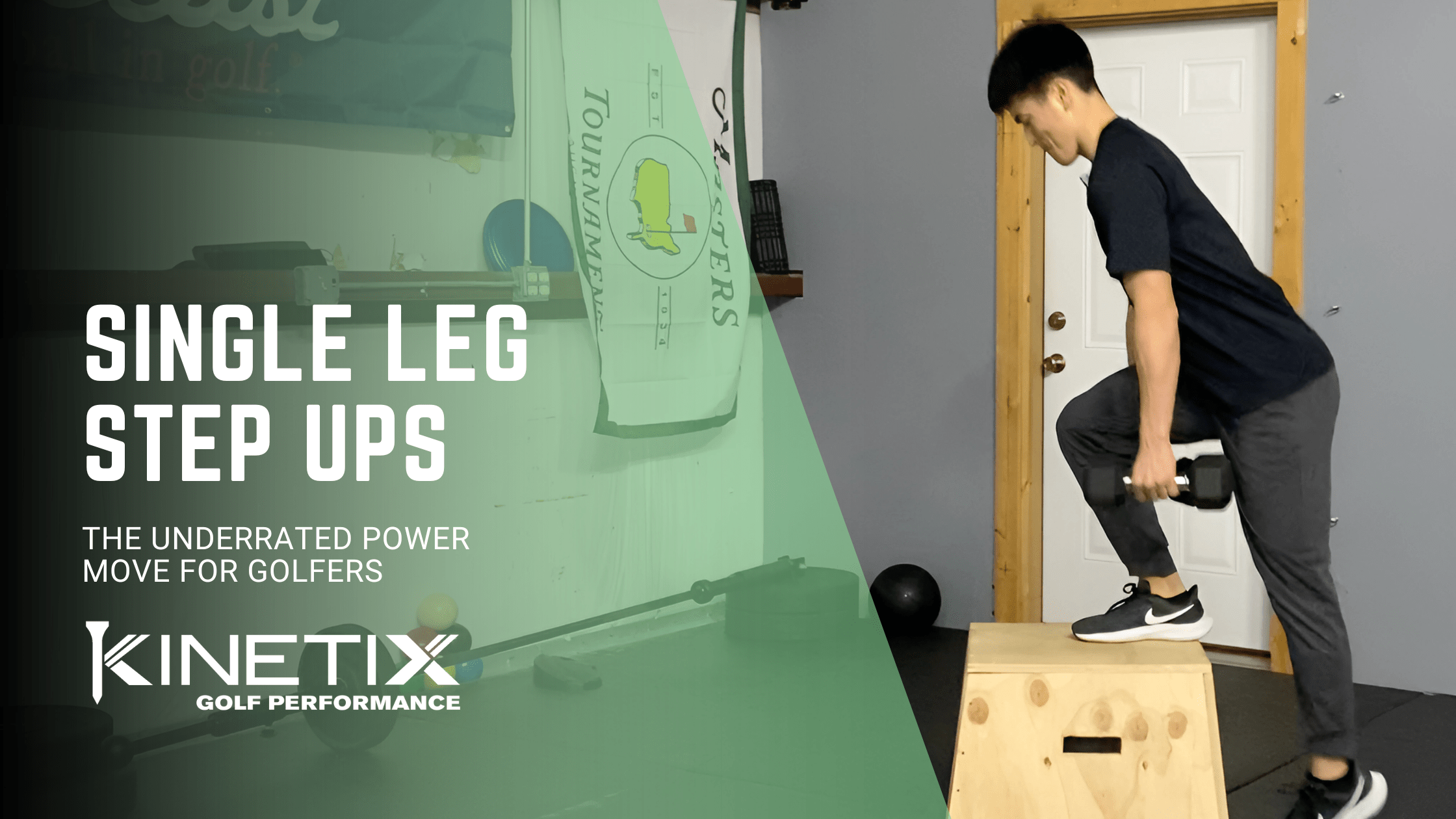
Golfer performing single leg step up exercise to build lower body strength and balance for golf swing stability

When it comes to building strength and power for the golf swing, most golfers look to flashy med ball throws or rotational band work. But if you’re ignoring the fundamentals—like single leg step-ups—you’re missing one of the most effective ways to improve hip extension, balance, and lead leg posting.

Whether you’re looking to hit the ball farther, increase control in your downswing, or move better overall—this is a must-have lower body exercise for your golf workouts.


Why Single Leg Training Matters for Golf

Golf is a unilateral sport. You’re constantly shifting weight, posting on one leg, and driving rotational force from an asymmetrical base.

The step-up teaches your body to:

  • Generate power from a single leg
  • Control your balance and stability in motion
  • Mimic lead leg posting during the downswing
  • Train hip extension for power without spinal compression

This is not just a “leg day” move. It’s a golf performance enhancer.


How to Do a Proper Single Leg Step-Up

  1. Set up a sturdy box or bench at knee height or below
  2. Stand side-on or in front of the box (depending on variation)
  3. Drive through the heel of your lead leg (the one on the box)
  4. Stand tall at the top, squeezing the glute of the working leg
  5. Control the descent and avoid pushing off the back foot

✅ Keep the torso tall
✅ Avoid rotating the hips
✅ Don’t let the trailing leg do the work


Progressions and Variations for Golf Fitness

1. Traditional Step-Up (Weighted or Bodyweight)

Foundational for building hip drive and control, especially for beginners or seniors. Can be loaded with dumbbells for strength development.

2. Step-Up with 90° Turn

Place the box to your side. Step up with the leg closest to the box, and rotate at the top. This mimics lead leg posting and rotation in the downswing.

3. Superset with Step-Downs

Improve eccentric control and time under tension. Focus on the slow lowering phase to build durability and tendon strength around the knee and hip.

4. Contrast Training with Jumps

Pair a heavy or slow step-up with an explosive jump variation (box jump, skater hop). This enhances the power-to-speed transfer, ideal for golfers seeking more swing velocity.


How Step-Ups Improve Your Golf Swing

Single leg step-ups translate directly into:

  • Stronger lead leg posting
  • More efficient hip rotation
  • Improved weight transfer mechanics
  • Greater vertical force production (key for clubhead speed)

Because the movement mimics the hip extension and stability required in the downswing, step-ups are a natural choice for golfers looking to boost performance from the ground up.


Great for Senior Golfers Too

Single leg step-ups are scalable, making them ideal for older adults:

  • Can be done bodyweight
  • Step height can be lowered
  • Builds lower body strength and balance safely

Plus, it’s joint-friendly when performed with proper form.


Programming Tips for Golf Fitness

We typically place this in:

  • A Block (Movement Prep) when done unloaded for mobility
  • B or C Block when loaded for strength or paired with a jump

Sample Prescription:

  • 3–4 sets of 6–8 reps per leg
  • For power: contrast with jumps
  • For strength: add dumbbells or kettlebells
  • For balance: slow tempo and controlled descent

Golf-Specific? You Bet.

While it doesn’t look like a swing, this exercise is deeply functional for golf:

  • Stronger legs = more stable base
  • Improved posting = better rotation
  • Single leg strength = injury prevention

You don’t need to mimic the swing—you need to train the movement systems that support it.


Build a Better Swing from the Ground Up

The golf swing starts from the ground. And if you want to unlock more speed, more control, and more longevity in your game—you need to train with intention.

The single leg step-up is one of the simplest, most effective ways to do just that.


Ready to Train Smarter?

This exercise is just one of the dozens of targeted golf exercises in our PinSeeker Performance Program—a 6-week, lifetime-access golf workout program designed to build mobility, strength, and power exactly where you need it.

🏌️‍♂️ Swing with more rotation and less pain
🏋️‍♀️ Improve strength, flexibility, and balance
⛳️ Play more consistently, regardless of age or experience

✅ One-time purchase
✅ Lifetime access
✅ Golf-Specific workouts you can do anywhere

Train smarter, swing stronger, and see real gains on the course with PinSeeker!
our 6-week pinseeker performance program is the best online golf fitness program

Posted on — Leave a comment

Seated Lat Pulldowns: Foundational Pulling Strength for Golf Fitness

Golfer performing seated lat pulldown exercise to build upper body strength for powerful golf swings

In golf fitness, it’s easy to get distracted by flashy exercises that “look” like the golf swing. But the truth is—strong, foundational movement patterns are what enable your body to produce power, stay injury-resistant, and move efficiently across all planes.

One of the most important of these patterns? Pulling.
And one of the best ways to build pulling strength? The seated lat pulldown.

Whether you’re a competitive golfer looking to hit farther, a recreational player chasing consistency, or a senior golfer maintaining longevity—this simple strength exercise needs a place in your program.


Why Pulling Strength Matters in Golf

While much of golf is rotational, the posterior chain—specifically the lats, rhomboids, mid/lower traps, and rear delts—plays a massive role in:

  • Postural control during the swing
  • Decelerating rotation safely
  • Creating torque through co-contraction
  • Generating speed through upper body pulling mechanics

Without adequate pulling strength, golfers often experience:

  • Rounded shoulders at setup
  • Lack of control during transition
  • Inability to maintain spine angle
  • Reduced clubhead speed
  • Increased risk of shoulder or elbow injuries

What Is the Seated Lat Pulldown?

The seated lat pulldown is a vertical pulling exercise targeting the latissimus dorsi, along with the rear delts, biceps, and other stabilizers of the shoulder and scapula such as the rhomboids and middle and lower traps.

How to Perform It:

  1. Sit at a lat pulldown station with knees secured under the pads
  2. Grip the bar slightly wider than shoulder-width, with palms facing forward
  3. Pull the bar down toward the top of your chest while squeezing your shoulder blades together
  4. Control the bar back up without letting your shoulders shrug
  5. Maintain upright posture throughout the entire range of motion

Why Golfers Should Train Lat Pulldowns

Build Foundational Strength

Lat pulldowns are ideal early in a training program (or in the workout) because they allow golfers to load the pulling pattern heavily and safely, especially in a supported seated position.

This helps lay the groundwork for more golf-specific exercises like:

  • Cable rotations
  • Side plank rear delt raises
  • Cable chops and pulls
  • Single-arm rotational rows
  • Horizontal band pulls

Improve Swing Mechanics

Stronger lats and scapular control support:

  • Better posture at address
  • More controlled backswing retraction
  • Stronger lead arm connection through impact
  • Safe deceleration through follow-through

Train Smart for Seniors

For older golfers or those newer to training, the seated lat pulldown is one of the best options to:

  • Build upper body strength without excessive spinal or shoulder strain
  • Train pull mechanics in a controlled environment
  • Progress gradually without relying on bodyweight (as with pull-ups)

Programming Tips for Golf Fitness

We typically place seated lat pulldowns in the early portion of our strength sessions, often in Block 1, when you’re freshest and can focus on quality reps.

Once foundational pulling strength is built, you can progress by:

  • Moving to unilateral lat pulldowns for asymmetrical control
  • Supersetting with core or shoulder stability drills
  • Introducing rotation into the pulling motion later in the workout (e.g., single-arm cable pulls)

Suggested Rep Scheme:

  • 3–4 sets of 8–10 reps
  • Controlled tempo (2 sec pull, 2 sec release)
  • Prioritize full range and shoulder positioning

What If You Don’t Have Access to a Lat Pulldown Machine?

No worries—this movement can be substituted with:

  • Band-resisted lat pulldowns (anchored overhead)
  • Pull-ups or assisted pull-ups
  • Single-arm dumbbell rows
  • TRX rows for bodyweight variations

Is It Golf-Specific? Absolutely.

Golf-specific doesn’t mean mimicking your swing—it means training the movement capacities that fuel it.
A stronger upper back and lat system:

  • Keeps your posture intact
  • Prevents energy leaks in your swing
  • Sets the stage for rotational power

The lat pulldown is a bridge—it helps transition your training from strength to rotational speed. Without it, flashy med ball drills and high-velocity work are built on a weak foundation.


Pull Power = Swing Power

Building pulling strength isn’t glamorous, but it’s one of the key differentiators between golfers who move well and swing consistently—and those who plateau or get hurt.

So whether you’re:

  • Just starting your golf fitness journey
  • Looking to increase clubhead speed
  • Or rehabbing from a shoulder or elbow issue…

…make sure you don’t skip the basics. The seated lat pulldown belongs in your program.


Build Your Golf Strength From the Ground Up

This exercise is just one of the dozens of targeted golf exercises in our PinSeeker Performance Program—a 6-week, lifetime-access golf workout program designed to build mobility, strength, and power exactly where you need it.

🏌️‍♂️ Swing with more rotation and less pain
🏋️‍♀️ Improve strength, flexibility, and balance
⛳️ Play more consistently, regardless of age or experience

✅ One-time purchase
✅ Lifetime access
✅ Golf-Specific workouts you can do anywhere

Train smarter, swing stronger, and see real gains on the course with PinSeeker!

our 6-week pinseeker performance program is the best online golf fitness program

Posted on — Leave a comment

Assisted Cossack Squats for Golf: Improve Frontal Plane Strength and Lead Leg Stability

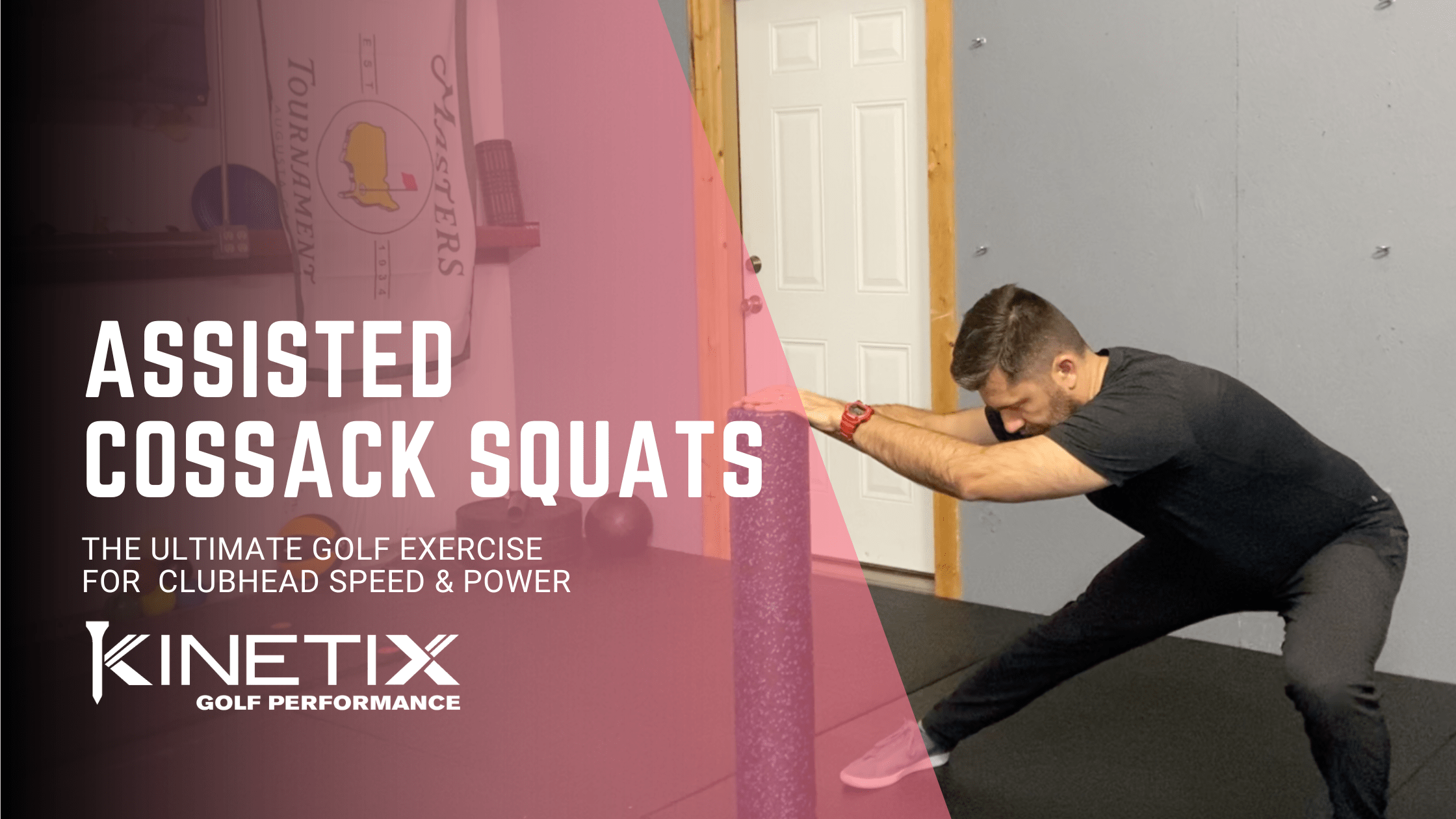
Assisted cossack squat demonstration for golfers - lateral hip mobility exercise for better swing mechanics

One of the most overlooked aspects of an efficient golf swing is frontal plane control—your ability to move and stabilize side-to-side. Golfers often spend time training in the sagittal plane (front to back, up to down), but to truly rotate powerfully and prevent swing faults like swaying or sliding, you need stability in the frontal plane, especially during your transition from backswing to downswing.

That’s where assisted Cossack squats come in.

This movement is a foundational golf exercise we program in our warm-up and strength phases, and it offers major benefits for all skill levels—including seniors and beginners who need joint-friendly modifications to build strength and mobility safely.


Why the Frontal Plane Matters in Your Golf Swing

During the transition from the top of the backswing to the downswing, your body needs to post and stabilize on the lead leg to initiate rotation. When this post isn’t strong—or frontal plane mobility is lacking—you’ll often see common swing faults like:

  • Swaying or sliding forward during the downswing
  • Loss of posture or early extension
  • Overuse of the lower back due to instability in the hips
  • Delayed or inefficient lead-side internal rotation

The assisted Cossack squat directly combats this by helping you:

  • Develop strength in the adductors, glutes, and quads
  • Improve hip internal and external rotation
  • Open up the groin and inner thigh musculature
  • Build control and stability in the lead leg for a solid post

How to Perform the Assisted Cossack Squat

This movement can be supported with a TRX strap, squat rack, resistance band, golf club, or doorway frame to provide balance and control.

Step-by-Step Instructions:

  1. Stand with feet in a wide stance, toes slightly turned out
  2. Hold onto your support (band, club, or rack) at chest level
  3. Shift your weight laterally, sitting back into one hip as you lower into a deep side lunge
  4. Keep the opposite leg extended, foot flat or with heel elevated depending on mobility
  5. Drive through the bent leg to return to center, then repeat to the other side

Coaching Tips:

  • Keep your chest tall and avoid collapsing forward
  • Let your hips sit back as you descend
  • Focus on quality movement over depth at first—especially for seniors or those with mobility limitations

Why It Works for Golfers of All Ages

What makes this movement powerful is its adaptability. For younger athletes, it can be performed deeper and even weighted. For seniors, or those dealing with hip, groin, or knee limitations, the assisted version builds confidence, control, and strength in a safe and supported environment.

Plus, because the movement mimics the frontal plane shift we use in golf, it carries over beautifully to:

  • Posting on the lead side during the downswing
  • Creating separation between upper and lower body
  • Reducing injury risk by increasing mobility and control

Programming Notes: Where to Include It

At Kinetix Golf Performance, we include Assisted Cossack Squats in both:

  • ✅ A Block (Movement Prep): Warm-up days to open hips and prep for rotational sequencing
  • ✅ Strength Days: Paired with rotational core work like Stork Turns or PVC Club Rotations to groove motor control before adding speed

Recommended dosage:

  • 2–3 sets of 5–8 reps per side
  • Can be used daily in warm-ups or 2x/week in strength training sessions

Cossack Squats Build Golf-Specific Stability, Not Just Strength

While Cossack squats don’t look “golf-specific” at first glance, they are one of the most functional exercises you can do to improve your swing mechanics.

They help you develop:

  • Frontal plane control
  • Lead leg posting ability
  • Hip mobility for rotation
  • Strength to avoid overuse injuries in the back or knees

And because we emphasize the assisted version, this makes the movement more accessible for golfers across all ability levels—including those in their 50s, 60s, or beyond.


Ready to Strengthen Your Swing Foundation?

If you’re tired of sliding in your downswing, feeling stuck in your hips, or lacking power in your lead side, this is your wake-up call.

This exercise is just one of the dozens of targeted golf exercises in our PinSeeker Performance Program—a 6-week, lifetime-access golf workout program designed to build mobility, strength, and power exactly where you need it.

🏌️‍♂️ Swing with more rotation and less pain
🏋️‍♀️ Improve strength, flexibility, and balance
⛳️ Play more consistently, regardless of age or experience

✅ One-time purchase
✅ Lifetime access
✅ Golf-Specific workouts you can do anywhere

Train smarter, swing stronger, and see real gains on the course with PinSeeker!
our 6-week pinseeker performance program is the best online golf fitness program

Posted on — Leave a comment

Lateral Line Stretch for Golfers – Improve Stability, Posture & Prevent Low-Back Pain

the lateral line golf stretch is a great golf exercise to help unwind the lateral fascial line of your body to improve your posture and golf swing.

Why the Lateral Line Stretch Matters for Golfers

A stable, powerful golf swing relies on both frontal plane stability (side-to-side control) and transverse plane rotation. The lateral fascial line—running from the foot’s peroneals up through the iliotibial band (ITB), tensor fascia lata (TFL), quadratus lumborum (QL), intercostals, and latissimus dorsi—connects those planes. When any portion of this lateral chain becomes tight or shortened, it compromises your ability to:

  • Stack your spine over your stance
  • Efficiently shift weight and resist unwanted sway
  • Maintain upright posture through the swing
  • Avoid low-back compression (S-posture) and subsequent pain

The simple yet effective lateral line stretch addresses these restrictions by lengthening the QL, lats, intercostals, TFL/ITB, and peroneals—all in one movement. This means better side-bend control, improved stacked posture, and a reduced risk of swing faults like swaying, sliding, and early spine collapse.


Anatomy & Common Dysfunctions

  1. Quadratus Lumborum (QL)
    • Originates at the iliac crest and inserts on the 12th rib and lumbar vertebrae.
    • Tightness here pulls the lower ribcage down and tilts the pelvis, promoting an “S-shaped” spine during the swing.
  2. Latissimus Dorsi & Intercostals
    • The lats attach from the lumbar spine to the humerus; intercostals run between ribs.
    • Tightness restricts ribcage mechanics, limiting full rotation and forcing compensations in the lumbar spine.
  3. Tensor Fascia Lata (TFL) & Iliotibial Band (ITB)
    • The TFL originates from the iliac crest and inserts into the ITB, which runs down the lateral thigh to the tibia.
    • A tight lateral thigh can restrict hip abduction and side-bending freedom, leading to an unstable trail side during the backswing.
  4. Peroneal/Fibularis Muscles
    • Located on the outside of the lower leg, these muscles assist in foot eversion and lateral stability.
    • Tight peroneals limit ankle mobility in the frontal plane, hindering weight shift and balance.

When this entire chain is restricted, golfers lose the ability to “stack”—that is, maintain a neutral spine without lateral collapse. Instead, they often sway or slide into the backswing, overbend in the lower back, or lose posture through impact, creating low back pain and diminished power.


How to Perform the Lateral Line Stretch

Setup:

  • Position: Stand beside a wall or sturdy object for support.
  • Foot Stance: Place your inside foot (closest to the wall) slightly forward; your outside foot remains back so you can lean into the stretch.
  • Arm Placement: Raise the arm on the side you’re stretching overhead.

Execution:

  1. Stack Your Spine:
    • Keep your pelvis neutral—avoid letting your hips hike or sag.
    • Brace your core by creating intra-abdominal pressure (IAP), maintaining a slight “tuck” in your tailbone.
  2. Side Bend & Reach:
    • Lean your torso away from the wall, reaching your top hand up and over toward the wall.
    • Keep your ribs stacked over your pelvis—don’t rotate or twist.
  3. Foot & Leg Engagement:
    • Press your outside leg into the ground to prevent lateral collapse of your hips.
    • You should feel a deep stretch from your peroneal muscles, up your ITB/TFL, into your QL, and along your lat/intercostals.
  4. Hold & Breathe:
    • Hold for 30–45 seconds, breathing deeply into the side body to encourage ribcage expansion.
    • Exhale and gently press your hips away from the wall to intensify the stretch, but never force it into pain.
  5. Switch Sides:
    • Carefully return to standing, then mirror the stretch on the opposite side.

Modifications & Tips:

  • Beginner Variation: Keep feet closer together and reduce side-bend depth until you develop stability.
  • Advanced Variation: Place the outside foot on a low step or yoga block to accentuate TFL/ITB stretch.
  • Pelvic Cue: Imagine “loading” the outside hip by pressing it slightly back—this prevents hip hiking.

Transferring This Stretch to Your Golf Swing

  1. Enhanced Frontal Plane Stability
    • By lengthening the QL and lateral chain, you resist unwanted “sway” into the backswing. A stable trail side means a smoother weight shift and less compensatory low-back bending.
  2. Improved Stack & Pivot
    • A neutral pelvis and elongated lats allow a fuller upper-body turn without collapsing into the side. This “stacked” spine promotes better pivot mechanics—your hips and shoulders rotating around a stable axis.
  3. Reduced Low-Back Compression
    • Freeing the lateral chain discourages the lower spine from over-arching into S-posture, lowering the risk of chronic pain and fatigue during or after rounds.
  4. Longer, More Powerful Swing Arc
    • When your anterior oblique and lateral fascial lines are open, you can achieve more X-Factor separation (torso-pelvis difference), feeding energy into the downswing and maximizing clubhead speed.

Integrate the Lateral Line Stretch into Your Golf Stretches Routine

  • Pre-Round Warm-Up: 1–2 holds per side after dynamic hip and thoracic mobility drills (e.g., Hip CARs, T-Spine Openers).
  • Post-Round Recovery: Hold 45–60 seconds per side to release excursion built up from rotational swings.
  • Daily Maintenance: Include on off-days or after prolonged sitting to counteract habitual lateral fascial tightness.

Sample Mobility Sequence:

  1. Ankle Rockers (10 reps per side)
  2. Hip CARs (3 reps each direction per side)
  3. Lateral Line Stretch (30–45 seconds each side)
  4. T-Spine Lumbar Lock Openers (8 reps per side)

Lateral Line Stretch for Golfers 55+

For golf exercises for seniors, this stretch is especially valuable because it:

  • Is low impact and joint-friendly
  • Promotes spinal decompression and better posture
  • Reduces fall risk by improving lateral stability
  • Eases QL and lower-back discomfort often exacerbated by long rounds or driving

Ready To Level Up Your Golf Game?

This exercise is just one of the dozens of targeted golf exercises in our PinSeeker Performance Program—a 6-week, lifetime-access golf workout program designed to build mobility, strength, and power exactly where you need it.

🏌️‍♂️ Swing with more rotation and less pain
🏋️‍♀️ Improve strength, flexibility, and balance
⛳️ Play more consistently, regardless of age or experience

✅ One-time purchase
✅ Lifetime access
✅ Golf-Specific workouts you can do anywhere

Train smarter, swing stronger, and see real gains on the course with PinSeeker!

our 6-week pinseeker performance program is the best online golf fitness program