Posted on — Leave a comment

Split Squats for Golfers: Build Unilateral Power and Stability in Your Golf Swing

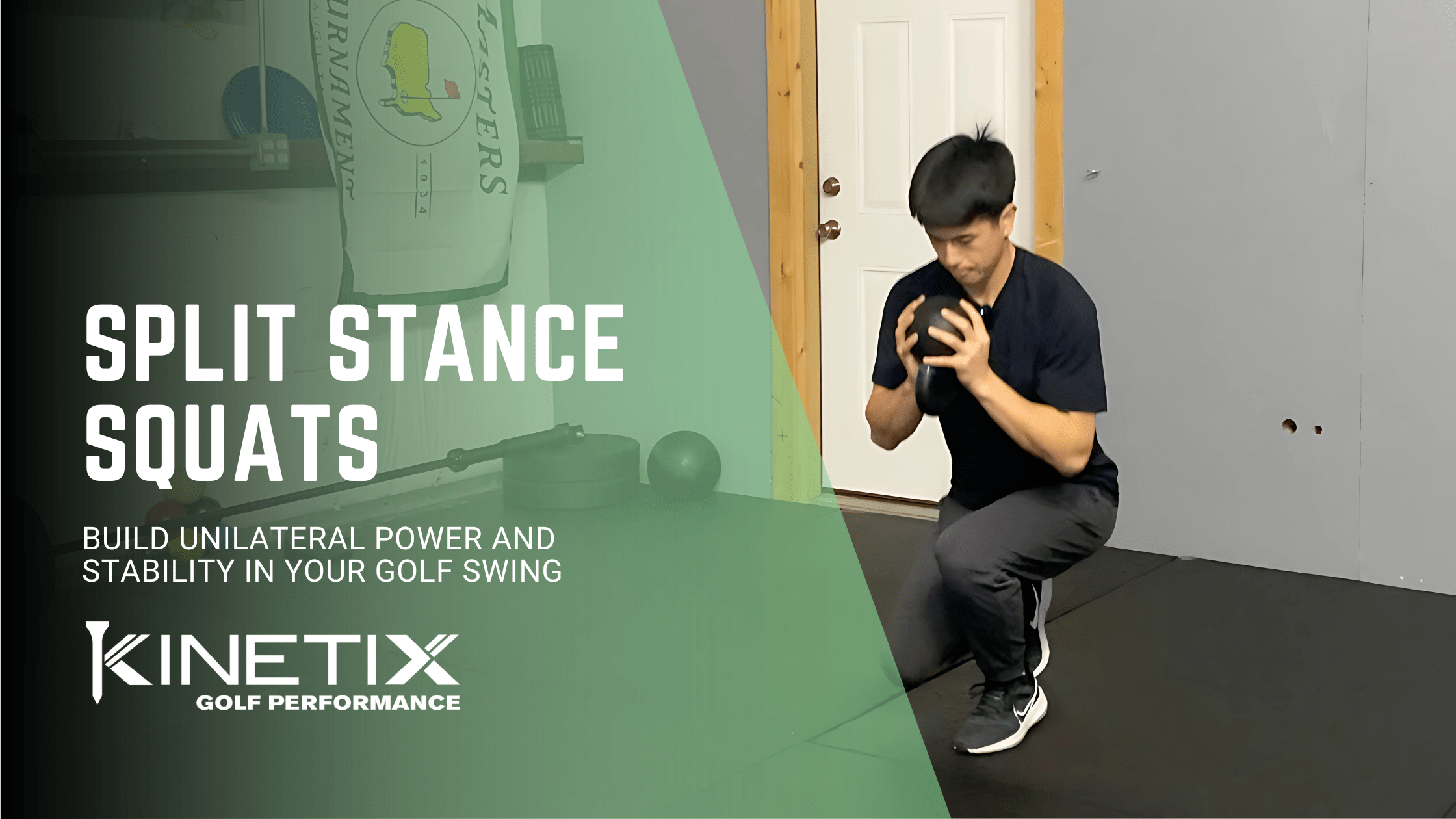
The split stance squat is a great golf exercises for building unilateral leg power and stability in your golf swing.

When it comes to building rotational power and balance in your golf swing, few exercises offer the functional benefits of split squats. This unilateral lower body exercise helps golfers train each leg independently, which is crucial since the golf swing isn’t symmetrical. The transfer of weight, rotation through the hips, and drive off the lead leg all demand strong and stable legs.

Split squats are a cornerstone in our golf performance programs—whether you’re an amateur or chasing scratch, this movement helps you create better ground reaction force, hip stability, and swing consistency.


Why Split Squats Matter for Golfers

Here’s how split squats translate directly to the golf course:

  • Unilateral Strength & Motor Recruitment: Training one leg at a time improves strength asymmetries and requires more neural drive, meaning more motor units are firing—critical for building power in the downswing.
  • Improved Weight Transfer: The golf swing requires proper load into the trail leg and a powerful shift into the lead leg. Split squats reinforce this pattern under control.
  • Better Hip Mobility & Stability: Working through a full range of motion builds strength in end ranges of hip flexion and extension, important for both backswing depth and follow-through rotation.
  • Scalable for All Fitness Levels: You can start with a kickstand (toe-down) back leg for support or progress to a rear-foot elevated split squat (RFESS) for greater range and challenge.

How to Perform a Split Squat for Golf

  1. Kickstand Split Squat
    • Start with your back foot resting lightly behind you (toe down).
    • Front foot planted, hip-width apart.
    • Lower down with control, keeping the torso upright.
    • Drive through the front heel to return to standing.
  2. Rear Foot Elevated Split Squat
    • Elevate the rear foot on a bench or low box.
    • Lower until your front thigh is parallel to the ground.
    • Keep tension in the quads, glutes, and hamstrings of the lead leg.
    • Keep your pelvis neutral—no arching or collapsing forward.

Programming Tips

We typically program split squats in the main strength block of our workouts:

  • Reps: 6 per leg
  • Sets: 3–4
  • Tempo: Slow eccentric (3 seconds down), fast concentric (explode up)
  • Optional Superset: Contrast with split stance med ball tosses for rotational power.

Split Squats and Golf Swing Translation

In your golf swing, a strong and stable lead leg is your post—it’s what you rotate around and push against to generate clubhead speed. Without stability in that post leg, you may leak power or lose consistency due to sway or slide. Split squats teach your body to control that movement and produce force exactly where it’s needed.


Final Thoughts

Split squats aren’t just a leg day staple—they’re a golf performance essential. Whether you’re in-season or building during the off-season, these should have a permanent place in your golf strength program.

Want golf workouts that build power and mobility without wasting time?

This exercise is just one of the dozens of targeted golf exercises in our PinSeeker Performance Program—a 6-week, lifetime-access golf workout program designed to build mobility, strength, and power exactly where you need it.

🏌️‍♂️ Swing with more rotation and less pain
🏋️‍♀️ Improve strength, flexibility, and balance
⛳️ Play more consistently, regardless of age or experience

✅ One-time purchase
✅ Lifetime access
✅ Golf-Specific workouts you can do anywhere

Train smarter, swing stronger, and see real gains on the course with PinSeeker!

our 6-week pinseeker performance program is the best online golf fitness program

Posted on — Leave a comment

Half-Kneeling Horizontal Rows: Strength Meets Rotation for Golf Performance

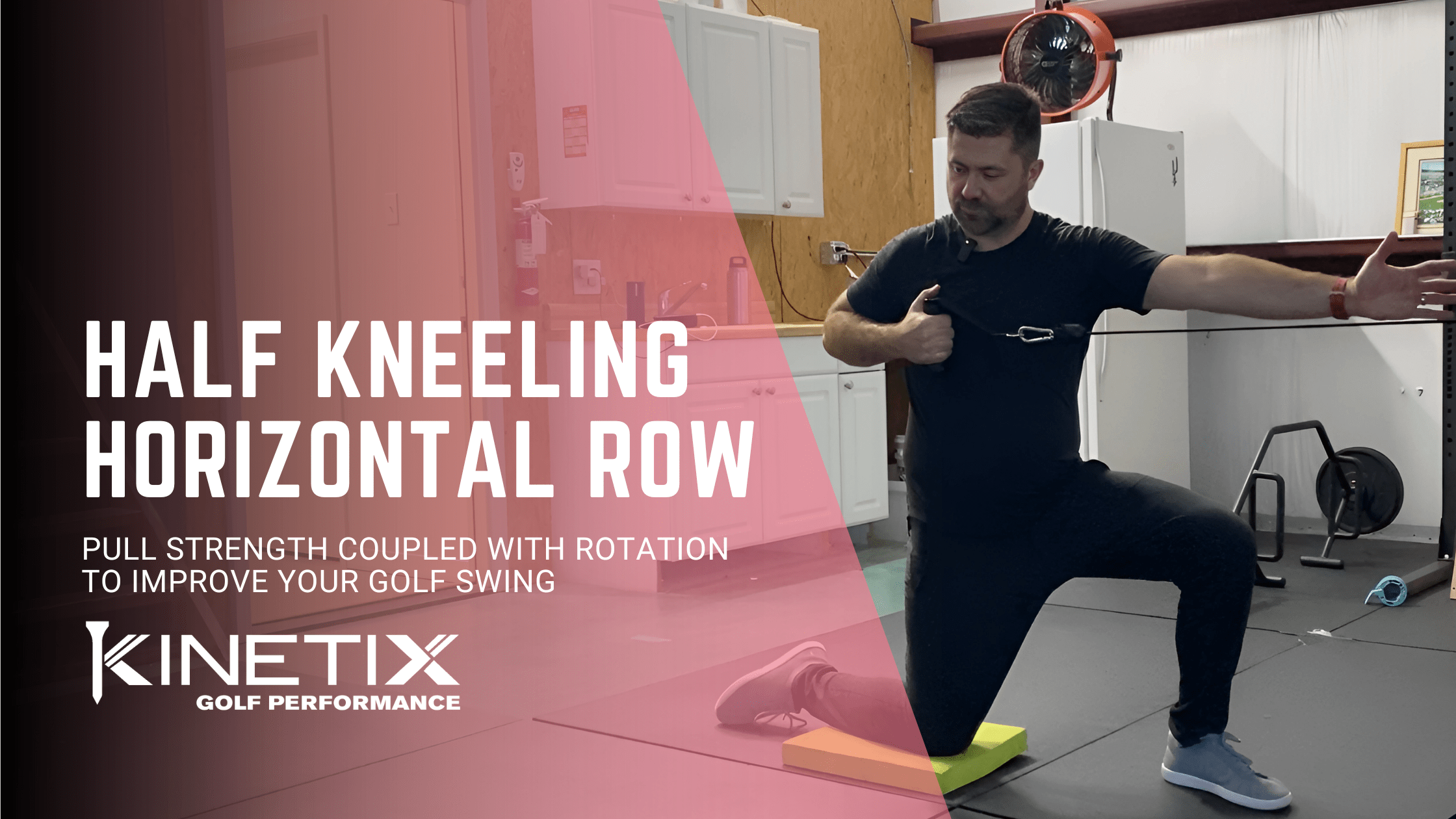
The Half Kneeling Horizontal Row couples pull strength with mid back rotation to improve your golf swing.

When it comes to golf fitness, we often focus on hip rotation, shoulder stability, and explosive power. But one area that deserves more attention is mid-back rotation and pulling strength—and the half-kneeling horizontal row delivers both.

This simple-yet-effective golf exercise develops posterior chain strength, especially the lats, rhomboids, and mid/lower traps, while also mobilizing the thoracic spine—an area critical for fluid, pain-free, and powerful swings.


Why Mid-Back Mobility Matters for Golf

Here’s a key stat:
47.5% of shoulder issues stem from dysfunction in the thoracic spine (mid back).
Another 45.5% come from the neck.
That means over 90% of shoulder dysfunction originates above or below the actual shoulder joint.

So, while it’s important to train shoulder strength directly, true shoulder performance—and injury prevention—often comes from improving mobility and control of the mid back. The horizontal row, especially from a half-kneeling position, allows us to do both.


What Is a Half-Kneeling Horizontal Row?

This exercise is typically done using a cable machine or a resistance band anchored at chest height. You’ll be in a half-kneeling stance (one knee down, one foot planted forward), which immediately challenges core stability, hip alignment, and balance.

But the magic comes when we add in mid-back rotation with the row:

  • You pull with control
  • As the elbow drives back, the thoracic spine rotates naturally
  • This mimics the separation and rotation needed in a high-level golf swing

The Pull-Strength + Rotation Combo

This combo matters because your golf swing isn’t just a push or a twist—it’s a coordinated pull from the ground up. The better you are at pulling with rotation, the more:

  • Efficient your swing mechanics become
  • Speed you can generate from the mid-back and lats
  • Stress you take off the shoulders and low back

How to Perform the Half-Kneeling Horizontal Row (With Rotation)

Setup:

  • Use a cable or anchored resistance band
  • Set the anchor at chest height
  • Get into a half-kneeling position (opposite leg forward from the working arm)

Execution:

  1. Grab the handle or band with a neutral grip
  2. Engage your core (ribs stacked over pelvis, diaphragmatic breathing)
  3. Begin pulling the handle toward your torso
  4. Allow your mid-back to rotate slightly as your elbow travels back
  5. Pause, squeeze your shoulder blade, and control the return

✅ Keep hips square
✅ Avoid over-rotating or flaring ribs
✅ Focus on controlled strength with smooth movement


Progressions & Variations

Once you’ve mastered the half-kneeling row, here are a few ways to challenge the body further:

Split-Stance Rows

Move into a more upright lunge position—this adds balance and hip stability demands.

Standing Rows with Step-Back Rotation

Take a step back as you row, mimicking the separation-to-rotation motion found in the golf swing. Think of it like an “archer pull.”

Unilateral Superset Options

Pair rows with bird-dogs, wall press dead bugs, or shoulder IYTs for full posterior chain training.


Golf Application: Where It Fits in Your Training

We typically place this exercise in the D block of your golf fitness program.

Sample Programming:

  • 3–4 sets
  • 8–12 reps per side
  • Rest: 60 seconds
  • Tempo: 2-1-2 for controlled rotation and tension

Great for All Ages (Including Senior Golfers)

One of the best aspects of the half-kneeling position is its built-in support and safety.
That makes it perfect for:

  • Senior golfers
  • Beginners with balance issues
  • Golfers recovering from injury

The controlled posture limits excessive movement, protects the spine, and teaches proper sequencing of pull + rotation.


Pull Smart. Rotate Strong.

Face it—without solid pulling strength and mid-back control, you’re putting unnecessary stress on the shoulders, neck, and low back. The half-kneeling horizontal row trains the foundational strength and rotational patterning that translate directly to a more efficient, powerful golf swing.

And it doesn’t take flashy equipment or complicated setups—just a band, a handle, and smart programming.


Build Golf Strength With Purpose

Our online golf performance programs are grounded in the real movement demands of the game—not gimmicks

Posted on — Leave a comment

Single Leg Step-Ups: The Underrated Power Move for Golfers

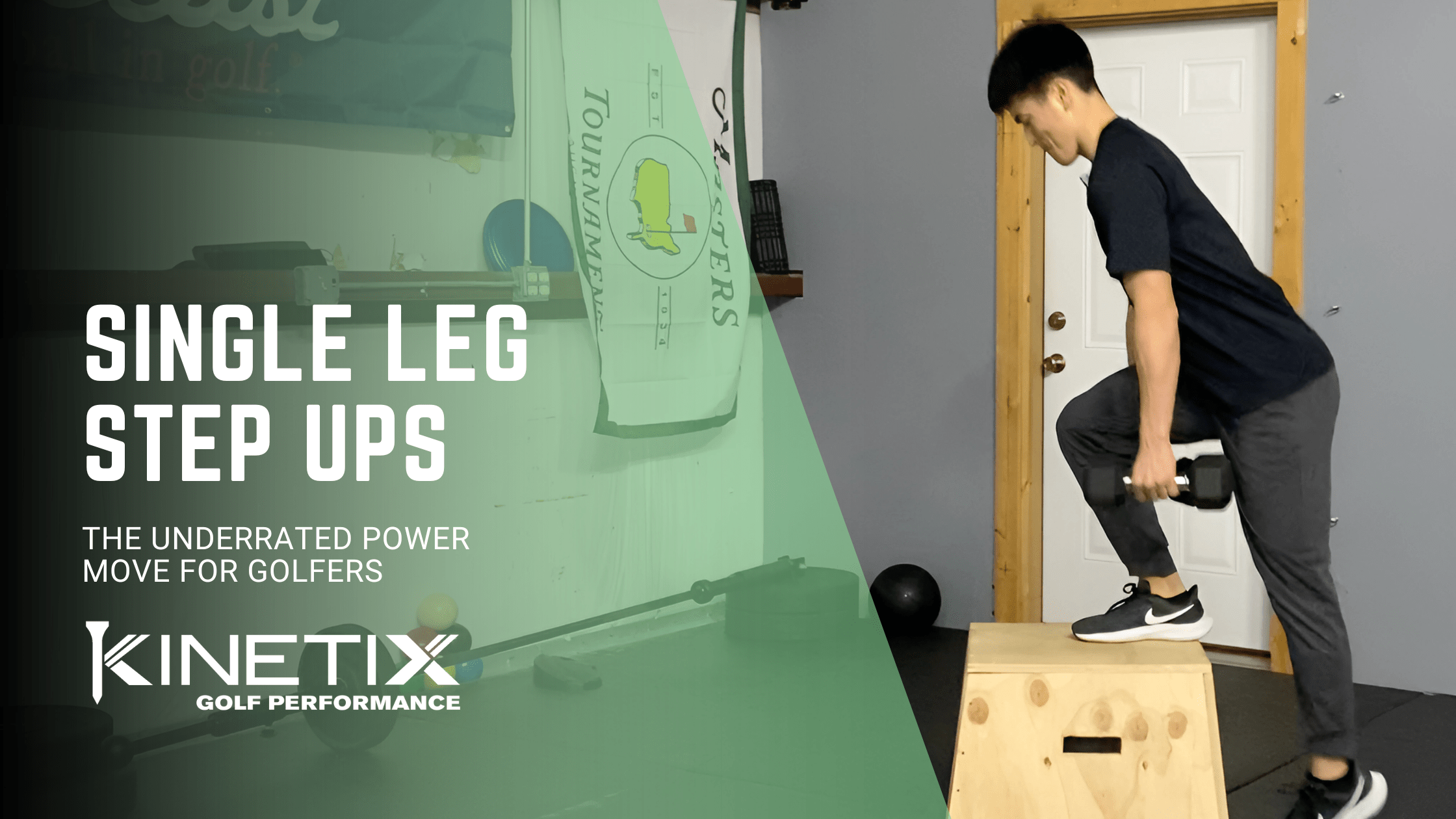
Golfer performing single leg step up exercise to build lower body strength and balance for golf swing stability

When it comes to building strength and power for the golf swing, most golfers look to flashy med ball throws or rotational band work. But if you’re ignoring the fundamentals—like single leg step-ups—you’re missing one of the most effective ways to improve hip extension, balance, and lead leg posting.

Whether you’re looking to hit the ball farther, increase control in your downswing, or move better overall—this is a must-have lower body exercise for your golf workouts.


Why Single Leg Training Matters for Golf

Golf is a unilateral sport. You’re constantly shifting weight, posting on one leg, and driving rotational force from an asymmetrical base.

The step-up teaches your body to:

  • Generate power from a single leg
  • Control your balance and stability in motion
  • Mimic lead leg posting during the downswing
  • Train hip extension for power without spinal compression

This is not just a “leg day” move. It’s a golf performance enhancer.


How to Do a Proper Single Leg Step-Up

  1. Set up a sturdy box or bench at knee height or below
  2. Stand side-on or in front of the box (depending on variation)
  3. Drive through the heel of your lead leg (the one on the box)
  4. Stand tall at the top, squeezing the glute of the working leg
  5. Control the descent and avoid pushing off the back foot

✅ Keep the torso tall
✅ Avoid rotating the hips
✅ Don’t let the trailing leg do the work


Progressions and Variations for Golf Fitness

1. Traditional Step-Up (Weighted or Bodyweight)

Foundational for building hip drive and control, especially for beginners or seniors. Can be loaded with dumbbells for strength development.

2. Step-Up with 90° Turn

Place the box to your side. Step up with the leg closest to the box, and rotate at the top. This mimics lead leg posting and rotation in the downswing.

3. Superset with Step-Downs

Improve eccentric control and time under tension. Focus on the slow lowering phase to build durability and tendon strength around the knee and hip.

4. Contrast Training with Jumps

Pair a heavy or slow step-up with an explosive jump variation (box jump, skater hop). This enhances the power-to-speed transfer, ideal for golfers seeking more swing velocity.


How Step-Ups Improve Your Golf Swing

Single leg step-ups translate directly into:

  • Stronger lead leg posting
  • More efficient hip rotation
  • Improved weight transfer mechanics
  • Greater vertical force production (key for clubhead speed)

Because the movement mimics the hip extension and stability required in the downswing, step-ups are a natural choice for golfers looking to boost performance from the ground up.


Great for Senior Golfers Too

Single leg step-ups are scalable, making them ideal for older adults:

  • Can be done bodyweight
  • Step height can be lowered
  • Builds lower body strength and balance safely

Plus, it’s joint-friendly when performed with proper form.


Programming Tips for Golf Fitness

We typically place this in:

  • A Block (Movement Prep) when done unloaded for mobility
  • B or C Block when loaded for strength or paired with a jump

Sample Prescription:

  • 3–4 sets of 6–8 reps per leg
  • For power: contrast with jumps
  • For strength: add dumbbells or kettlebells
  • For balance: slow tempo and controlled descent

Golf-Specific? You Bet.

While it doesn’t look like a swing, this exercise is deeply functional for golf:

  • Stronger legs = more stable base
  • Improved posting = better rotation
  • Single leg strength = injury prevention

You don’t need to mimic the swing—you need to train the movement systems that support it.


Build a Better Swing from the Ground Up

The golf swing starts from the ground. And if you want to unlock more speed, more control, and more longevity in your game—you need to train with intention.

The single leg step-up is one of the simplest, most effective ways to do just that.


Ready to Train Smarter?

This exercise is just one of the dozens of targeted golf exercises in our PinSeeker Performance Program—a 6-week, lifetime-access golf workout program designed to build mobility, strength, and power exactly where you need it.

🏌️‍♂️ Swing with more rotation and less pain
🏋️‍♀️ Improve strength, flexibility, and balance
⛳️ Play more consistently, regardless of age or experience

✅ One-time purchase
✅ Lifetime access
✅ Golf-Specific workouts you can do anywhere

Train smarter, swing stronger, and see real gains on the course with PinSeeker!
our 6-week pinseeker performance program is the best online golf fitness program

Posted on — Leave a comment

Seated Lat Pulldowns: Foundational Pulling Strength for Golf Fitness

Golfer performing seated lat pulldown exercise to build upper body strength for powerful golf swings

In golf fitness, it’s easy to get distracted by flashy exercises that “look” like the golf swing. But the truth is—strong, foundational movement patterns are what enable your body to produce power, stay injury-resistant, and move efficiently across all planes.

One of the most important of these patterns? Pulling.
And one of the best ways to build pulling strength? The seated lat pulldown.

Whether you’re a competitive golfer looking to hit farther, a recreational player chasing consistency, or a senior golfer maintaining longevity—this simple strength exercise needs a place in your program.


Why Pulling Strength Matters in Golf

While much of golf is rotational, the posterior chain—specifically the lats, rhomboids, mid/lower traps, and rear delts—plays a massive role in:

  • Postural control during the swing
  • Decelerating rotation safely
  • Creating torque through co-contraction
  • Generating speed through upper body pulling mechanics

Without adequate pulling strength, golfers often experience:

  • Rounded shoulders at setup
  • Lack of control during transition
  • Inability to maintain spine angle
  • Reduced clubhead speed
  • Increased risk of shoulder or elbow injuries

What Is the Seated Lat Pulldown?

The seated lat pulldown is a vertical pulling exercise targeting the latissimus dorsi, along with the rear delts, biceps, and other stabilizers of the shoulder and scapula such as the rhomboids and middle and lower traps.

How to Perform It:

  1. Sit at a lat pulldown station with knees secured under the pads
  2. Grip the bar slightly wider than shoulder-width, with palms facing forward
  3. Pull the bar down toward the top of your chest while squeezing your shoulder blades together
  4. Control the bar back up without letting your shoulders shrug
  5. Maintain upright posture throughout the entire range of motion

Why Golfers Should Train Lat Pulldowns

Build Foundational Strength

Lat pulldowns are ideal early in a training program (or in the workout) because they allow golfers to load the pulling pattern heavily and safely, especially in a supported seated position.

This helps lay the groundwork for more golf-specific exercises like:

  • Cable rotations
  • Side plank rear delt raises
  • Cable chops and pulls
  • Single-arm rotational rows
  • Horizontal band pulls

Improve Swing Mechanics

Stronger lats and scapular control support:

  • Better posture at address
  • More controlled backswing retraction
  • Stronger lead arm connection through impact
  • Safe deceleration through follow-through

Train Smart for Seniors

For older golfers or those newer to training, the seated lat pulldown is one of the best options to:

  • Build upper body strength without excessive spinal or shoulder strain
  • Train pull mechanics in a controlled environment
  • Progress gradually without relying on bodyweight (as with pull-ups)

Programming Tips for Golf Fitness

We typically place seated lat pulldowns in the early portion of our strength sessions, often in Block 1, when you’re freshest and can focus on quality reps.

Once foundational pulling strength is built, you can progress by:

  • Moving to unilateral lat pulldowns for asymmetrical control
  • Supersetting with core or shoulder stability drills
  • Introducing rotation into the pulling motion later in the workout (e.g., single-arm cable pulls)

Suggested Rep Scheme:

  • 3–4 sets of 8–10 reps
  • Controlled tempo (2 sec pull, 2 sec release)
  • Prioritize full range and shoulder positioning

What If You Don’t Have Access to a Lat Pulldown Machine?

No worries—this movement can be substituted with:

  • Band-resisted lat pulldowns (anchored overhead)
  • Pull-ups or assisted pull-ups
  • Single-arm dumbbell rows
  • TRX rows for bodyweight variations

Is It Golf-Specific? Absolutely.

Golf-specific doesn’t mean mimicking your swing—it means training the movement capacities that fuel it.
A stronger upper back and lat system:

  • Keeps your posture intact
  • Prevents energy leaks in your swing
  • Sets the stage for rotational power

The lat pulldown is a bridge—it helps transition your training from strength to rotational speed. Without it, flashy med ball drills and high-velocity work are built on a weak foundation.


Pull Power = Swing Power

Building pulling strength isn’t glamorous, but it’s one of the key differentiators between golfers who move well and swing consistently—and those who plateau or get hurt.

So whether you’re:

  • Just starting your golf fitness journey
  • Looking to increase clubhead speed
  • Or rehabbing from a shoulder or elbow issue…

…make sure you don’t skip the basics. The seated lat pulldown belongs in your program.


Build Your Golf Strength From the Ground Up

This exercise is just one of the dozens of targeted golf exercises in our PinSeeker Performance Program—a 6-week, lifetime-access golf workout program designed to build mobility, strength, and power exactly where you need it.

🏌️‍♂️ Swing with more rotation and less pain
🏋️‍♀️ Improve strength, flexibility, and balance
⛳️ Play more consistently, regardless of age or experience

✅ One-time purchase
✅ Lifetime access
✅ Golf-Specific workouts you can do anywhere

Train smarter, swing stronger, and see real gains on the course with PinSeeker!
our 6-week pinseeker performance program is the best online golf fitness program

Posted on — Leave a comment

Banded Rotation Pull Backs: Build Rotational Power & Pulling Strength for Your Golf Swing

If you’re looking for a simple but powerful way to generate more speed, improve hip rotation, and maximize pulling strength in your golf swing, the banded rotation pull back should be in your training arsenal.

This highly targeted golf exercise is designed to replicate and train the rotational mechanics of the swing by leveraging resistance in the pulling phase—all while maintaining your golf-specific posture.


What Is the Banded Rotation Pull Back?

The banded rotation pull back is a resistance-based drill where the golfer assumes a golf posture, then performs a rotational pull using a resistance band anchored in front of them. The movement simulates the transition phase of the golf swing, where the hips initiate rotation, and the upper body follows with a powerful pull.

Unlike many gym-based rotational exercises, this drill keeps the golf stance intact, making it highly transferable to on-course performance.


Why This Golf Exercise Matters

✅ Trains Hip-Led Rotation
Initiating the pull from the hips ensures the correct kinematic sequence, where the lower body leads and the upper body follows—a must for an efficient and powerful swing.

✅ Builds Pulling Strength
By resisting the band through rotation, you activate key pulling muscles: latissimus dorsi, rhomboids, mid-back stabilizers, and the obliques—all critical for club control and acceleration.

✅ Improves Golf-Specific Mobility & Posture Control
Holding golf posture throughout the movement challenges your thoracic spine, lumbo-pelvic control, and rotational range of motion, all while maintaining posture stability.

✅ Boosts Swing Speed & Clubhead Velocity
Stronger, more coordinated pulling through rotation directly improves your ability to generate force, increase clubhead speed, and maintain swing consistency under load.


How to Perform Banded Rotation Pull Backs (Step-by-Step)

  1. Anchor a resistance band at chest height or slightly lower.
  2. Step back into a solid golf posture (hips hinged, knees slightly bent, spine neutral).
  3. Extend both arms out in front to grip the band.
  4. Initiate the movement by rotating your hips, then pull the band across your body (toward your trail side).
  5. Control the return to start, resisting the band’s pull.

Repeat for 8–12 reps per side.


Biomechanics Breakdown: Why It Works

  • Hip-led rotation builds kinetic chain sequencing for smoother transitions.
  • Pulling through resistance replicates the downswing acceleration phase.
  • Thoracic rotation under tension improves mobility and rotational control.
  • Anti-rotation on the return phase trains control and deceleration, reducing risk of injury.

This drill also activates the deep core stabilizers, which are essential for maintaining posture and stability through the full swing.


Avoid These Common Mistakes

  • ❌ Rotating from the shoulders only (instead of leading with hips)
  • ❌ Standing upright instead of maintaining golf posture
  • ❌ Letting the band control the return instead of resisting it

Who Should Use This Exercise?

  • Golfers struggling with swing speed
  • Players lacking hip rotation
  • Athletes wanting better kinematic sequencing
  • Anyone training golf-specific pulling mechanics

Add to Your Program for Maximum Gains

  • Use this exercise as a power warm-up before strength sessions.
  • Pair it with med ball rotational throws, kickstand balance turns, or landmine jerk presses for a complete rotation/power block.
  • Aim for 2–3 sets per side, 2–3x/week.

Want More? Dive Deeper Into These Related Posts:


Trust Kinetix Golf Performance: Your Golf Fitness Authority

At Kinetix Golf Performance, we don’t throw random exercises at golfers. Every drill is biomechanically grounded, tested in real golf athletes, and programmed for real results.

This exercise is just one of the dozens of targeted golf exercises in our PinSeeker Performance Program—a 6-week, lifetime-access golf workout program designed to build mobility, strength, and power exactly where you need it.

🏌️‍♂️ Swing with more rotation and less pain
🏋️‍♀️ Improve strength, flexibility, and balance
⛳️ Play more consistently, regardless of age or experience

✅ One-time purchase
✅ Lifetime access
✅ Golf-Specific workouts you can do anywhere

Train smarter, swing stronger, and see real gains on the course with PinSeeker!

our 6-week pinseeker performance program is the best online golf fitness program

Posted on — Leave a comment

Lateral Bound to Med Ball Throw: The Ultimate Golf Exercise for Clubhead Speed & Power

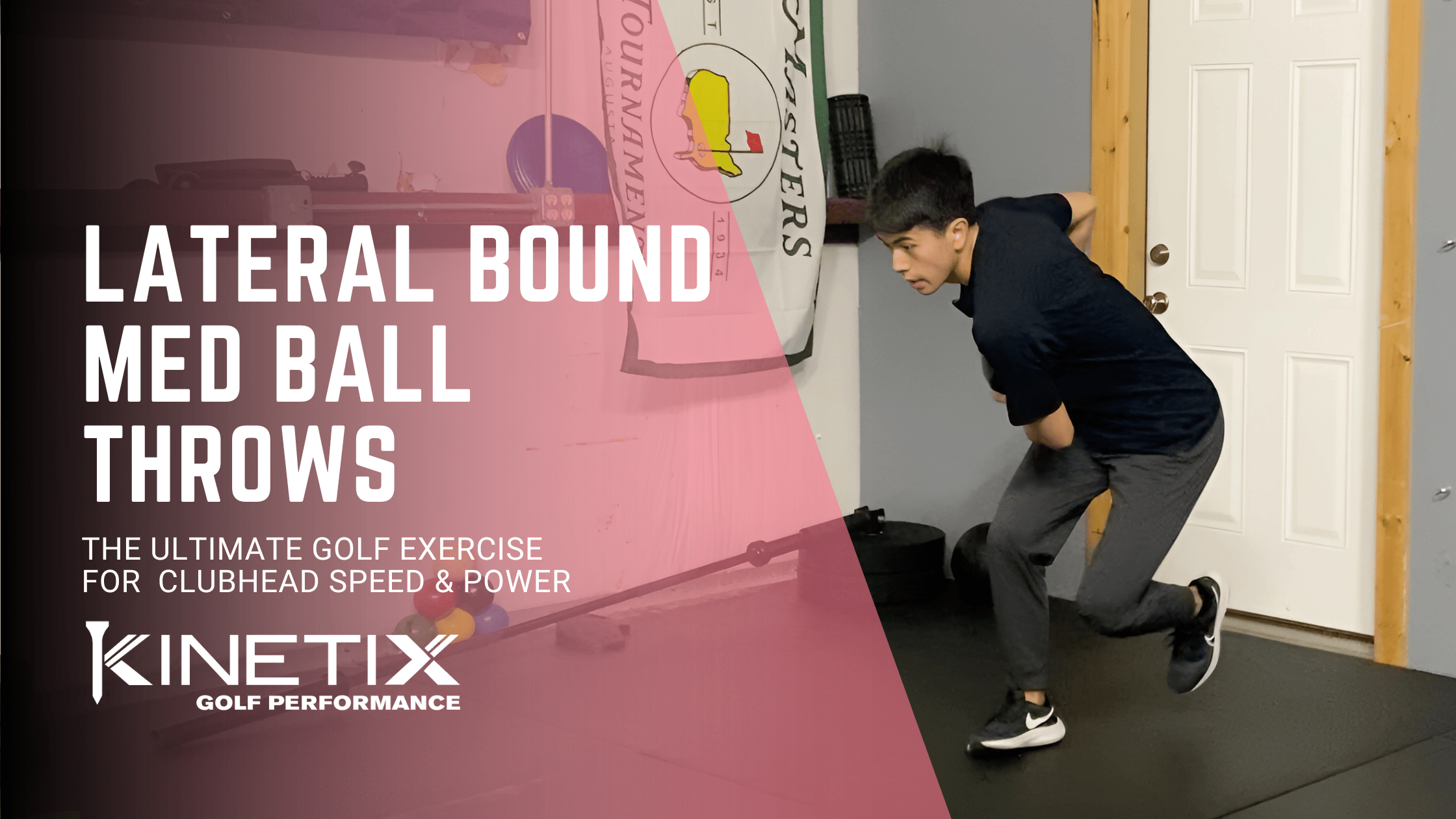
The lateral bounding with med ball throws is the ultimate golf exercises to develop speed, power while working on frontal plane stability

If you’re a golfer looking to unlock more power, generate higher clubhead speed, and finally translate your gym work to your swing, then the lateral bound to med ball throw is a go-to exercise you should not skip.

This powerful movement combines lower-body explosiveness, core rotation, and upper-body force production, mimicking the exact kinetic sequence of the golf swing—especially that crucial moment of transitioning power from the trail side to the lead side.


What Is the Lateral Bound to Med Ball Throw?

This exercise blends a frontal-plane power movement (lateral bound) with a rotational power output (med ball throw). You start by loading your trail leg, perform a lateral jump toward your lead side, and immediately deliver an explosive med ball throw into a wall (or to a partner). Think of it as a progression of the med ball shot put, but with increased speed and load transfer from the ground up.


Why Golfers Should Use It

✅ Replicates Golf Swing Kinetics
You load the trail side, transfer force to the lead side, and rotate the upper body—all fundamental to a powerful golf swing.

✅ Boosts Clubhead Speed
This explosive drill trains your body to use ground reaction forces more effectively, leading to increased swing velocity and ball striking power.

✅ Improves Lower-Body Power & Stability
The lateral bound challenges frontal plane stability and develops the glutes, adductors, and stabilizers necessary to support a dynamic golf swing.

✅ Engages the Core in Rotation
Because you’re throwing rotationally, you’re building core strength and rotational acceleration, helping your body move as one cohesive unit.


How to Do It (Form Tips)

  1. Start in an athletic stance, holding a light-to-medium med ball at chest level.
  2. Load into your trail leg, bending slightly at the hip and knee.
  3. Explosively bound laterally to your lead leg while maintaining posture.
  4. As you land, use that momentum to rotate through your core and upper body.
  5. Throw the med ball into the wall as powerfully and accurately as possible.
  6. Reset and repeat for 4–6 reps per side.

Programming Tip for Golfers

  • Use this drill 2x per week during power training phases.
  • Perform it after a dynamic warm-up but before heavy lifting.
  • Pair with landmine rotational press or medicine ball slams for full rotational training.

Golf Swing Translation: How It Helps

This drill teaches your body to:

  • Load your trail hip (crucial for coil and power storage)
  • Explode through the lead leg (mimicking downswing dynamics)
  • Transfer rotational energy efficiently through your torso and into your arms
  • Decelerate and stabilize your finish (reducing injury risk)

Common Mistakes to Avoid

🚫 Landing stiff without absorbing force
🚫 Rotating from the arms instead of the hips and core
🚫 Rushing the movement without balance or control


Takeaway: Power Your Swing from the Ground Up

The Lateral Bound to Med Ball Throw isn’t just a flashy drill—it’s a targeted power exercise rooted in biomechanics that helps golfers of all levels become more explosive and consistent. It’s ideal for golfers who are serious about increasing their clubhead speed, improving ground force production, and building a smoother, more powerful swing.


Learn More:


Ready to unlock next-level performance?

This exercise is just one of the dozens of targeted golf exercises in our PinSeeker Performance Program—a 6-week, lifetime-access golf workout program designed to build mobility, strength, and power exactly where you need it.

🏌️‍♂️ Swing with more rotation and less pain
🏋️‍♀️ Improve strength, flexibility, and balance
⛳️ Play more consistently, regardless of age or experience

✅ One-time purchase
✅ Lifetime access
✅ Golf-Specific workouts you can do anywhere

Train smarter, swing stronger, and see real gains on the course with PinSeeker!
our 6-week pinseeker performance program is the best online golf fitness program