Posted on — Leave a comment

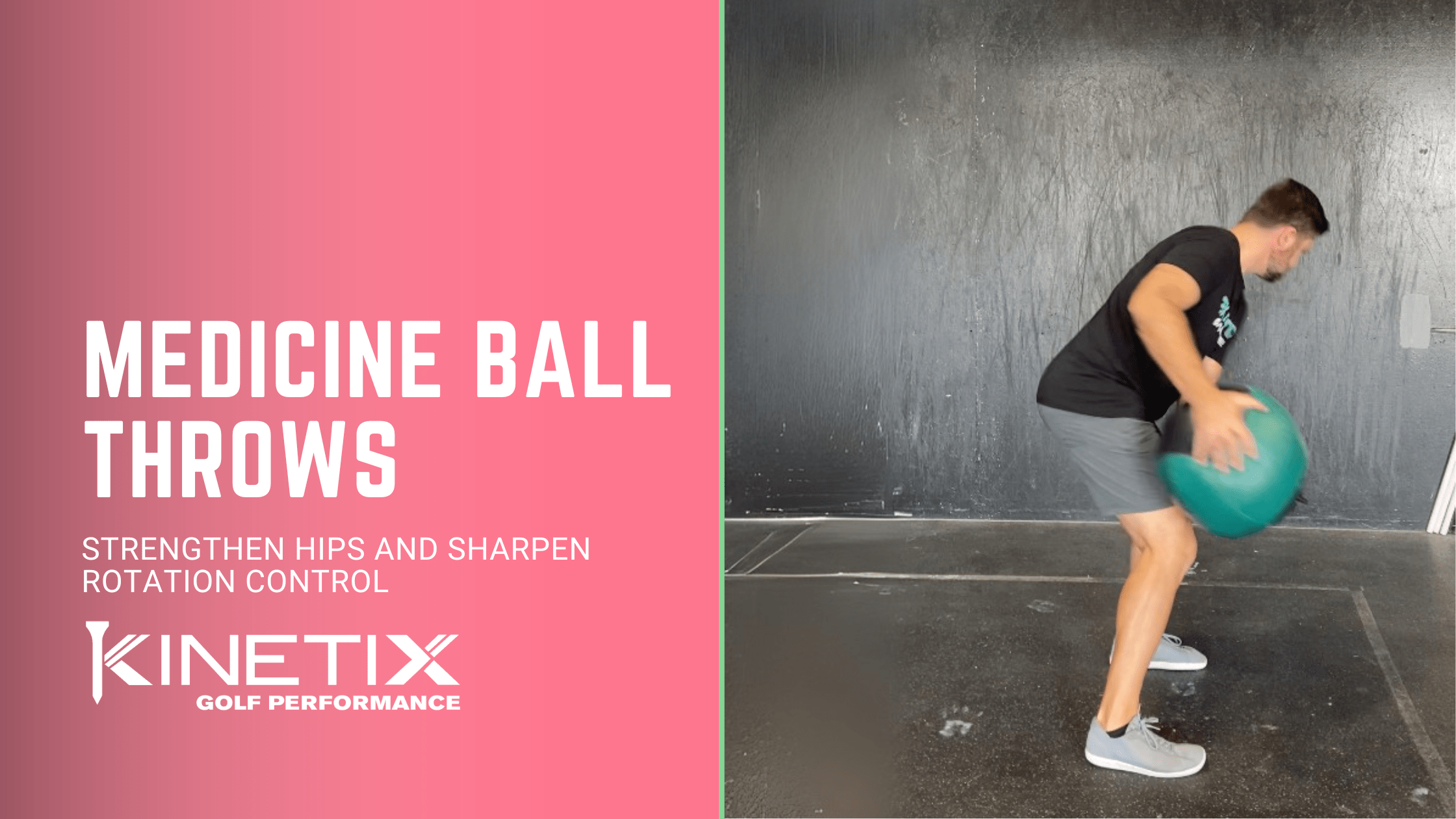
Medicine Ball Throws for Golf | Boost Swing Speed & Power

Med ball throws are some of the best drills for explosive power in your golf swing.

Why Medicine Ball Throws Belong in Every Golfer’s Speed & Power Routine

If you want to add real clubhead speed and distance to your drives, you must train the same ballistic force and multi-planar stability your swing demands. Medicine ball throws—specifically wall ball throws—deliver explosive training in both the front plane (stabilizing against lateral forces) and the transverse plane (rotational power). This translates directly to faster, more powerful swings on the course.


The Science: Ballistic Training + Transfer to the Golf Swing

  • Rate of Force Development (RFD):
    Medicine ball throws force your body to generate maximal power in milliseconds. The faster you can activate muscle fibers, the greater your RFD—a crucial factor for increasing clubhead speed.
  • Front Plane Stability:
    Facing the wall, you must absorb and counter the ball’s impact with your arms and core—building stability through your shoulders, trunk, and hips. Improved resistance to lateral forces helps maintain posture in your swing under load.
  • Transverse Plane Rotation:
    As you twist and release the ball, you train the same hip-to-shoulder torque used in your backswing and downswing. This rotational strength and timing carry over to more efficient torque transfer into the club.

How to Perform Medicine Ball Wall Throws for Golfers

Equipment & Setup

  • Medicine Ball: 6–10 lbs (start lighter if new to explosive throws)
  • Wall Space: Find a sturdy, flat wall with about 6–8 feet of clearance.
  • Feet Position: Stand about 3–4 feet from the wall in an athletic, golf-stance position.

Execution Steps

  1. Athletic Ready Position:
    • Feet roughly shoulder-width, toes pointing forward or slightly flared (depending on comfort).
    • Knees soft, hips hinged, chest upright, and core braced.
  2. Load & Coiling:
    • Hold the medicine ball at chest height with both hands, elbows tucked in.
    • Rotate your torso slightly away from the wall—coil through your hips (trail hip loading) while maintaining a stable front leg.
  3. Explosive Release:
    • Explode through your hips and core, rotating toward the wall.
    • Extend your arms and slam the ball against the wall with maximal intent, finishing with locked-out arms and solid core bracing.
    • Imagine “throwing the club” in a rotational path, not just an overhead press.
  4. Catch & Reset:
    • Quickly catch or retrieve the rebounding ball.
    • Immediately reload for the next rep, limiting ground contact time to maintain ballistic intent.
  5. Reps & Sets:
    • Perform 3–4 sets of 6–8 throws per side, alternating lead leg stance if desired (e.g., right foot forward for right-handed throw, then switch).

Coaching Tips

  • Minimal Arm Bend: Keep elbows tucked to emphasize core and hip drive.
  • Controlled Landing: Don’t overreach; catch the ball without lunging.
  • Spinal Alignment: Maintain a neutral spine—avoid excessive extension or flexion.
  • Full Hip Extension: Drive through the front glute and leg to simulate impact-phase power.

How This Boosts Your Golf Swing

  1. Explosive Hip Drive: Medicine ball throws reinforce the hip-hinge-to-rotation sequence, improving your ability to fire from the ground up.
  2. Core Stabilization: Constant deceleration of the rebounding ball trains your obliques, transverse abdominals, and spinal erectors to resist unwanted rotation and maintain posture.
  3. Transfer of Torque: By rotating against resistance, you teach your body to maximize torque in the same plane as your backswing and downswing.
  4. Speed Endurance: Repetitive ballistic throws build the local muscular endurance needed to maintain swing speed through 18 holes.

Integrate Wall Ball Throws into Your Golf Program

  • Warm-Up: Light throws (4–6 reps) after dynamic hip and thoracic mobility drills.
  • Power Training Days: Use as a primary rotational power drill, pairing with kettlebell swings or jump squats in contrast circuits.
  • Pre-Round Prep: 2–3 ballistic throws to prime your core and shoulders for on-course rotational demands.

Ready To Level Up Your Golf Game?

Elevate your training—unlock your explosive golf potential. Incorporate medicine ball throws into your workouts and experience a faster, more powerful swing.

This exercise is just one of the dozens of targeted golf exercises in our PinSeeker Performance Program—a 6-week, lifetime-access golf workout program designed to build mobility, strength, and power exactly where you need it.

🏌️‍♂️ Swing with more rotation and less pain
🏋️‍♀️ Improve strength, flexibility, and balance
⛳️ Play more consistently, regardless of age or experience

✅ One-time purchase
✅ Lifetime access
✅ Golf-Specific workouts you can do anywhere

Train smarter, swing stronger, and see real gains on the course with PinSeeker!

our 6-week pinseeker performance program is the best online golf fitness program

Posted on — Leave a comment

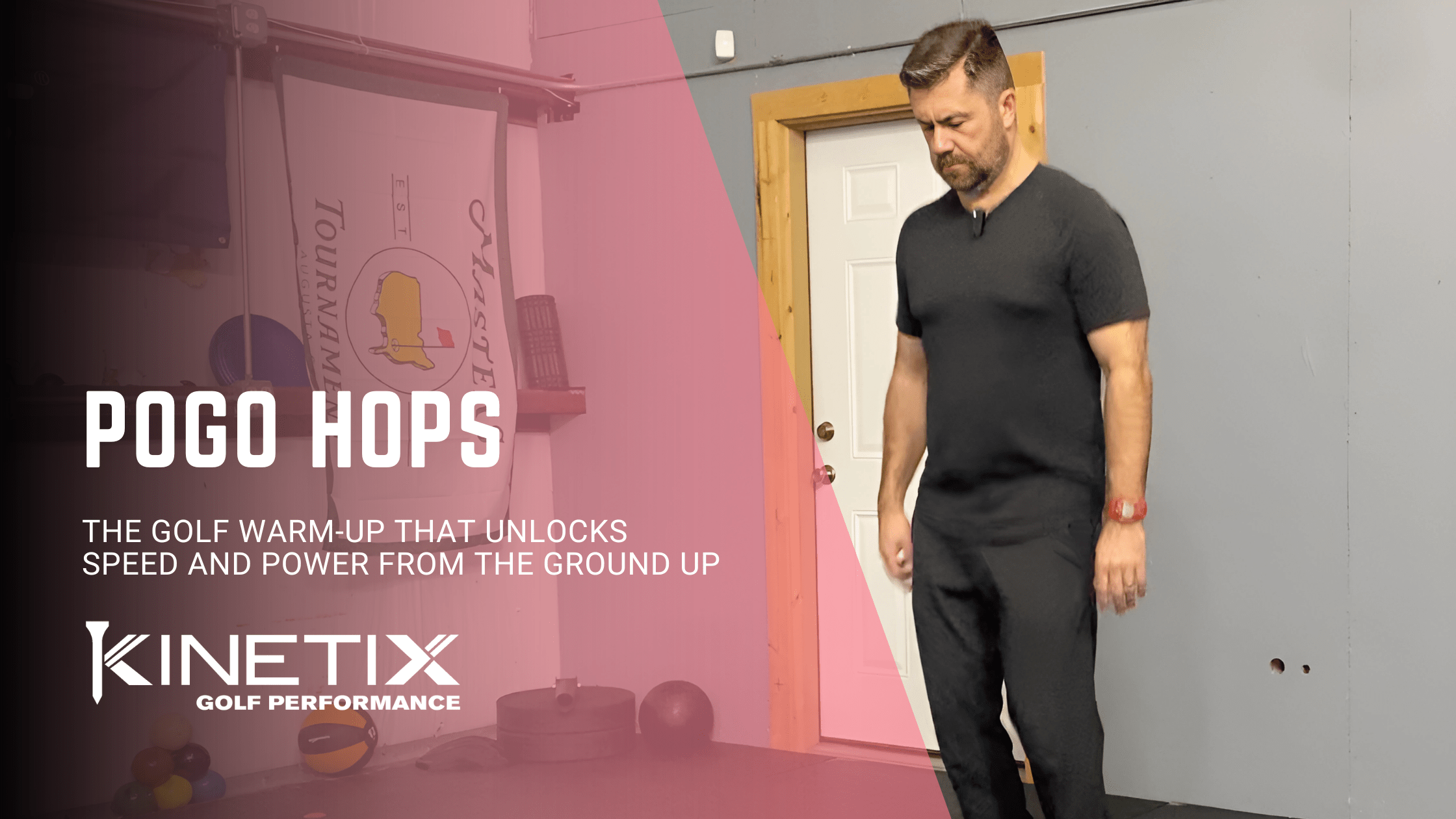
POGO Hops: The Golf Warm-Up That Unlocks Speed and Power from the Ground Up

Golfer performing POGO hops exercise to improve ankle mobility and explosive power for golf swing speed

One of the most underrated drivers of power in your golf swing? Your ankles.

That’s right. Whether you’re hitting a drive off the tee or launching your irons down the fairway, ground reaction force—starting from the feet and ankles—is what allows the rest of your kinetic chain to fire.

That’s where POGO hops come in.

This simple plyometric warm-up drill helps golfers prime their ankle mobility and explosiveness, preparing the body for high-speed rotational movement. Used in our A Block programming on speed and power days, POGO hops are a go-to tool for building a more athletic and responsive swing.


Why POGO Hops Matter in Golf Training

Many golfers think power only comes from the hips and shoulders. While that’s partially true, the vertical component of your swing has a direct relationship with vertical jump output. Studies show that better vertical force production often correlates with increased clubhead speed.

POGO hops:

  • Improve ankle dorsiflexion and plantar flexion
  • Activate the stretch-shortening cycle used in ballistic movements
  • Train soft landing mechanics and deceleration control
  • Prime reactive strength in the calves and Achilles
  • Warm up the feet, ankles, and lower legs in preparation for higher-intensity efforts

This makes them ideal in any golfer’s dynamic warm-up—especially before training rotational power or going through high-speed swing drills.


How to Perform POGO Hops for Golf Warm-Ups

No equipment is required. You just need your body and a little space.

Step-by-Step Instructions:

  1. Stand tall with feet hip-width apart
  2. Arms at your side or slightly bent at 90 degrees for rhythm
  3. Perform small, quick vertical hops on the balls of your feet
  4. Focus on minimal ground contact time and light, springy landings
  5. Keep knees relatively straight—movement comes from ankle flexion and extension
  6. Land softly and recoil immediately upward
  7. Perform for 15–20 seconds, rest, repeat for 2–3 rounds

What Makes POGO Hops Effective for Golfers?

POGO hops develop the ankle stiffness and elasticity needed to transfer force from the ground through your legs and torso. This elastic recoil mirrors what happens during a powerful swing sequence where you push into the ground to create rotation and speed.

Benefits include:

  • Increased vertical force development
  • Enhanced ankle joint mobility and elasticity
  • Improved reactive neuromuscular timing
  • Better swing sequencing through ground-up mechanics
  • Reduced risk of ankle and calf strains during golf or speed training

When to Program POGO Hops in Your Golf Training

These belong in your A Block warm-up phase on speed/power training days—particularly if you’ll be doing:

Want to create a complete warm-up circuit? Pair POGO hops with:


Conclusion: Jumpstart Your Golf Swing with POGO Hops

If you want a more explosive swing, it starts with your feet.

POGO hops are a simple but highly effective drill that prepares your ankles, calves, and nervous system for the high-speed demands of your golf swing. Integrate them into your warm-up and you’ll notice better mobility, improved loading mechanics, and faster swing speeds.


Train Like an Athlete. Play Like a Pro.

Join Kinetix Golf Performance and access our golf-specific warm-ups, mobility plans, and full-body workouts designed for speed, power, and longevity on the course.

This exercise is just one of the dozens of targeted golf exercises in our PinSeeker Performance Program—a 6-week, lifetime-access golf workout program designed to build mobility, strength, and power exactly where you need it.

🏌️‍♂️ Swing with more rotation and less pain
🏋️‍♀️ Improve strength, flexibility, and balance
⛳️ Play more consistently, regardless of age or experience

✅ One-time purchase
✅ Lifetime access
✅ Golf-Specific workouts you can do anywhere

Train smarter, swing stronger, and see real gains on the course with PinSeeker!
our 6-week pinseeker performance program is the best online golf fitness program

Posted on — Leave a comment

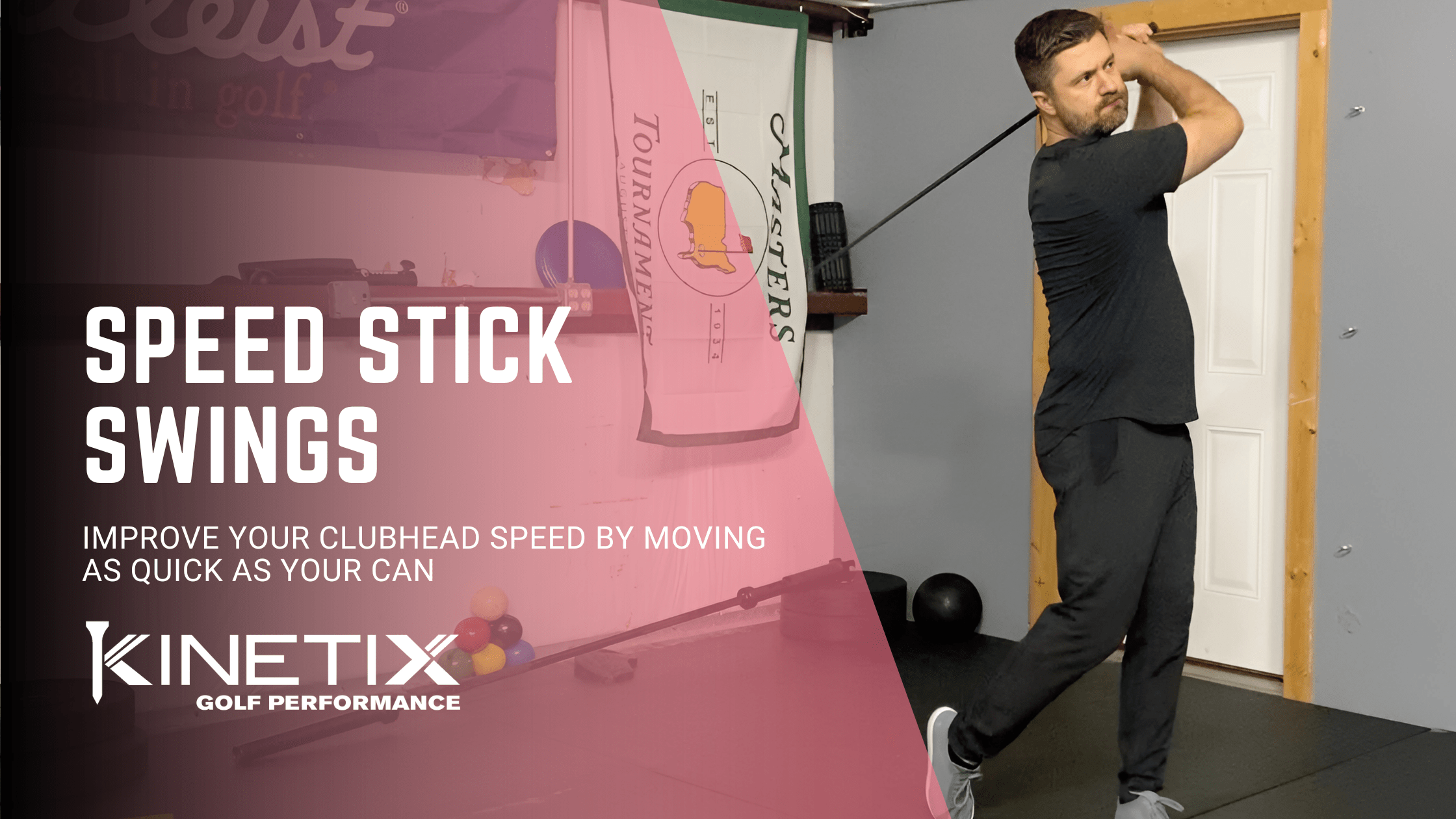
Stick Swings for Golf Swing Speed | Increase Swing Speed Fast

the speed stick drills is a great golf exercise to help improve your overall clubhead speed.

Why Stick Swings Might Be the Best Kept Secret in Golf Speed Training

If you’re trying to swing faster, hit the ball farther, and get more out of your body—without fancy equipment or heavy weights—then you need to be doing stick swings. This ultra-simple, high-speed drill uses nothing more than a club shaft (or alignment stick) to train your central nervous system to fire at higher speeds, engage the lower body, and improve swing sequencing.


The Science Behind Stick Swings

  • Overspeed Training:
    Using a lighter object (like a bare club shaft) lets your body move faster than normal, helping you rewire your neuromuscular system to access more speed during your actual golf swing.
  • Deceleration Training:
    Swinging opposite handed and in reverse direction works the braking system of your swing—your obliques, glutes, and posterior stabilizers—teaching your body how to slow down safely after fast rotational movement. The better you can decelerate, the more confidently you can accelerate.
  • Ground Reaction Force:
    Adding shuffle steps or progressive footwork teaches your legs to generate force from the ground up, giving your upper body more to work with in the swing.

How to Perform Stick Swings for Speed Training

Equipment:

  • A golf shaft with no head, alignment stick, or speed training stick (SuperSpeed, etc.)

Phase 1: Dominant Side Swings

  • Take your normal grip and swing as fast as possible.
  • Keep it safe but intentional—this isn’t about mechanics, it’s about speed.
  • Do 3 sets of 5–6 swings at maximum effort.

Phase 2: Reverse Swings

  • Same stance and grip, but swing in the reverse direction (backswing becomes downswing).
  • This targets rotational stability and deceleration control.
  • Perform 2–3 sets of 5 reps.

Phase 3: Opposite-Handed Swings

  • Switch to a left-handed stance (if you’re a righty) or vice versa.
  • Swing as fast as possible from the non-dominant side.
  • This challenges your coordination and targets the muscles responsible for slowing your real swing.
  • Do 3 sets of 5 reps.

Phase 4: Shuffle Step Progression

  • Add in a small shuffle or step into the swing to simulate using lower body momentum.
  • This helps develop rotational sequencing, timing, and ground force production.
  • Alternate between dominant and non-dominant sides.

Programming Tips

  • Perform 2–3x per week on non-lifting days or before skill sessions.
  • Always perform these before hitting golf balls to maximize CNS freshness.
  • Track your swing speed every few weeks using a launch monitor or radar to measure progress.

Benefits of Stick Swings for Golfers

  1. Increased Clubhead Speed
    Train your body to move faster with less resistance—just like sprinting uphill and then running downhill.
  2. Improved Sequencing
    Your lower half leads the movement; your torso and arms follow. Shuffle swings reinforce kinetic chain timing.
  3. Enhanced Stability
    By working your decelerators (in reverse and opposite swings), you become more stable, which helps prevent injury and swing breakdown.
  4. Greater Mobility & Control
    Fast, full-range swings help you gain comfort in end-range rotational positions—key for players with stiffness or mobility restrictions.
  5. Budget-Friendly & Accessible
    You don’t need a gym or trainer. Just a stick and some space—indoors or outdoors.

Bonus Insight: Why Opposite Side Work Matters

Your swing is only as strong as your body’s ability to decelerate and control force. By training the opposite side of your body, you’re:

  • Balancing muscle development (reducing injury risk)
  • Reinforcing rotational control
  • Teaching your nervous system to trust higher speeds

This is especially helpful for players recovering from injury or working through compensations and imbalances.

This exercise is just one of the dozens of targeted golf exercises in our PinSeeker Performance Program—a 6-week, lifetime-access golf workout program designed to build mobility, strength, and power exactly where you need it.

🏌️‍♂️ Swing with more rotation and less pain
🏋️‍♀️ Improve strength, flexibility, and balance
⛳️ Play more consistently, regardless of age or experience

✅ One-time purchase
✅ Lifetime access
✅ Golf-Specific workouts you can do anywhere

Train smarter, swing stronger, and see real gains on the course with PinSeeker!
our 6-week pinseeker performance program is the best online golf fitness program

Posted on — Leave a comment

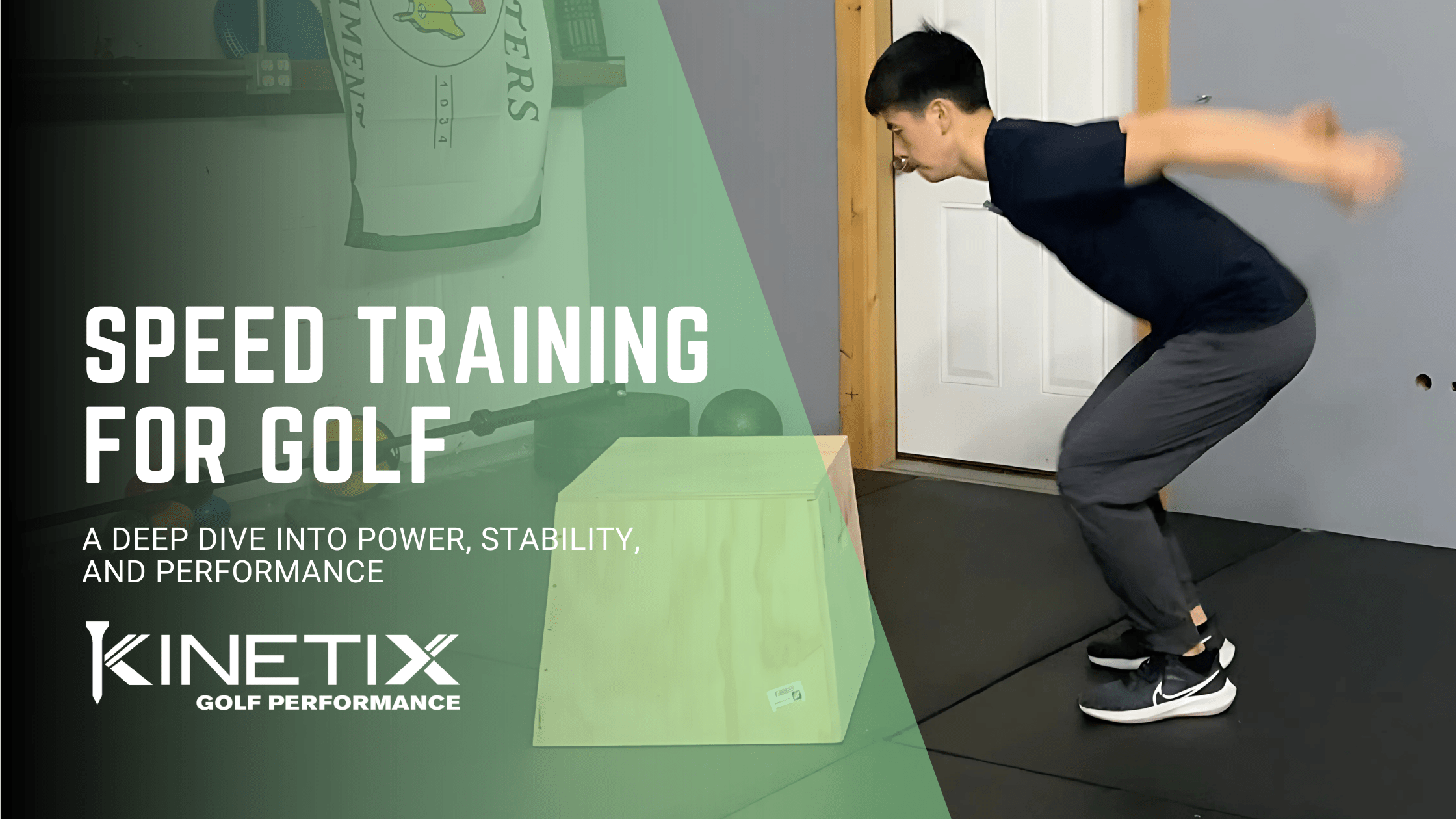
What Is Speed Training in Golf? A Deep Dive into Power, Stability, and Performance

We answer the question what is speed training for golf?

Golf isn’t just about finesse—it’s about speed, sequencing, and power. One of the most common goals among amateur and professional golfers alike is to increase clubhead speed to gain more distance off the tee. But what is speed training in golf, and how do you train for it safely and effectively?

Let’s break it down from a biomechanics and performance training perspective, so you understand how to apply these principles to your own golf fitness program.


What Is Speed Training in Golf?

Speed training in golf is the process of improving your body’s ability to produce force quickly and efficiently through the golf swing. It’s not just swinging harder—it’s about improving the sequence of movement, neuromuscular efficiency, and the body’s capacity to accelerate and decelerate.

When done correctly, speed training leads to:

  • Higher clubhead speed
  • Greater ball speed
  • Increased driving distance
  • Better rotational efficiency
  • More consistent and powerful swings

Speed Comes from the Body, Not Just the Club

Before focusing on overspeed training tools or fancy gadgets, you must first understand the source of speed: your body. A fast, powerful swing is the result of stable segments working with mobile ones in perfect sequence. This is often referred to as the Joint-by-Joint Approach:

Body RegionFunction
FeetStable
AnklesMobile
KneesStable
HipsMobile
Low Back/CoreStable
Thoracic SpineMobile
Scapulae (Shoulder Blades)Stable
Shoulder (GH Joint)Mobile
ElbowsStable
WristsMobile
Hands/FingersStable

If you skip over foundational stability and rush into aggressive swinging drills, you’re likely to build dysfunction instead of speed.


Principles of Speed Training for Golf

Here are four key pillars we use when programming speed development into our online golf performance programs:

1. Build Stability First (Core & Glutes)

You can’t generate power from a shaky base. Start by building core strength and glute strength to provide your upper body with a strong platform to push and rotate from. Think of these areas as your engine block—they must hold strong under pressure.

2. Train the Brakes (Deceleration Muscles)

“The body will only move as fast as it knows it can slow down.”
Training muscles like the hamstrings, lats, and obliques to decelerate rotational or jumping movements gives the brain permission to move faster. This is how you unlock new speed ceilings.

Drills like:

  • Lateral bounds with controlled landings
  • Med ball slams with forced eccentric stops
  • Rotational landmine pulls with deceleration holds

…all develop this essential control.

3. Move Fast Under Load

Don’t fall into the trap of only lifting heavy and slow. While strength is essential, speed is velocity-specific—meaning you have to train it directly. Whether it’s trap bar jumps, sled sprints, or med ball throws, we use ballistic training principles to move explosively under controlled resistance.

This builds what we call your ballistic threshold—your body’s ability to produce force quickly while maintaining coordination.

4. Contrast Training Is Key

Contrast training pairs strength movements with speed-based drills. For example:

  • Heavy trap bar deadlift → Vertical jump
  • Half-kneeling cable press → Rotational med ball throw
  • Goblet squat → Band-assisted squat jumps

This combination teaches the nervous system to fire faster and apply max force in sport-specific contexts.


Speed Training for Golfers of All Ages

Whether you’re a competitive golfer looking to break 80 or a senior golfer trying to maintain distance, speed training is scalable.

  • Younger golfers: Can handle higher loads and ballistic movements
  • Senior golfers: Focus more on deceleration control, stability, and light-speed drills

No matter your age, the concept is the same—train mobility where needed, build stability in key regions, and develop speed safely through consistent, progressive programming.


Speed Is a Skill—Train It Like One

Speed training isn’t about maxing out one drill or chasing launch monitor metrics. It’s about improving the way your body moves—from the ground up—so it can deliver effortless power through the golf swing.

At Kinetix Golf Performance, our speed training systems are built on these foundations. If you’re ready to gain distance, swing faster, and feel more powerful, it starts with moving better.

This exercise is just one of the dozens of targeted golf exercises in our PinSeeker Performance Program—a 6-week, lifetime-access golf workout program designed to build mobility, strength, and power exactly where you need it.

🏌️‍♂️ Swing with more rotation and less pain
🏋️‍♀️ Improve strength, flexibility, and balance
⛳️ Play more consistently, regardless of age or experience

✅ One-time purchase
✅ Lifetime access
✅ Golf-Specific workouts you can do anywhere

Train smarter, swing stronger, and see real gains on the course with PinSeeker!
our 6-week pinseeker performance program is the best online golf fitness program

Posted on — Leave a comment

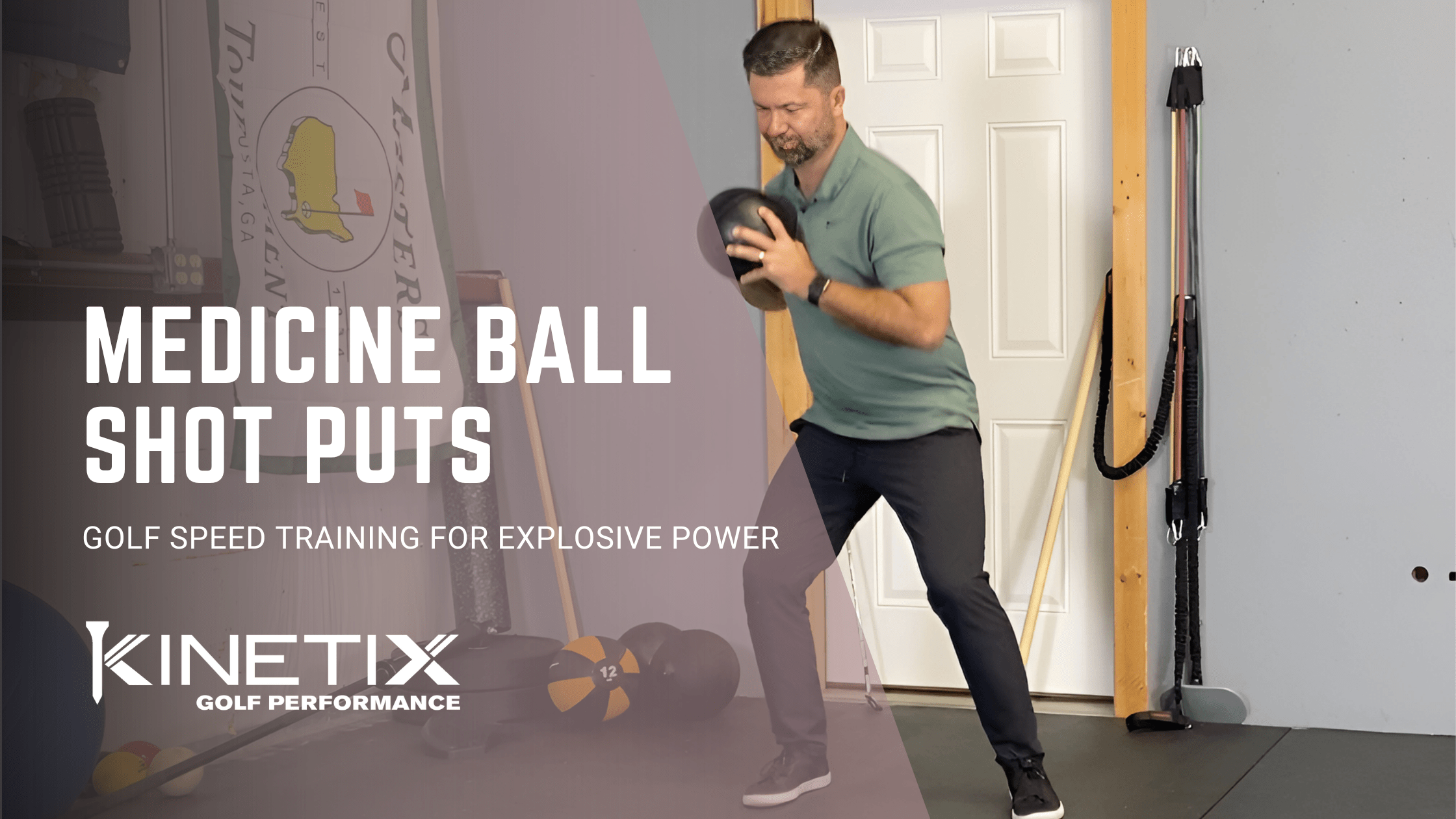
Golf Speed Training: Med Ball Shot Put for Explosive Swing Power

medicine ball shot put throws are a great golf exercise to develop explosive power in your golf swing.

Why Med Ball Shot Puts Are a Must for Golfers

Adding distance to your drives isn’t just about strength—it’s about explosive power and rate of force development (RFD). The medicine ball shot put is a ballistic, upper-body dominant drill that trains your core, shoulders, and hips to fire in unison—mimicking the acceleration and release phases of your golf swing.

Key benefits for golfers:

  • Rotational Power: Trains you to generate torque through the hips and transfer it up through the torso and arms.
  • Explosive Upper-Body Drive: Develops rapid shoulder extension and core bracing for a stronger finish.
  • Sequencing & Timing: Reinforces the ground-to-hands power chain in one fluid movement.

How to Perform the Medicine Ball Shot Put

  1. Stance & Setup
    • Stand with feet hip-width apart, knees slightly bent, and toes pointed forward.
    • Hold a medicine ball (6–10 lbs) at chest height with both hands.
  2. Loading Phase
    • Coil your torso away from your target side, shifting weight onto your back leg.
    • Keep your front knee soft and core braced.
  3. Explosive Release
    • Drive through your hips toward the target, rotating your torso explosively.
    • “Put” (push) the ball forward and slightly upward, extending the arms fully at the end.
  4. Catch & Reset
    • Let the ball land or catch it on the rebound.
    • Reset your posture and repeat for 3–4 sets of 6–8 reps per side, resting 60 sec between sets.

Form Tips:

  • Fast Intent: Think “push the ball as hard as you can,” focusing on speed, not load.
  • Full Extension: Finish with locked-out arms and a strong core brace with a forceful exhale of breathe through pierced lips.
  • Stable Base: Keep feet planted—force should come from hip drive, not leg push alone.

Integrating Shot Puts into Your Golf Workout

  • Warm-Up: Use light med ball throws to awaken your core and shoulders.
  • Main Power Circuit: Combine shot puts with kettlebell swings and banded rotational slams for a total-body power session.
  • Pre-Round Prep: 1–2 sets of med ball shot puts to prime your explosiveness before teeing off.

From Drill to Drive: Real Gains on the Course

Golfers who consistently train med ball shot puts report:

  • Increased clubhead speed (+5–10 mph common in 6–8 weeks)
  • Longer drives (10–25 extra yards)
  • Better transition control through impact
  • Reduced late-round fatigue due to improved muscular efficiency

Take Your Power Training Further

This exercise is just one of the dozens of targeted golf exercises in our PinSeeker Performance Program—a 6-week, lifetime-access golf workout program designed to build mobility, strength, and power exactly where you need it.

🏌️‍♂️ Swing with more rotation and less pain
🏋️‍♀️ Improve strength, flexibility, and balance
⛳️ Play more consistently, regardless of age or experience

✅ One-time purchase
✅ Lifetime access
✅ Golf-Specific workouts you can do anywhere

Train smarter, swing stronger, and see real gains on the course with PinSeeker!
our 6-week pinseeker performance program is the best online golf fitness program

Posted on — Leave a comment

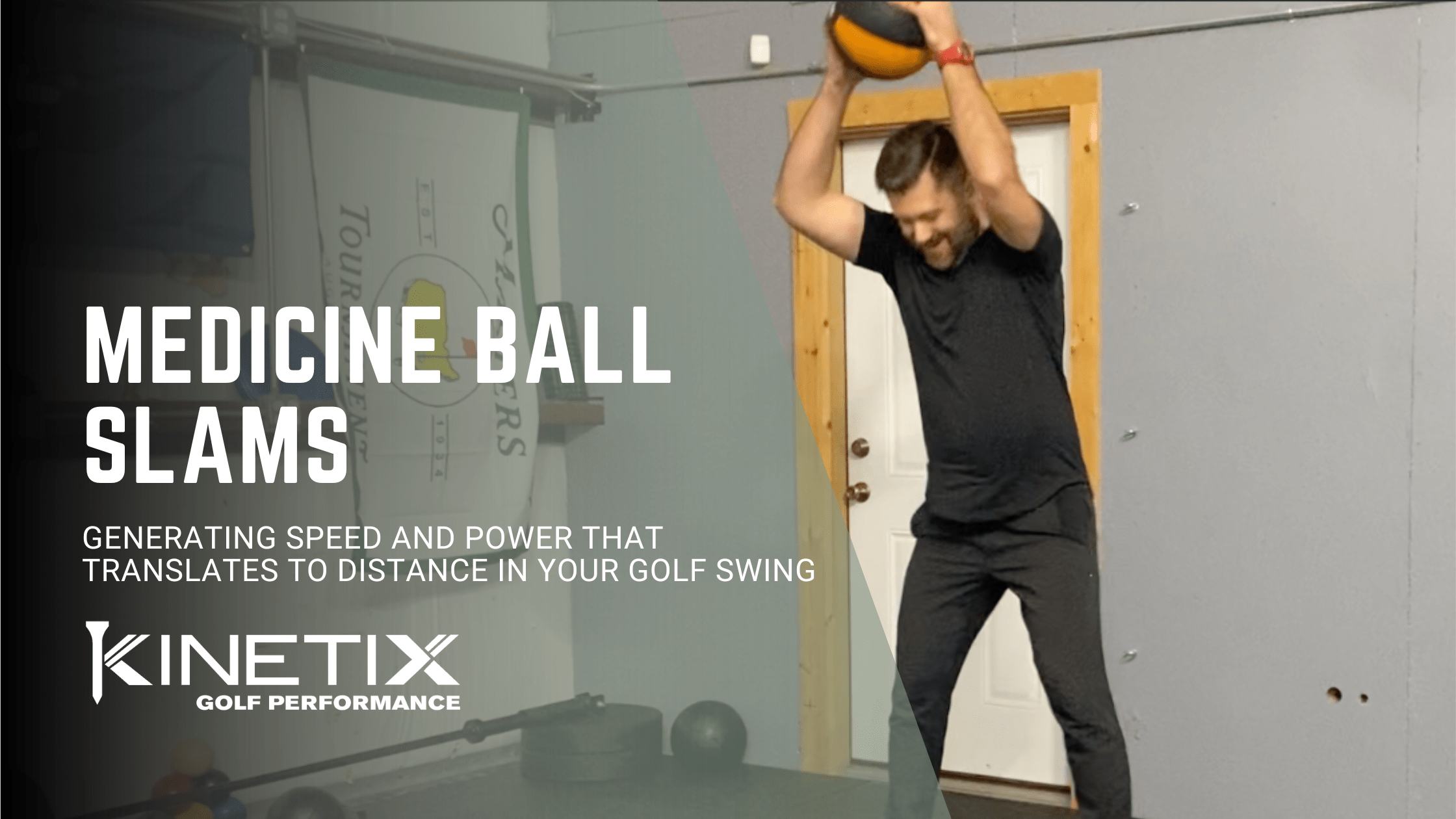
Golf Exercise for Swing Speed: Med Ball Slams from a Square Stance

med ball slams are a great golf exercises to develop power and speed in your golf swing.

✅ Unlock Explosive Power with Med Ball Slams from a Square Stance

If you want to add serious speed to your golf swing, your training needs to include exercises that develop rotational power, force transfer, and total-body explosiveness. One of the most effective and versatile tools for this purpose? A medicine ball.

Today’s featured exercise — the medicine ball slam from a square stance — trains the core, hips, and shoulders to fire together explosively, mimicking the dynamic force generation needed in your golf swing.

Whether you’re trying to break 90, break 80, or finally feel effortless clubhead speed off the tee, this drill will elevate your power potential.


🧠 Why It Works for Golfers

Golfers don’t just need strength — they need to generate it fast. This is called rate of force development (RFD), and med ball slams directly target this quality.

Training in a square stance ensures you:

  • Maximize vertical and rotational force
  • Engage both sides of your body symmetrically
  • Develop better ground reaction force and core-to-extremity sequencing

This is functional power you’ll feel on the course.


✅ How to Perform Med Ball Slams (Square Stance)

  1. Start in an athletic stance, feet shoulder-width apart, toes pointed forward.
  2. Hold a moderately weighted medicine ball (6–10 lbs) at chest or overhead level.
  3. With a tall spine and braced core, slam the ball down directly in front of you using your full body — hips, abs, and shoulders should all contribute.
  4. Catch or retrieve the ball, reset, and repeat.
  5. Perform 3–4 sets of 5–6 reps, focusing on maximum intent and speed.

Coaching Tips:

  • Think fast and violent, not just heavy.
  • Don’t let your knees collapse — keep the glutes active and knees tracking over the toes.
  • Exhale forcefully on the slam to engage your core and improve timing.

🔥 Pro Tip for Golfers

The golf swing is fast — so your training should be, too.

Med ball slams develop dynamic sequencing, where power starts from the ground, transfers through the hips and core, and finishes through the hands — just like your driver.

Done regularly, these slams can help increase clubhead speed, swing efficiency, and distance off the tee.


🚀 Start Your Golf Speed Training Today

This exercise is just one of the dozens of targeted golf exercises in our PinSeeker Performance Program—a 6-week, lifetime-access golf workout program designed to build mobility, strength, and power exactly where you need it.

🏌️‍♂️ Swing with more rotation and less pain
🏋️‍♀️ Improve strength, flexibility, and balance
⛳️ Play more consistently, regardless of age or experience

✅ One-time purchase
✅ Lifetime access
✅ Golf-Specific workouts you can do anywhere

Train smarter, swing stronger, and see real gains on the course with PinSeeker!
our 6-week pinseeker performance program is the best online golf fitness program