
Golf Swing Tightness? Start With the Adductors
One of the most overlooked muscle groups in golf mobility is the adductors — the inner thigh muscles that help stabilize the pelvis, control leg position, and influence hip movement.
When tight or restricted, they can significantly limit your ability to externally rotate the hips in the backswing and post and rotate through the lead leg in the downswing. This is where the Adductor Rock Back becomes a game-changing drill.
At Kinetix Golf Performance, we implement this movement in recovery blocks or mobility sessions to help golfers open up their hips, lengthen shortened tissues, and create the freedom they need for a smooth and powerful swing.
Why Adductors Matter in the Golf Swing
Let’s connect the anatomy to performance:
- During the backswing, your trail leg must externally rotate to load properly. Tight adductors restrict that range.
- In the downswing, your lead leg needs to internally rotate and post firmly to allow for proper pelvic rotation and energy transfer.
- Without good adductor length and control, you’ll either sway, slide, or stand up out of posture, killing your consistency and power.
What Are Adductor Rock Backs?
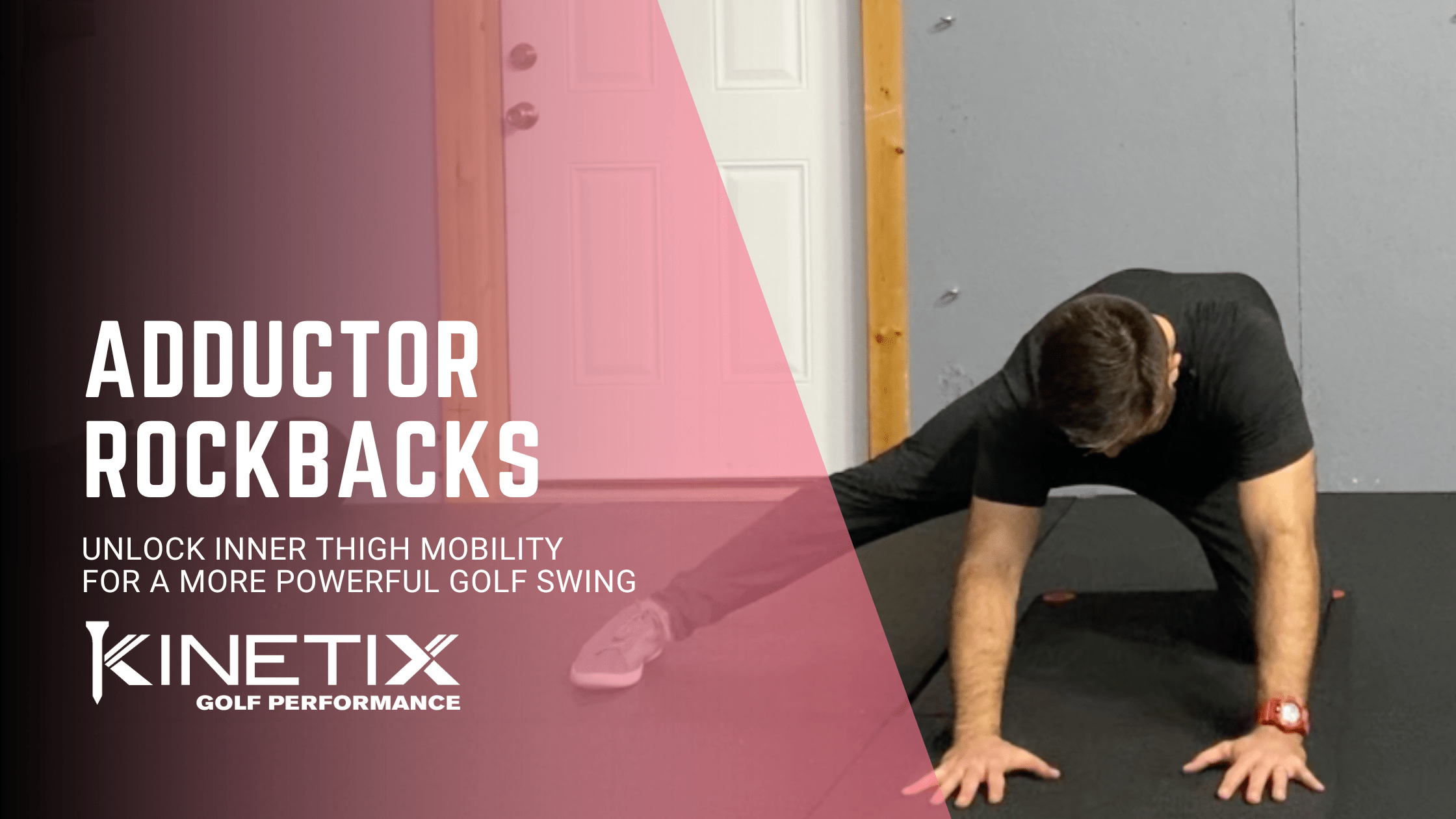
The Adductor Rock Back is a mobility-focused stretch that targets the inner thigh muscles by placing the hip into abduction and gently shifting backward to lengthen the adductors under active control.
It’s not just a static stretch — it’s a functional mobility drill that trains movement quality and teaches your body how to own these ranges of motion, especially when your swing demands it.
How to Perform the Adductor Rock Back
✅ Setup:
- Start in a quadruped (hands and knees) position on the ground
- Extend one leg straight out to the side, keeping the foot flat on the floor and toes facing forward
- Hands remain under shoulders, spine stays neutral (no arching or tucking)
✅ Movement:
- Inhale deeply to create intra-abdominal pressure
- Slowly rock your hips backward, like you’re sitting your butt toward your heel
- Feel the stretch through the inner thigh of the extended leg
- Return to the start and repeat with control
🔁 Perform 8–10 controlled reps per side
📌 Keep your tailbone neutral — cue your hips to push back like “reaching your back pockets away,” not tucking under
Why This Drill Is a Must for Golfers
🔹 Improves Hip External Rotation
Limited trail leg rotation in the backswing? Tight adductors might be the cause. This drill opens that space.
🔹 Aids Lead Leg Posting
In the downswing, a lack of internal rotation and lead hip stability often stems from adductor tension. Rock backs help mobilize and prep that tissue.
🔹 Restores Pelvis Neutrality
Tight adductors can pull the pelvis out of alignment, affecting posture and spinal mechanics — which trickles into inconsistent ball striking and lower back pain.
🔹 Reduces Compensations in Your Swing
By creating balance and mobility between the inner thigh and outer hip structures, you reduce sway, slide, and early extension.
Programming Tips
Use Adductor Rock Backs:
- In your movement prep block before a lower body day or golf practice
- On mobility or recovery-focused days
- Before swing sessions where you want to focus on hip rotation, trail leg loading, or lead leg posting
📌 Pair with:
- 90/90 shinbox with twists
- Cossack squats
- Assisted lateral lunges
For a full frontal-plane focused mobility session.
Pro Tip: Don’t Tuck the Tailbone
A common mistake with this drill is tucking the tailbone as you rock back, which reduces the stretch through the adductors and alters pelvic mechanics.
Instead, cue yourself to:
“Push your back pockets toward the wall behind you.”
This keeps the pelvis in neutral and allows a true stretch through the inner thigh, exactly where golfers need more freedom.
Stretch With Purpose, Swing With Power
Adductor Rock Backs are simple, effective, and highly transferable to your golf swing mechanics. Don’t underestimate the power of targeted mobility.
Golfers who build real mobility and control through the hips hit the ball more consistently, with less pain, and greater swing efficiency.
Ready to take your mobility training to the next level?
This exercise is just one of the dozens of targeted golf exercises in our PinSeeker Performance Program—a 6-week, lifetime-access golf workout program designed to build mobility, strength, and power exactly where you need it.
🏌️♂️ Swing with more rotation and less pain
🏋️♀️ Improve strength, flexibility, and balance
⛳️ Play more consistently, regardless of age or experience
✅ One-time purchase
✅ Lifetime access
✅ Golf-Specific workouts you can do anywhere
Train smarter, swing stronger, and see real gains on the course with PinSeeker!
