Posted on — Leave a comment

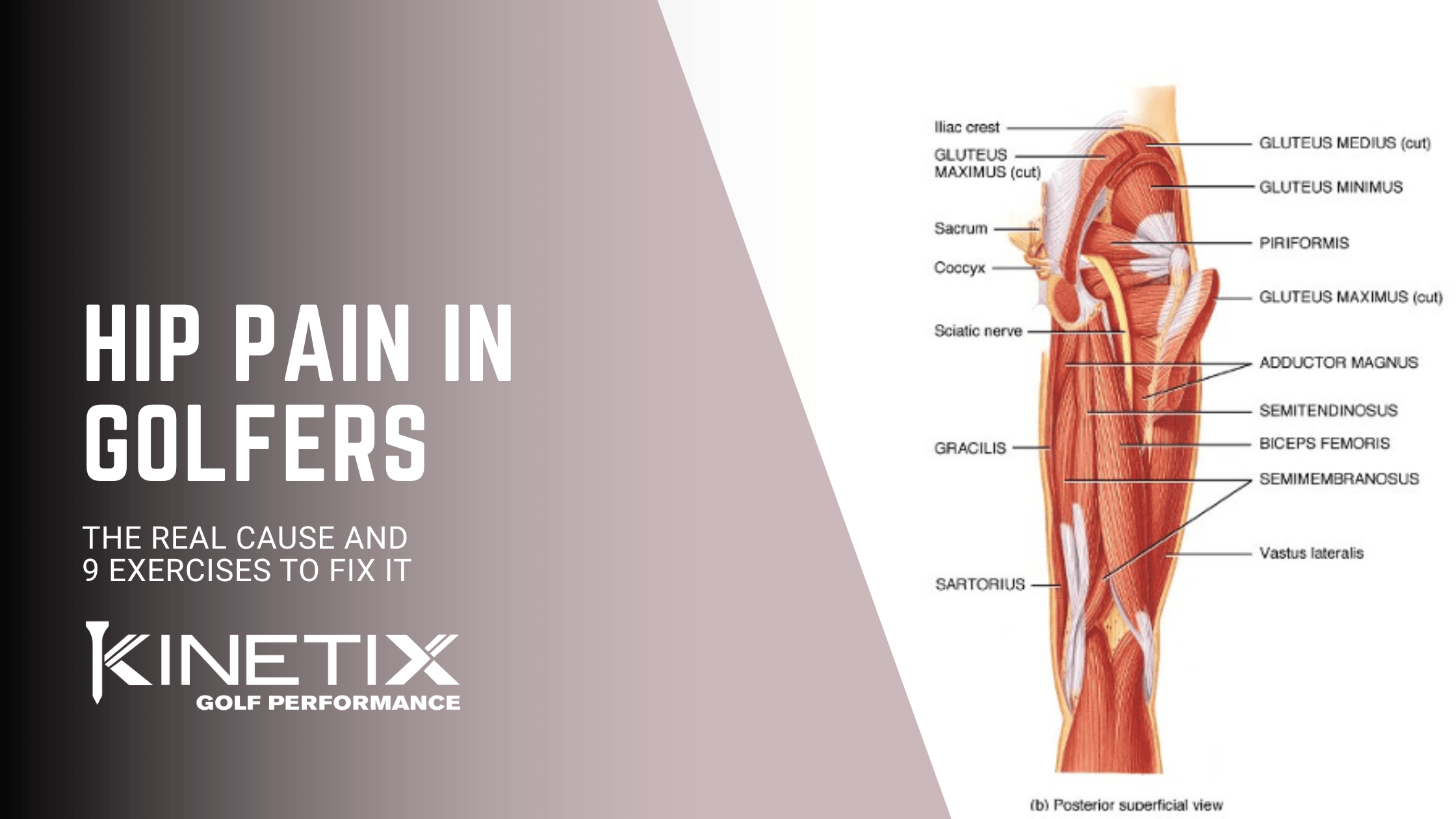
Hip Pain in Golfers: The Real Cause (and 9 Exercises to Fix It)

Hip pain is a major cause of golf injuries that lead to low back pain. learn 9 exercises to help build mobility in your hips for golf.

Why Hip Pain is So Common in Golfers

Whether you’re a weekend warrior or a single-digit handicapper, hip pain can silently wreck your golf swing. The hip joint is meant to rotate, stabilize, and transfer energy between the ground and your torso. But when either internal rotation (IR) or external rotation (ER) becomes restricted—as it often does in golfers—it creates tension, torque, and pain.

Tight hips don’t just limit range of motion, they force your body to compensate elsewhere. And one of the biggest culprits? A lack of foot stability.


Poor Foot Stability = Locked-Down Hips

Your hips want to be mobile—but if your feet are unstable, the body prioritizes safety over performance. That means the hips will lock down to absorb instability, sacrificing rotation and setting the stage for pain.

Translation?

  • If your arches collapse, your hips tighten.
  • If your weight shifts poorly, your hips pay the price.
  • If your feet can’t grip the ground, your hips overwork to stabilize your swing.

It’s a chain reaction—one we can interrupt with smart, targeted exercises.


Top Exercises to Reduce Hip Pain & Improve Golf Swing Mobility

These hip exercises are not just great for pain relief, they’re vital for unlocking rotation, improving hip stability, and enhancing ground force production in your golf swing.

Each of these can be used as standalone drills or integrated into your warm-ups, cool-downs, or corrective sessions. Wherever possible, we’ll link back to dedicated blog posts that explain each one in more detail (recommended for SEO).


1. Hip CARs (Controlled Articular Rotations)

A staple for improving hip joint control, CARs isolate pure rotation and highlight asymmetries in internal and external rotation.

👉 Learn how to properly perform Hip CARs here (link to future or existing CARs blog)


2. 90/90 Hip Flow Series

This includes:

  • 90/90 Get Ups
  • 90/90 with Twist
  • 90/90/90 Oblique Stretch

These drills target both passive and active hip mobility, lengthening tight tissues while training the brain to access those ranges under control.

👉 See our full 90/90 hip mobility guide


3. Side Bridges

Side bridges (or side planks) build lateral hip stability, especially in the glute med, which is essential for weight shift and pelvic control.

See our golf-specific side bridge progression


4. Heel-Elevated Deep Squats

Elevating the heels allows for deeper hip and knee flexion while minimizing ankle mobility limitations. It’s a great way to decompress tight hips and improve anterior pelvic tilt control.

👉 Try this drill with breath work: Heel Elevated Squats


5. Hip Airplanes

These are essential for teaching the body to control hip rotation under load. They reinforce both IR and ER while building balance and proprioception.

👉 Our full guide on Hip Airplanes for Golfers


6. World’s Greatest Stretch to Downward Dog to Spiderman

A compound mobility sequence that hits the hips, hamstrings, thoracic spine, and calves—perfect for full-body integration before your round.

👉 See how to use this in your golf warm-up routine


7. Foam Rolling for the Hips & TFL

Before stretching, release tension in the hip flexors, TFL, and glutes using a foam roller. This preps your tissue for movement.

👉 Check out our Foam Rolling for Golfers guide


8. Adductor Rock-Backs

These target the inner thigh and help restore hip abduction, which is often tight and overlooked in golfers.

👉 Learn the adductor rock-back variation we recommend


9. Pelvic Control + Hip Activation Drills

Any time you’re doing hip mobility work, don’t forget to pair it with glute activation and pelvic stability work—so your brain learns to use that new range.

This is where drills like diaphragmatic breathing, dead bugs, and suitcase carries complement the above list for long-term results.


When to Use These Drills

SituationRecommended Drills
Pre-Round Warm-UpHip CARs, 90/90 with Twist, Down Dog to Spiderman
Post-Round RecoveryFoam rolling, Oblique Stretch, Heel-Elevated Squats
Ongoing Rehab for Hip PainHip Airplanes, Side Bridges, Adductor Rock-Backs
Strengthening & Integration90/90 Get Ups, Deep Squats, Suitcase Carries

Swing Faults Caused by Tight Hips

When the hips are locked up—especially in IR and ER—you’re likely to see swing faults like:

  • Early Extension (pushing the pelvis toward the ball on the downswing)
  • Loss of Posture
  • Sway or Slide during weight shift
  • Inability to Separate Hips from Torso
  • Low Back Pain from compensating with lumbar spine movement

These are common in players who spend hours sitting, lack a proper warm-up, or haven’t trained hip mobility intentionally.

Download Our 6-Week Golf Workout Program Today!

This exercise is just one of the dozens of targeted golf exercises in our PinSeeker Performance Program—a 6-week, lifetime-access golf workout program designed to build mobility, strength, and power exactly where you need it.

🏌️‍♂️ Swing with more rotation and less pain
🏋️‍♀️ Improve strength, flexibility, and balance
⛳️ Play more consistently, regardless of age or experience

✅ One-time purchase
✅ Lifetime access
✅ Golf-Specific workouts you can do anywhere

Train smarter, swing stronger, and see real gains on the course with PinSeeker!

our 6-week pinseeker performance program is the best online golf fitness program

Posted on — Leave a comment

Curtsy Lunges for Golfers: Strengthen Hips and Sharpen Rotation Control

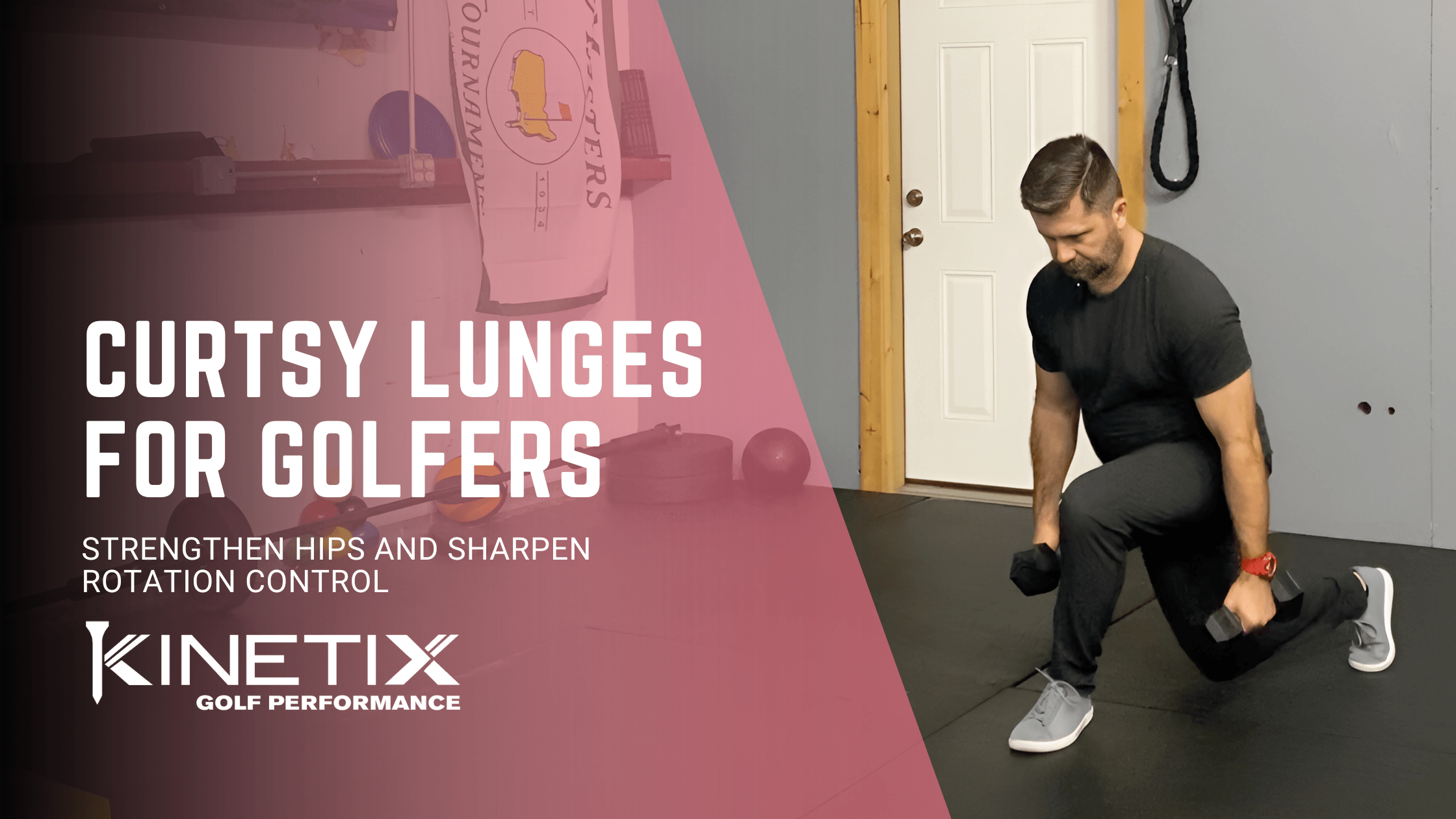
Golfer performing curtsy lunge exercise to improve hip mobility and lateral strength for better golf swing

If your golf swing lacks stability or you feel like your hips aren’t rotating fluidly through impact, the curtsy lunge might be the missing piece.

While often overlooked in traditional strength training programs, this lunge variation develops:

  • Hip internal rotation (IR)
  • Adductor strength and control
  • Single-leg stability and mobility

In short, it trains the exact physical characteristics that support a powerful, efficient, and pain-free golf swing.


What is a Curtsy Lunge?

The curtsy lunge is a variation of the reverse lunge that crosses the rear leg diagonally behind the front leg as you step back and lower. This creates a unique challenge to the lead hip, forcing it to stabilize while moving through:

  • Hip adduction
  • Hip internal rotation
  • Dynamic balance and alignment

Unlike traditional lunges, the curtsy targets muscles and movement planes that are often neglected—but are critical for rotational sports like golf.


Why Curtsy Lunges Belong in Golf Workouts

The curtsy lunge brings specific benefits to golfers who want to:

  • Improve lead leg posting during the downswing
  • Increase hip rotational capacity
  • Strengthen through end ranges (like IR)
  • Prevent excessive swaying or sliding in the lower body
  • Enhance pelvic control through transition

This movement builds the strength and control to rotate around a stable hip, instead of leaking energy forward or sideways.


How to Perform a Curtsy Lunge (Golf Version)

Equipment: Dumbbells, kettlebells, or a landmine bar setup

Step-by-Step:

  1. Stand tall with feet shoulder-width apart
  2. Step one leg diagonally behind the front leg
  3. Lower down slowly, maintaining a tall spine
  4. Feel the load in the lead glute and adductor
  5. Drive through the front foot to return to standing

✅ Keep knees tracking over toes
✅ Avoid collapsing at the torso
✅ Stay stable through the full range of motion


Variations and Progressions

1. Bodyweight Curtsy Lunge

Perfect for warm-ups, mobility drills, or senior golfers focusing on control and balance.

2. Weighted Curtsy Lunge

Use dumbbells or kettlebells to build strength. Hold weight in a goblet position for added core activation.

3. Landmine Curtsy Lunge

Our favorite—using a landmine barbell setup to guide motion and add progressive overload. The arc of the landmine naturally supports the rotational challenge.

4. Tempo Curtsy Lunge

Slow the descent (3–5 seconds down) to increase time under tension and build tendon resilience in the hips.


How It Translates to the Golf Swing

Golfers need hip stability and control, especially in the lead leg during the transition and downswing. The curtsy lunge reinforces:

  • The upright “posting” action on the lead leg
  • Rotational strength under load
  • Controlled internal rotation at the hip joint
  • Lateral and diagonal force absorption

It doesn’t just make your hips stronger—it makes your swing more stable, powerful, and repeatable.


Great for Senior Golfers, Too

Curtsy lunges can be scaled for golfers of all ages. Use a support (like a rack or foam roller) to help maintain balance. Limit depth to comfort level and avoid pain.

You’ll still gain:

  • Improved hip mobility
  • Better single-leg coordination
  • Enhanced functional balance

Programming Suggestions

Place the curtsy lunge in your B or C Block—after warm-ups but before high-speed or ballistic movements.

Sample Prescription:

  • 3–4 sets
  • 6–8 reps per leg
  • Add tempo (slow lower) or resistance as needed
  • Superset with hip mobility drills or anti-rotation core work

Curtsy Lunges = Golf Power + Control

While they may not look “golfy,” curtsy lunges are golf-specific where it matters most: in building the rotational strength, hip mobility, and lower-body control required for a powerful, injury-resistant swing.

It’s not about mimicking the swing—it’s about preparing your body to perform the swing better.


Ready to Move Better, Swing Faster, and Feel Stronger?

Start training with intention. Our online golf performance programs are designed for golfers at any level to build speed, stability, and longevity in their game.

This exercise is just one of the dozens of targeted golf exercises in our PinSeeker Performance Program—a 6-week, lifetime-access golf workout program designed to build mobility, strength, and power exactly where you need it.

🏌️‍♂️ Swing with more rotation and less pain
🏋️‍♀️ Improve strength, flexibility, and balance
⛳️ Play more consistently, regardless of age or experience

✅ One-time purchase
✅ Lifetime access
✅ Golf-Specific workouts you can do anywhere

Train smarter, swing stronger, and see real gains on the course with PinSeeker!
our 6-week pinseeker performance program is the best online golf fitness program

Posted on — Leave a comment

Hip 90/90 Shinbox Get-Ups: Build Hip Mobility and Rotational Strength for Your Golf Swing

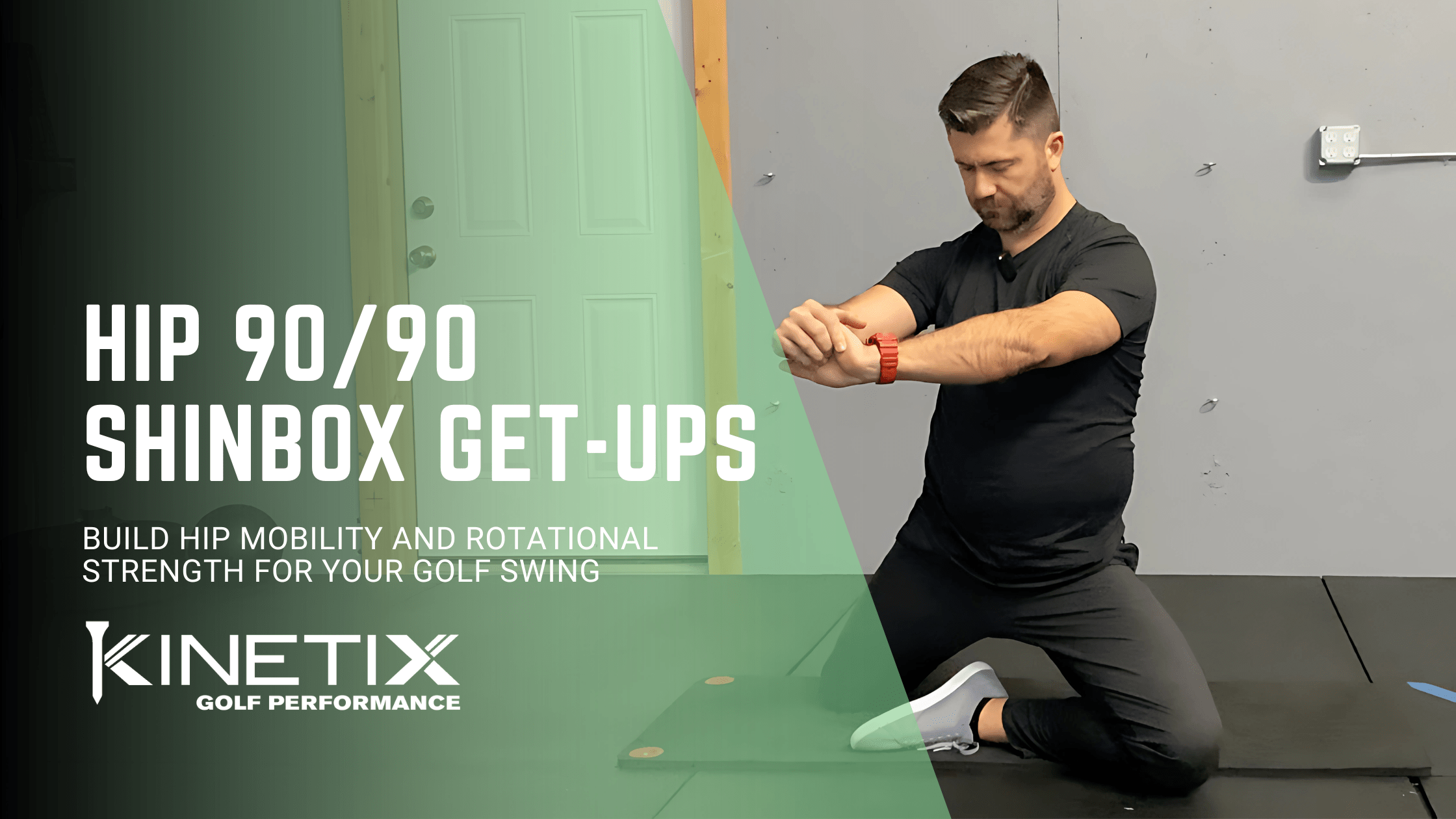
Golf fitness professional performing shinbox 90/90 get up to enhance swing mechanics and mobility

Golf is a rotational sport. But before you can unlock a smooth and powerful swing, you need functional hip mobility—specifically the ability to control internal and external rotation through your entire swing arc. One of our go-to exercises for training this? The 90/90 shinbox with get-ups.

This drill isn’t just for flexibility—it builds strength, control, and power at your end ranges, which is critical if you want to rotate efficiently and reduce compensation through your lower back or knees.

Whether you’re preparing for a round or warming up for a lower-body strength session, the shinbox get-up belongs in your A-block (movement prep phase).


Why Hip Rotation Is Crucial for Golf Performance

Your hips play a major role in:

  • Initiating the backswing
  • Transitioning through the downswing
  • Transferring force through the kinetic chain
  • Decelerating the swing without injury

Yet many golfers lack control in two key motions:

  • Internal Rotation of the lead hip during the downswing
  • External Rotation of the trail hip during the downswing
  • Internal Rotation of the trail hip during the backswing
  • External Rotation of the lead hip during the backswing

This lack of mobility and strength often shows up as:

  • Early extension
  • Swaying or sliding
  • Lower back pain
  • Loss of clubhead speed

What Is the 90/90 Shinbox Get-Up?

The 90/90 position places your front leg in external rotation and your back leg in internal rotation, mimicking the hip shapes seen during a golf swing. When you add the get-up, you begin training strength and motor control through those ranges.

How to Perform It:

  1. Sit on the floor in a 90/90 position:
    • Front leg bent in front of you at 90 degrees
    • Back leg bent behind you at 90 degrees
  2. Maintain a tall spine as you lean forward slightly into the front hip (active stretch)
  3. From this position, drive through the front leg to lift your hips off the floor and come to a kneeling or tall kneeling position
  4. Reverse the motion with control to return to seated 90/90
  5. Switch sides and repeat

Coaching Tips:

  • Keep your torso tall throughout the movement
  • Use your glutes and adductors to initiate the lift—not momentum
  • If needed, use a support (club, dowel, or foam roller) to assist balance

Why Golfers Should Train Hip Rotation in End Ranges

Most golfers only rotate their hips dynamically—but rarely train strength or control in the actual end ranges of motion. This exercise changes that.

✅ External Rotation helps load the backswing on the lead side
✅ Internal Rotation supports the downswing transition and helps decelerate rotation on the lead side

By getting stronger in these positions, you:

  • Create more efficient hip turn in your swing
  • Reduce pressure on the lower back and knees
  • Improve sequencing between hips and torso
  • Build better balance and coordination between both sides of your body

Who Should Use 90/90 Get-Ups?

This exercise is suitable for:

  • ✅ Younger athletes seeking more rotational speed
  • ✅ Senior golfers looking to improve mobility safely
  • ✅ Golfers rehabbing hip, groin, or lower back issues
  • ✅ Anyone wanting to prep the body for lower-body lifts (deadlifts, lunges, etc.)

When to Program This Golf Exercise

We recommend incorporating 90/90 shinbox get-ups in your A Block—our term for movement preparation prior to a heavier lifting session or golf-specific speed/power work.

This gets your hips moving properly before placing load or asking for high-velocity rotation.

Suggested prescription:

  • 2–3 sets of 3–5 reps per side
  • Perform at the beginning of your golf workout, 2–3 times per week

Golf-Specific? You Bet.

While this exercise may not look like a swing drill, it directly targets the mobility and control patterns that transfer to a better, safer, and more powerful swing.

Remember:

Golf-specific doesn’t just mean mimicking your swing.
It means training the systems that support your swing—hip control, joint stability, sequencing, and movement efficiency.


Build Better Hips, Build a Better Swing

If you’re struggling with:

  • A slide during the downswing
  • Limited hip turn
  • Lower back discomfort
  • Or simply want to unlock more rotation in your swing…

…then the 90/90 shinbox get-up needs to be in your weekly routine.

This simple but powerful move will make a big difference in how you move and perform on the course.

This exercise is just one of the dozens of targeted golf exercises in our PinSeeker Performance Program—a 6-week, lifetime-access golf workout program designed to build mobility, strength, and power exactly where you need it.

🏌️‍♂️ Swing with more rotation and less pain
🏋️‍♀️ Improve strength, flexibility, and balance
⛳️ Play more consistently, regardless of age or experience

✅ One-time purchase
✅ Lifetime access
✅ Golf-Specific workouts you can do anywhere

Train smarter, swing stronger, and see real gains on the course with PinSeeker!
our 6-week pinseeker performance program is the best online golf fitness program

Posted on — Leave a comment

Supported Stork Turns: A Hip Mobility Power Move for Golfers

In the world of golf performance, hip mobility and single-leg stability are non-negotiable when it comes to maintaining control, generating power, and avoiding injury. One of the most effective hip mobility exercises for golf that also builds balance and rotational control is the Supported Stork Turn.

This drill targets two key performance factors in the golf swing:

  • Hip Internal and External Rotation (IR/ER)
  • Single-Leg Stability and Balance

Let’s break down what makes this exercise a must for every golfer looking to level up.


Why Hip Mobility Matters in Your Golf Swing

Your hips act as a rotational powerhouse in your swing. Limited mobility—particularly in internal and external rotation—can lead to:

  • Compensatory movements (excessive sway or slide)
  • Early extension
  • Loss of posture
  • Lower back pain
  • Inconsistent contact and decreased clubhead speed

That’s why drills like Supported Stork Turns are so powerful—they combine joint mobility with motor control, two essential elements for athletic longevity and peak golf performance.


The Supported Stork Turn Explained

This isn’t just a balance drill—this is a functional mobility exercise built for golf. Here’s how to perform it properly:

Setup:

  • Stand next to a golf club, foam roller, or rack for support.
  • Shift your weight onto one leg (your stabilizing leg).
  • Bring the opposite foot off the ground and tuck it behind the standing leg’s knee in a figure-4 position.

Execution:

  • Keeping your hands free or lightly touching the support, gently rotate the lifted knee in and out, moving through internal and external rotation.
  • Focus on keeping your stabilizing leg strong and aligned while the motion challenges your hip mobility.
  • Repeat for 6–8 slow, controlled reps, then switch sides.

Why This Works for Golfers

This drill mirrors the rotational demand of the golf swing, especially during the transition from backswing to downswing. Here’s what it helps improve:

  • Stability through the lead leg
  • Controlled hip rotation during weight shift
  • Balance under dynamic loading
  • Rotational dissociation between upper and lower body

Backed by Data: Why Single-Leg Stability Matters

On average, PGA Tour players can maintain a single-leg stance for 16–18 seconds. Many amateur golfers fall significantly short of that. Limited balance = more swing faults.

By integrating Supported Stork Turns into your routine, you’re not just increasing mobility—you’re training your body to control rotation while stable, the exact skill needed to generate power without sacrificing accuracy.


How to Program It

When:
Before practice, in your warm-up, or on a recovery day

How often:
3–5x/week

Pair with:
✅ Hip CARs for Golf
✅ 90/90 Rotational Get Ups
✅ Hip Anatomy & Rotation Blog


Final Thoughts: Train Your Hips, Play Your Best

Supported Stork Turns offer a simple yet incredibly effective solution to unlock more rotation, improve balance, and protect your swing from breakdown. Whether you’re working toward more consistent ball-striking or just trying to play without pain, this belongs in your hip mobility exercise toolkit for golf.


Want More Golf-Specific Mobility Drills?

Check out our full catalog of golf fitness programming, mobility progressions, and training tips at Kinetix Golf Performance — Trusted by golfers who want to swing pain-free, hit it farther, and play for life.

This exercise is just one of the dozens of targeted golf exercises in our PinSeeker Performance Program—a 6-week, lifetime-access golf workout program designed to build mobility, strength, and power exactly where you need it.

🏌️‍♂️ Swing with more rotation and less pain
🏋️‍♀️ Improve strength, flexibility, and balance
⛳️ Play more consistently, regardless of age or experience

✅ One-time purchase
✅ Lifetime access
✅ Golf-Specific workouts you can do anywhere

Train smarter, swing stronger, and see real gains on the course with PinSeeker!

our 6-week pinseeker performance program is the best online golf fitness program