Posted on — Leave a comment

Lateral Line Stretch for Golfers – Improve Stability, Posture & Prevent Low-Back Pain

the lateral line golf stretch is a great golf exercise to help unwind the lateral fascial line of your body to improve your posture and golf swing.

Why the Lateral Line Stretch Matters for Golfers

A stable, powerful golf swing relies on both frontal plane stability (side-to-side control) and transverse plane rotation. The lateral fascial line—running from the foot’s peroneals up through the iliotibial band (ITB), tensor fascia lata (TFL), quadratus lumborum (QL), intercostals, and latissimus dorsi—connects those planes. When any portion of this lateral chain becomes tight or shortened, it compromises your ability to:

  • Stack your spine over your stance
  • Efficiently shift weight and resist unwanted sway
  • Maintain upright posture through the swing
  • Avoid low-back compression (S-posture) and subsequent pain

The simple yet effective lateral line stretch addresses these restrictions by lengthening the QL, lats, intercostals, TFL/ITB, and peroneals—all in one movement. This means better side-bend control, improved stacked posture, and a reduced risk of swing faults like swaying, sliding, and early spine collapse.


Anatomy & Common Dysfunctions

  1. Quadratus Lumborum (QL)
    • Originates at the iliac crest and inserts on the 12th rib and lumbar vertebrae.
    • Tightness here pulls the lower ribcage down and tilts the pelvis, promoting an “S-shaped” spine during the swing.
  2. Latissimus Dorsi & Intercostals
    • The lats attach from the lumbar spine to the humerus; intercostals run between ribs.
    • Tightness restricts ribcage mechanics, limiting full rotation and forcing compensations in the lumbar spine.
  3. Tensor Fascia Lata (TFL) & Iliotibial Band (ITB)
    • The TFL originates from the iliac crest and inserts into the ITB, which runs down the lateral thigh to the tibia.
    • A tight lateral thigh can restrict hip abduction and side-bending freedom, leading to an unstable trail side during the backswing.
  4. Peroneal/Fibularis Muscles
    • Located on the outside of the lower leg, these muscles assist in foot eversion and lateral stability.
    • Tight peroneals limit ankle mobility in the frontal plane, hindering weight shift and balance.

When this entire chain is restricted, golfers lose the ability to “stack”—that is, maintain a neutral spine without lateral collapse. Instead, they often sway or slide into the backswing, overbend in the lower back, or lose posture through impact, creating low back pain and diminished power.


How to Perform the Lateral Line Stretch

Setup:

  • Position: Stand beside a wall or sturdy object for support.
  • Foot Stance: Place your inside foot (closest to the wall) slightly forward; your outside foot remains back so you can lean into the stretch.
  • Arm Placement: Raise the arm on the side you’re stretching overhead.

Execution:

  1. Stack Your Spine:
    • Keep your pelvis neutral—avoid letting your hips hike or sag.
    • Brace your core by creating intra-abdominal pressure (IAP), maintaining a slight “tuck” in your tailbone.
  2. Side Bend & Reach:
    • Lean your torso away from the wall, reaching your top hand up and over toward the wall.
    • Keep your ribs stacked over your pelvis—don’t rotate or twist.
  3. Foot & Leg Engagement:
    • Press your outside leg into the ground to prevent lateral collapse of your hips.
    • You should feel a deep stretch from your peroneal muscles, up your ITB/TFL, into your QL, and along your lat/intercostals.
  4. Hold & Breathe:
    • Hold for 30–45 seconds, breathing deeply into the side body to encourage ribcage expansion.
    • Exhale and gently press your hips away from the wall to intensify the stretch, but never force it into pain.
  5. Switch Sides:
    • Carefully return to standing, then mirror the stretch on the opposite side.

Modifications & Tips:

  • Beginner Variation: Keep feet closer together and reduce side-bend depth until you develop stability.
  • Advanced Variation: Place the outside foot on a low step or yoga block to accentuate TFL/ITB stretch.
  • Pelvic Cue: Imagine “loading” the outside hip by pressing it slightly back—this prevents hip hiking.

Transferring This Stretch to Your Golf Swing

  1. Enhanced Frontal Plane Stability
    • By lengthening the QL and lateral chain, you resist unwanted “sway” into the backswing. A stable trail side means a smoother weight shift and less compensatory low-back bending.
  2. Improved Stack & Pivot
    • A neutral pelvis and elongated lats allow a fuller upper-body turn without collapsing into the side. This “stacked” spine promotes better pivot mechanics—your hips and shoulders rotating around a stable axis.
  3. Reduced Low-Back Compression
    • Freeing the lateral chain discourages the lower spine from over-arching into S-posture, lowering the risk of chronic pain and fatigue during or after rounds.
  4. Longer, More Powerful Swing Arc
    • When your anterior oblique and lateral fascial lines are open, you can achieve more X-Factor separation (torso-pelvis difference), feeding energy into the downswing and maximizing clubhead speed.

Integrate the Lateral Line Stretch into Your Golf Stretches Routine

  • Pre-Round Warm-Up: 1–2 holds per side after dynamic hip and thoracic mobility drills (e.g., Hip CARs, T-Spine Openers).
  • Post-Round Recovery: Hold 45–60 seconds per side to release excursion built up from rotational swings.
  • Daily Maintenance: Include on off-days or after prolonged sitting to counteract habitual lateral fascial tightness.

Sample Mobility Sequence:

  1. Ankle Rockers (10 reps per side)
  2. Hip CARs (3 reps each direction per side)
  3. Lateral Line Stretch (30–45 seconds each side)
  4. T-Spine Lumbar Lock Openers (8 reps per side)

Lateral Line Stretch for Golfers 55+

For golf exercises for seniors, this stretch is especially valuable because it:

  • Is low impact and joint-friendly
  • Promotes spinal decompression and better posture
  • Reduces fall risk by improving lateral stability
  • Eases QL and lower-back discomfort often exacerbated by long rounds or driving

Ready To Level Up Your Golf Game?

This exercise is just one of the dozens of targeted golf exercises in our PinSeeker Performance Program—a 6-week, lifetime-access golf workout program designed to build mobility, strength, and power exactly where you need it.

🏌️‍♂️ Swing with more rotation and less pain
🏋️‍♀️ Improve strength, flexibility, and balance
⛳️ Play more consistently, regardless of age or experience

✅ One-time purchase
✅ Lifetime access
✅ Golf-Specific workouts you can do anywhere

Train smarter, swing stronger, and see real gains on the course with PinSeeker!

our 6-week pinseeker performance program is the best online golf fitness program

Posted on — Leave a comment

Golf Stretches: Couch Stretch with Rotation for Hip Flexors, Quads & Thoracic Mobility

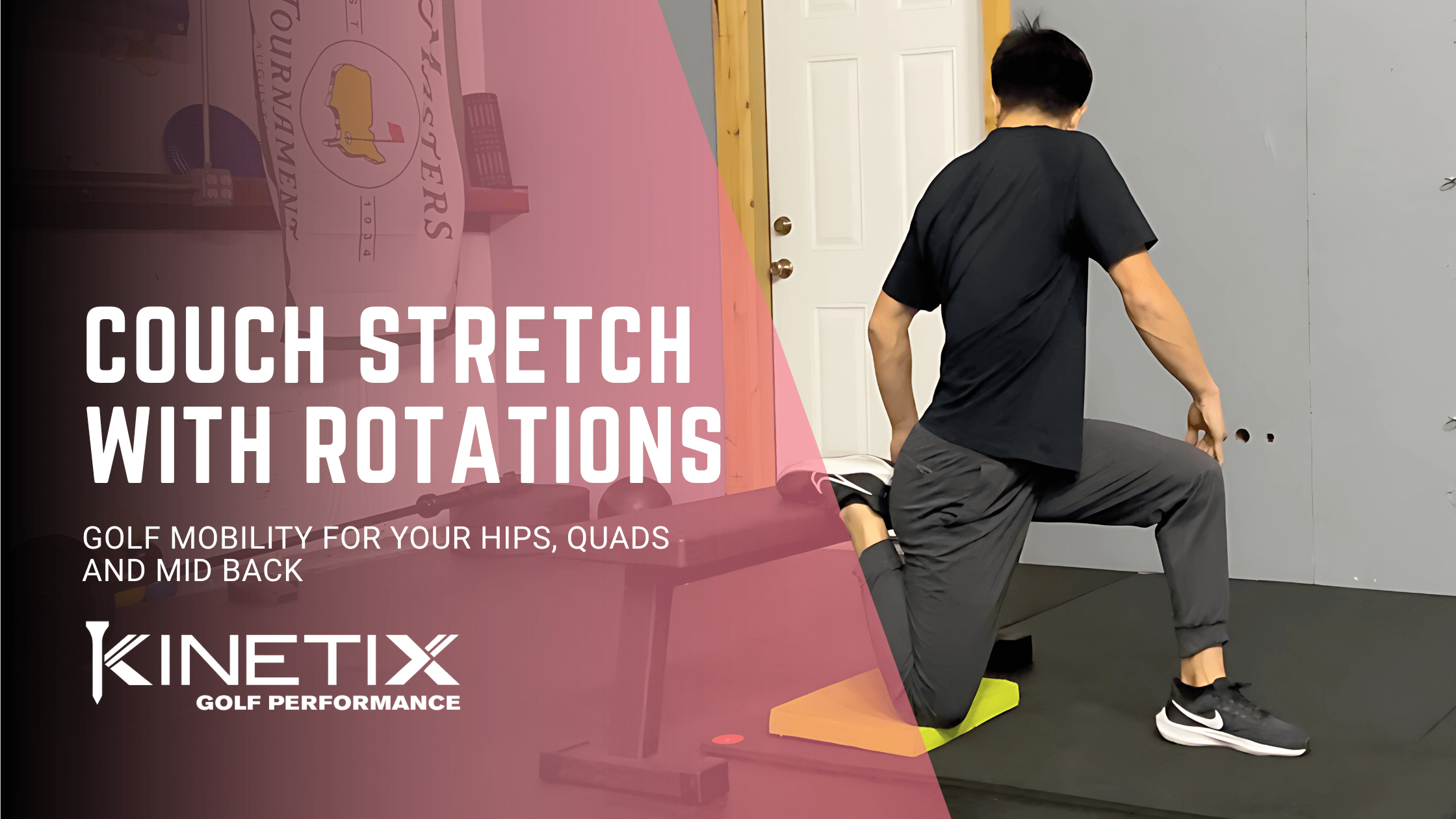
the couch stretch with rotations is a great golf exercise to help with hip and mid back mobility.

Unlock Your Swing with the Couch Stretch + Rotation

If tight hip flexors, quads, or a restricted mid-back are holding your swing back, the couch stretch with rotation is a must-add to your golf stretching routine. This stretch not only lengthens the anterior chain—hip flexors and quads—but also mobilizes the thoracic spine through rotation. By targeting the anterior oblique sling (which connects the front of one hip to the opposite shoulder), you create the freedom to coil and uncoil more efficiently, translating to greater range of motion and power in your golf swing.


Why the Couch Stretch + Rotation Matters for Golfers

  1. Hip Flexor & Quad Lengthening
    • Tight hip flexors and quads pull your pelvis into excessive anterior tilt, compressing your lumbar spine and restricting hip extension.
    • A deep couch stretch helps restore hip extension, which is crucial for a stable trail leg during the backswing and full rotation in the downswing.
  2. Pelvic Stabilization
    • Locking your pelvis in a neutral position prevents compensations—like early extension—that rob you of coil and power.
    • When your pelvis is stable, your thoracic rotation can improve without overloading your lower back.
  3. Thoracic Spine Mobilization
    • Adding rotation in the top arm opens up the mid-back (T-spine), allowing you to achieve a deeper upper-body turn without “hiking” or rounding.
    • Better T-spine mobility reduces compensatory side-bend or lumbar rotation that leads to swing faults.
  4. Anterior Oblique Sling Engagement
    • The anterior oblique sling—fascia and muscle fibers running from the front of the hip, across the abdominal wall, to the opposite shoulder—transmits power in a golf swing.
    • Stretching and activating this sling with a couch stretch plus rotation promotes dynamic length and recoil, helping you create more X-Factor separation (torso-pelvis difference) and efficient energy transfer.

How to Perform the Couch Stretch with Rotation

Setup:

  1. Equipment: Place one knee on the ground about 12 inches from a wall or couch.
  2. Foot Position: Lean your shin and foot up against the wall/couch so your knee is bent at ~90°. The front thigh and shin should be vertical.
  3. Pelvic Neutral: Tuck your tailbone slightly to neutralize your lower back—avoid overarching.

Execution (Hip Flexor & Quad):

  1. Drive Hips Forward: Keeping torso upright, shift hips forward until you feel a deep stretch in the front of the back hip (hip flexor) and quad.
  2. Maintain Neutral Spine: Ensure your pelvis stays level—don’t relax into an anterior pelvic tilt.

Add Rotation (Thoracic & Oblique Sling):

  1. Reach Top Arm Up: Raise the arm on the same side as your stretched leg overhead (e.g., left knee down → left arm up).
  2. Rotate & Reach: Rotate your torso away from the wall/couch (e.g., if your left knee is on the wall, rotate right). Allow your top arm to sweep across your body, reaching diagonally toward the opposite (front) side.
  3. Open Chest & Breathe: Keep shoulders down—don’t shrug. Breathe deeply into your side body and mid-back to enhance mobility.
  4. Hold & Reset: Hold for 30–45 seconds, then return your hand to your hip. You can pulse gently into deeper rotation (2–3 pulses) before resetting.
  5. Repeat on Opposite Side: Switch legs and mirror the movement to ensure balanced mobility.

Benefits of This Golf Stretch

  1. Improved Hip Extension & Quad Flexibility
    • Better rear-leg drive in the downswing
    • More stable coxal joint reduces strain on knees and low back
  2. Enhanced Thoracic Rotation
    • Allows a fuller upper-body coil without compensating through lumbar spine
    • Promotes a wider swing arc and better turn mechanics
  3. Optimized Anterior Oblique Sling Function
    • Facilitates dynamic recoil and power transmission from ankles to shoulders
    • Increases separation between pelvis and torso (“X-Factor”) for more clubhead speed
  4. Reduced Swing Faults
    • Minimizes early extension, sway, and lumbar over-rotation
    • Encourages a neutral spine and balanced posture throughout the swing

Integrate the Couch + Rotation into Your Golf Stretches Routine

  • Pre-Round Warm-Up: 1–2 sets per side after dynamic hip openers (e.g., ankle rockers).
  • Post-Round Recovery: Hold 45–60 seconds per side to release accumulated tension.
  • Daily Mobility Drill: Include on non-playing days to maintain hip and T-spine health.

Sample Sequence:

  1. Hip CARs (3 reps each direction)
  2. Ankle Rockers (10 reps per side)
  3. Couch Stretch + Rotation (30–45 seconds per side)
  4. T-Spine Lumbar Lock Openers (8 reps per side)

Ready to Transform Your Mobility and Power?

This exercise is just one of the dozens of targeted golf exercises in our PinSeeker Performance Program—a 6-week, lifetime-access golf workout program designed to build mobility, strength, and power exactly where you need it.

🏌️‍♂️ Swing with more rotation and less pain
🏋️‍♀️ Improve strength, flexibility, and balance
⛳️ Play more consistently, regardless of age or experience

✅ One-time purchase
✅ Lifetime access
✅ Golf-Specific workouts you can do anywhere

Train smarter, swing stronger, and see real gains on the course with PinSeeker!
our 6-week pinseeker performance program is the best online golf fitness program

Posted on — Leave a comment

Best Golf Stretches – T-Spine Lumbar Lock Opener for Thoracic Mobility

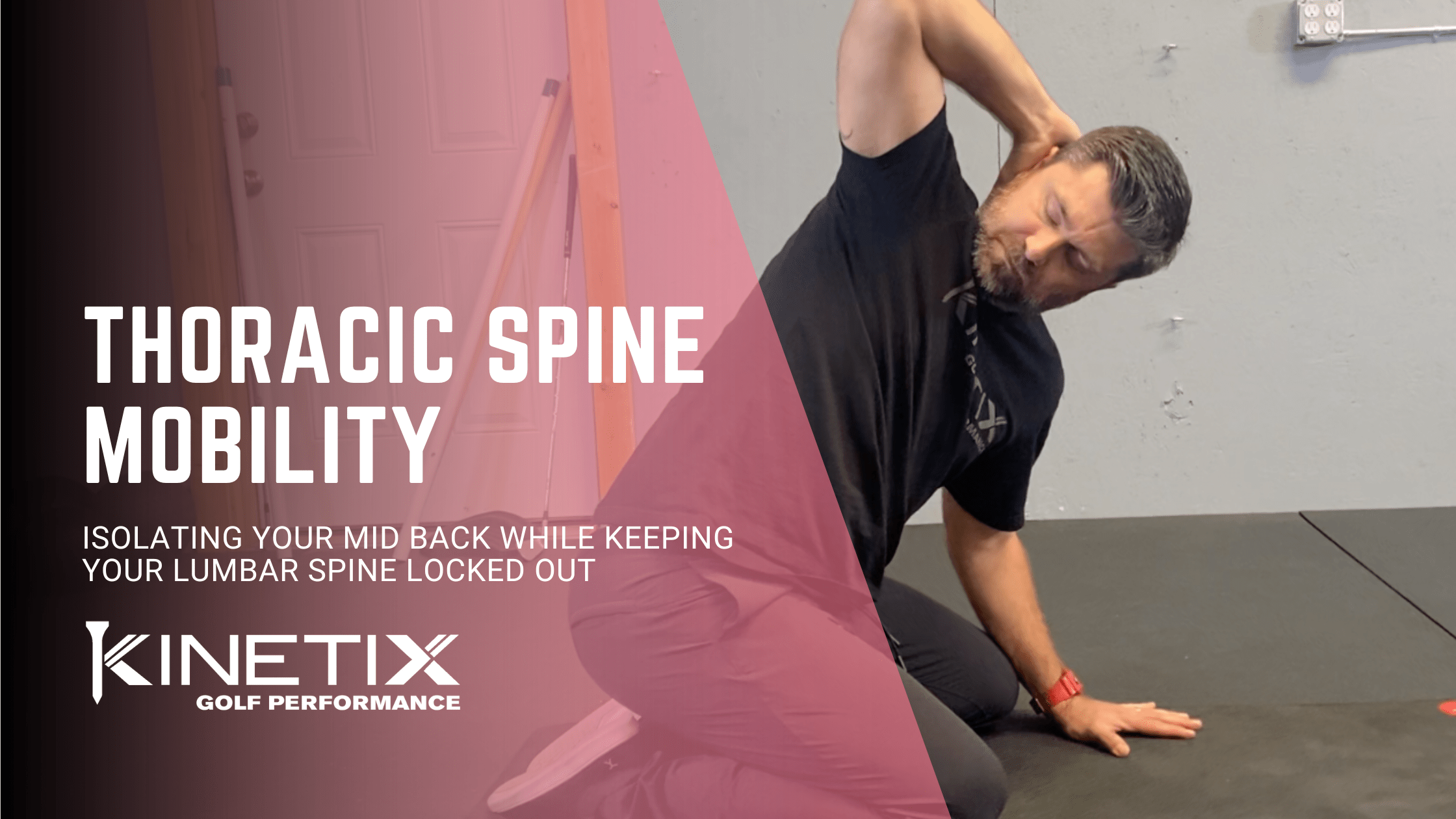
thoracic spine openers in the lumbar lock position are a great golf exercise to improve mid back mobility while the low back doesn't work to compensate isolating the movement more in the mid back, where it should be.

Unlock Your Swing: The Best Golf Stretch for Thoracic Mobility

If your golf swing feels tight, limited, or inconsistent, your thoracic spine (mid-back) could be the culprit.

The T-Spine Lumbar Lock Opener is one of the best golf stretches you can do to restore rotational mobility, reduce stress on the lower back and shoulders, and create a smoother, more powerful golf swing.

Whether you’re warming up before a round or looking for a daily routine to enhance mobility, this drill is a must-have.


Why Thoracic Mobility Matters for Golfers

The thoracic spine (T-spine) is designed for rotation, yet many golfers are locked up here due to years of sitting, poor posture, or training that ignores this region.

When you lack mobility here, other joints — like the lumbar spine or shoulders — are forced to compensate. That can lead to:

  • Poor backswing rotation
  • Overuse injuries in the lower back
  • Inconsistent club path and contact
  • Early swing fatigue
  • limited range of motion in your shoulders

The T-Spine Lumbar Lock Opener directly targets this mobility gap by isolating thoracic rotation while locking down the lumbar spine — ensuring the movement comes from the right place.


How to Perform the T-Spine Lumbar Lock Opener

Setup:

  1. Start in a child’s pose or kneeling position with your hips sitting back onto your heels and elbows on the ground (or foam pad).
  2. Place one hand behind your head.
  3. Keep your opposite elbow and hips fixed.

Movement:

  1. Slowly rotate the elbow with the hand behind your head up toward the ceiling, rotating through your thoracic spine.
  2. Pause briefly, then return to the start.
  3. Perform 2–3 sets of 8–10 slow, controlled reps per side.

Key Cues:

  • Hips stay glued to your heels
  • Elbow on the ground remains planted
  • Rotate through the upper back, not the lower spine
  • Breathe into each rep for more range of motion

Why This Stretch is Gold for Golfers

The T-Spine Lumbar Lock Opener delivers:

  • Increased rotation for a deeper, more complete backswing
  • Reduced compensation in the low back (helps prevent injury)
  • More efficient sequencing through the downswing
  • Better follow-through without strain
  • A more repeatable swing pattern under fatigue

When to Use It

This stretch fits perfectly into your:

  • Pre-round warm-up (dynamic prep to loosen up)
  • Daily mobility routine (to reclaim lost range)
  • Post-workout cooldown (to reinforce quality rotation)

Pair it with activation drills like Dead Bug with Reach or Bird Dog Rows to blend mobility with control.


Train Smart: Golf-Specific Mobility That Matters

Thoracic mobility is not about yoga for the sake of yoga — it’s about better movement for a better swing.

This exercise is just one of the dozens of targeted golf exercises in our PinSeeker Performance Program—a 6-week, lifetime-access golf workout program designed to build mobility, strength, and power exactly where you need it.

🏌️‍♂️ Swing with more rotation and less pain
🏋️‍♀️ Improve strength, flexibility, and balance
⛳️ Play more consistently, regardless of age or experience

✅ One-time purchase
✅ Lifetime access
✅ Golf-Specific workouts you can do anywhere

Train smarter, swing stronger, and see real gains on the course with PinSeeker!
our 6-week pinseeker performance program is the best online golf fitness program