Posted on — Leave a comment

Hip Anatomy for Golfers: Anteversion, Retroversion & Mobility

anteversion, retroversion, and understanding hip anatomy will help understand your personal hip mobility better, that will improve your golf game.

Every golfer’s hip structure is unique. Factors like acetabular version (anteversion vs. retroversion) and femoral neck inclination govern your available range of motion (ROM). Understanding these anatomic variations helps you:

  • Interpret hip screening results accurately
  • Customize mobility drills (e.g., focus on external rotation if you’re anteverted)
  • Choose equipment and swing techniques (stance width, toe angle) that match your hip geometry
  • Prevent swing faults caused by forcing joint motions (early extension, sway, lower-back compensation)

Below, we dive into hip joint basics, define anteversion vs. retroversion, outline normal versus congenital ROM expectations, share sample programming by hip type, and examine real-world case studies of golfers whose hip anatomy influenced their swings.


1. Hip Joint Basics: The Ball-and-Socket Architecture

The hip is a ball-and-socket joint where the spherical femoral head (“ball”) fits into the acetabulum (“socket”). Key anatomic features include:

  • Acetabular Depth & Orientation: How deep and forward/backward the socket faces
  • Femoral Neck-Shaft Angle: The angle between the femoral neck and shaft, impacting lever mechanics
  • Version (Anteversion/Retroversion): The rotational orientation of the femoral neck relative to the pelvis

These elements dictate:

  • Internal Rotation (IR): Bringing thigh toward midline
  • External Rotation (ER): Rotating thigh away from midline
  • Flexion/Extension & Abduction/Adduction: Other planes of hip motion

Because each golfer’s femoral head and acetabulum may be shaped or oriented differently, available ROM in each plane can vary widely—sometimes by more than 20–30%.


2. Anteversion vs. Retroversion: Definitions & Screening

2.1 Acetabular & Femoral Anteversion

  • Anteversion: The femoral neck is rotated anteriorly (forward).
    • Implication: Greater hip IR, limited ER.
    • On Screen: During hip physical exam, an anteverted hip might allow 40–50° IR but only 10–20° ER.

2.2 Acetabular & Femoral Retroversion

  • Retroversion: The femoral neck is rotated posteriorly (backward).
    • Implication: Greater hip ER, limited IR.
    • On Screen: You might see 40–50° ER but only 10–20° IR.

2.3 How to Screen

  1. Prone Hip IR/ER Test:
    • Lay prone, knees bent 90°.
    • Measure hip IR and ER by rotating the lower legs inward/outward.
    • Compare to normative values (≈35–45° IR, 45–55° ER in a neutral hip).
  2. Thomas Test with Rotation:
    • Supine, one hip flexed to chest.
    • Observe resting thigh rotation of the opposite leg—anteversion often shows toes turned inward at rest; retroversion shows toes turned outward.

Key Takeaway: If IR or ER deviates significantly from “normal,” you likely have a structural anteversion or retroversion. Accept your anatomy and avoid forcing ROM beyond these limits.


3. Normal ROM Expectations vs. Congenital Limits

3.1 Typical Hip ROM (General Population)

  • Flexion: 120–125°
  • Extension: 10–15°
  • Abduction: 40–45°
  • Adduction: 20–25°
  • Internal Rotation: 35–45°
  • External Rotation: 45–55°

3.2 Variations by Anteversion/Retroversion

Hip VersionTypical IRTypical ERGolf Implications
Anteverted45–55°10–20°More internal coil; may struggle with wide stance and ER-intensive drills
Retroverted10–20°45–55°Comfortable squaring stance; limited backswing IR, risk of early extension
Neutral35–45°35–45°Balanced IR/ER; easier to achieve textbook positions

Note: Some golfers may display “functional” ROM limitations from soft-tissue tightness or past injuries—distinguish these from true “structural” limitations found on imaging or repeated screening.


4. Customize Mobility & Drill Selection by Hip Type

Once you understand your hip version, tailor your mobility work to optimize the ROM you do have:

4.1 Anteverted (Greater IR, Limited ER)

  • Focus:
    • External Rotation Drills: Supine figure-four stretch, standing hip ER in lumbo-lock.
    • Posterior Capsule Mobilization: Pigeon pose with elevated shin to minimize impingement.
  • Avoid Forcing:
    • Deep internal rotation positions (e.g., crossed-legged hip openers that push IR beyond 50°).
  • Sample Drill:
    • Hip CARs emphasizing ER: Keep femur capped, rotate outward to end range, controlling back through IR.

4.2 Retroverted (Greater ER, Limited IR)

  • Focus:
    • Internal Rotation Drills: Seated IR on bench (shin moving away), half-kneeling rocker.
    • Anterior Capsule/Quad-Flexor Lengthening: Low lunge with horizontal adduction.
  • Avoid Forcing:
    • Excessive external rotation (e.g., 90/90 drills pushing ER beyond comfortable).
  • Sample Drill:
    • Hip CARs emphasizing IR: Control the femoral head into IR while keeping stable pelvis.

4.3 Neutral (Balanced IR/ER)

  • Focus:
    • Maintain Balance: Include equal IR and ER drills.
    • Dynamic Stability: Standing banded IR/ER, half-kneeling rotations.
  • Avoid Forcing:
    • Extreme end-range positions if joint noise or pain occurs.
  • Sample Drill:
    • Hip CARs in both directions for joint health and proprioception.

5. Equipment & Swing Technique Considerations

Knowing your hip version informs more than just mobility drills—it guides critical equipment and swing decisions:

  1. Stance Width
    • Anteverted Hips: May prefer a slightly narrower stance to avoid discomfort during backswing IR.
    • Retroverted Hips: Can accommodate a wider stance, but avoid forcing too wide if IR is limited.
  2. Toe Angle
    • Anteversion: Toes may naturally flare out (20–30°) to open the hip socket; forcing toes straight can cause impingement.
    • Retroversion: Toes may point slightly inward (0–5°) to center the femoral head; forcing toes out can stress the AC joint.
  3. Club Length & Lie Angles
    • If your hip IR prevents proper address posture, consult a fitter about adjusting club length or lie to maintain spine angle without forcing hip motion.
  4. Swing Technique Adjustments
    • Restricted IR: May need to limit backswing width and rely on mid-body coil (rotate torso more than hips).
    • Restricted ER: Stay more “in your stance” on the downswing to avoid early hip bump and maintain axis tilt.

6. Preventing Common Swing Faults

When golfers ignore congenital hip limits, they often develop compensations:

  1. Early Extension
    • Cause: Limited hip IR on trail leg.
    • Solution: Limit backswing hip depth, strengthen trail-side glute and posterior chain.
  2. Sway or Slide
    • Cause: Limited ER on lead side, causing lateral shift instead of rotation.
    • Solution: Seated ER drills, CARS in ER, practice “turn in place” without slide.
  3. Lower-Back Compensation
    • Cause: Forcing hip rotation beyond bony limits.
    • Solution: Decrease range, focus on thoracic rotation, use hip-openers within safe ROM.

7. Sample Programming by Hip Type

Below is a two-day sample mobility/strength micro-cycle to address each hip version. Adjust sets/reps based on your current fitness and golf demands.

7.1 Anteverted Hip Sample (Focus on ER)

Day A:

  • Warm-Up:
    • Hip CARs (3 reps each direction, emphasizing ER)
    • Half-Kneeling Hip ER Stretch (30 sec each side)
  • Strength & Stability:
    • Banded Monster Walks (2×12 yards)
    • Single-Leg RDL (B-stance, 3×8 per side)
  • Cool-Down:
    • Supine Figure-Four w/Bolster (2×30 sec each side)

Day B:

  • Warm-Up:
    • Standing Band IR/ER (1×12 each)
    • Hip CARs (3 reps each direction)
  • Power & Rotational Work:
    • Landmine Rotations (3×8 per side)
    • Med Ball Rotational Throws (3×6 per side)
  • Recovery:
    • Seated Pigeon with External Rotation (2×30 sec each)

7.2 Retroverted Hip Sample (Focus on IR)

Day A:

  • Warm-Up:
    • Hip CARs (3 reps each direction, emphasizing IR)
    • Half-Kneeling Hip IR Rocker (2×10 each side)
  • Strength & Stability:
    • Glute Bridge w/March (3×10 per side)
    • KB Single-Leg RDL (3×8 per side)
  • Cool-Down:
    • Low Lunge with Horizontal Adduction (2×30 sec each)

Day B:

  • Warm-Up:
    • Banded IR/ER (1×12 each)
    • Hip CARs (3 reps each direction)
  • Power & Rotational Work:
    • Banded Push-Pulls (3×10 per side)
    • Jump Squats + Deadlift Contrast Superset (3×3 + 6)
  • Recovery:
    • PNF IR Hold (1×30 sec each, gentle contract-relax)

7.3 Neutral Hip Sample (Balanced IR/ER)

Day A:

  • Warm-Up:
    • Hip CARs (3 reps each direction)
    • Standing Banded IR/ER (1×12 each)
  • Strength & Stability:
    • Banded Trap-Bar Deadlift (3×6)
    • Bird Dog Rows (3×8 per side)
  • Cool-Down:
    • Seated 90/90 w/Side Bend (2×30 sec each)

Day B:

  • Warm-Up:
    • Hip CARs (3 reps each direction)
    • Banded Monster Walks (1×12 yards)
  • Power & Rotational Work:
    • Med Ball Shot Puts (3×6 per side)
    • KB Swings (3×12)
  • Recovery:
    • Child’s Pose with T-Spine Rotation (2×30 sec each)

Conclusion

Understanding your hip anatomy—from acetabular version to femoral neck inclination—empowers you to train smarter, prevent injury, and optimize your golf swing. By customizing mobility drills, stance, and technique to your unique structure, you pave the way for maximum rotational efficiency and power.

This exercise is just one of the dozens of targeted golf exercises in our PinSeeker Performance Program—a 6-week, lifetime-access golf workout program designed to build mobility, strength, and power exactly where you need it.

🏌️‍♂️ Swing with more rotation and less pain
🏋️‍♀️ Improve strength, flexibility, and balance
⛳️ Play more consistently, regardless of age or experience

✅ One-time purchase
✅ Lifetime access
✅ Golf-Specific workouts you can do anywhere

Train smarter, swing stronger, and see real gains on the course with PinSeeker!

our 6-week pinseeker performance program is the best online golf fitness program

Posted on — Leave a comment

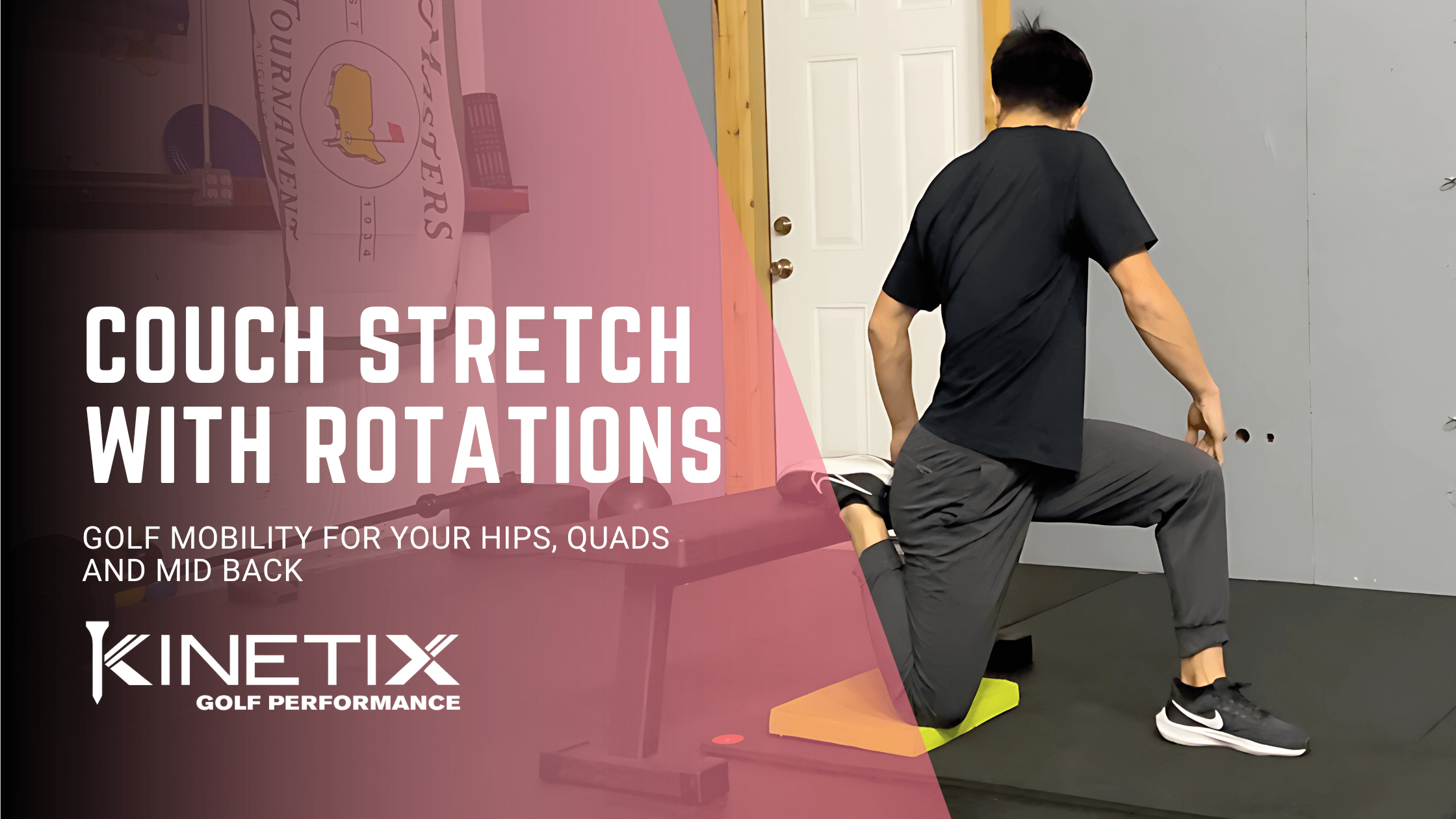
Golf Stretches: Couch Stretch with Rotation for Hip Flexors, Quads & Thoracic Mobility

the couch stretch with rotations is a great golf exercise to help with hip and mid back mobility.

Unlock Your Swing with the Couch Stretch + Rotation

If tight hip flexors, quads, or a restricted mid-back are holding your swing back, the couch stretch with rotation is a must-add to your golf stretching routine. This stretch not only lengthens the anterior chain—hip flexors and quads—but also mobilizes the thoracic spine through rotation. By targeting the anterior oblique sling (which connects the front of one hip to the opposite shoulder), you create the freedom to coil and uncoil more efficiently, translating to greater range of motion and power in your golf swing.


Why the Couch Stretch + Rotation Matters for Golfers

  1. Hip Flexor & Quad Lengthening
    • Tight hip flexors and quads pull your pelvis into excessive anterior tilt, compressing your lumbar spine and restricting hip extension.
    • A deep couch stretch helps restore hip extension, which is crucial for a stable trail leg during the backswing and full rotation in the downswing.
  2. Pelvic Stabilization
    • Locking your pelvis in a neutral position prevents compensations—like early extension—that rob you of coil and power.
    • When your pelvis is stable, your thoracic rotation can improve without overloading your lower back.
  3. Thoracic Spine Mobilization
    • Adding rotation in the top arm opens up the mid-back (T-spine), allowing you to achieve a deeper upper-body turn without “hiking” or rounding.
    • Better T-spine mobility reduces compensatory side-bend or lumbar rotation that leads to swing faults.
  4. Anterior Oblique Sling Engagement
    • The anterior oblique sling—fascia and muscle fibers running from the front of the hip, across the abdominal wall, to the opposite shoulder—transmits power in a golf swing.
    • Stretching and activating this sling with a couch stretch plus rotation promotes dynamic length and recoil, helping you create more X-Factor separation (torso-pelvis difference) and efficient energy transfer.

How to Perform the Couch Stretch with Rotation

Setup:

  1. Equipment: Place one knee on the ground about 12 inches from a wall or couch.
  2. Foot Position: Lean your shin and foot up against the wall/couch so your knee is bent at ~90°. The front thigh and shin should be vertical.
  3. Pelvic Neutral: Tuck your tailbone slightly to neutralize your lower back—avoid overarching.

Execution (Hip Flexor & Quad):

  1. Drive Hips Forward: Keeping torso upright, shift hips forward until you feel a deep stretch in the front of the back hip (hip flexor) and quad.
  2. Maintain Neutral Spine: Ensure your pelvis stays level—don’t relax into an anterior pelvic tilt.

Add Rotation (Thoracic & Oblique Sling):

  1. Reach Top Arm Up: Raise the arm on the same side as your stretched leg overhead (e.g., left knee down → left arm up).
  2. Rotate & Reach: Rotate your torso away from the wall/couch (e.g., if your left knee is on the wall, rotate right). Allow your top arm to sweep across your body, reaching diagonally toward the opposite (front) side.
  3. Open Chest & Breathe: Keep shoulders down—don’t shrug. Breathe deeply into your side body and mid-back to enhance mobility.
  4. Hold & Reset: Hold for 30–45 seconds, then return your hand to your hip. You can pulse gently into deeper rotation (2–3 pulses) before resetting.
  5. Repeat on Opposite Side: Switch legs and mirror the movement to ensure balanced mobility.

Benefits of This Golf Stretch

  1. Improved Hip Extension & Quad Flexibility
    • Better rear-leg drive in the downswing
    • More stable coxal joint reduces strain on knees and low back
  2. Enhanced Thoracic Rotation
    • Allows a fuller upper-body coil without compensating through lumbar spine
    • Promotes a wider swing arc and better turn mechanics
  3. Optimized Anterior Oblique Sling Function
    • Facilitates dynamic recoil and power transmission from ankles to shoulders
    • Increases separation between pelvis and torso (“X-Factor”) for more clubhead speed
  4. Reduced Swing Faults
    • Minimizes early extension, sway, and lumbar over-rotation
    • Encourages a neutral spine and balanced posture throughout the swing

Integrate the Couch + Rotation into Your Golf Stretches Routine

  • Pre-Round Warm-Up: 1–2 sets per side after dynamic hip openers (e.g., ankle rockers).
  • Post-Round Recovery: Hold 45–60 seconds per side to release accumulated tension.
  • Daily Mobility Drill: Include on non-playing days to maintain hip and T-spine health.

Sample Sequence:

  1. Hip CARs (3 reps each direction)
  2. Ankle Rockers (10 reps per side)
  3. Couch Stretch + Rotation (30–45 seconds per side)
  4. T-Spine Lumbar Lock Openers (8 reps per side)

Ready to Transform Your Mobility and Power?

This exercise is just one of the dozens of targeted golf exercises in our PinSeeker Performance Program—a 6-week, lifetime-access golf workout program designed to build mobility, strength, and power exactly where you need it.

🏌️‍♂️ Swing with more rotation and less pain
🏋️‍♀️ Improve strength, flexibility, and balance
⛳️ Play more consistently, regardless of age or experience

✅ One-time purchase
✅ Lifetime access
✅ Golf-Specific workouts you can do anywhere

Train smarter, swing stronger, and see real gains on the course with PinSeeker!
our 6-week pinseeker performance program is the best online golf fitness program

Posted on — Leave a comment

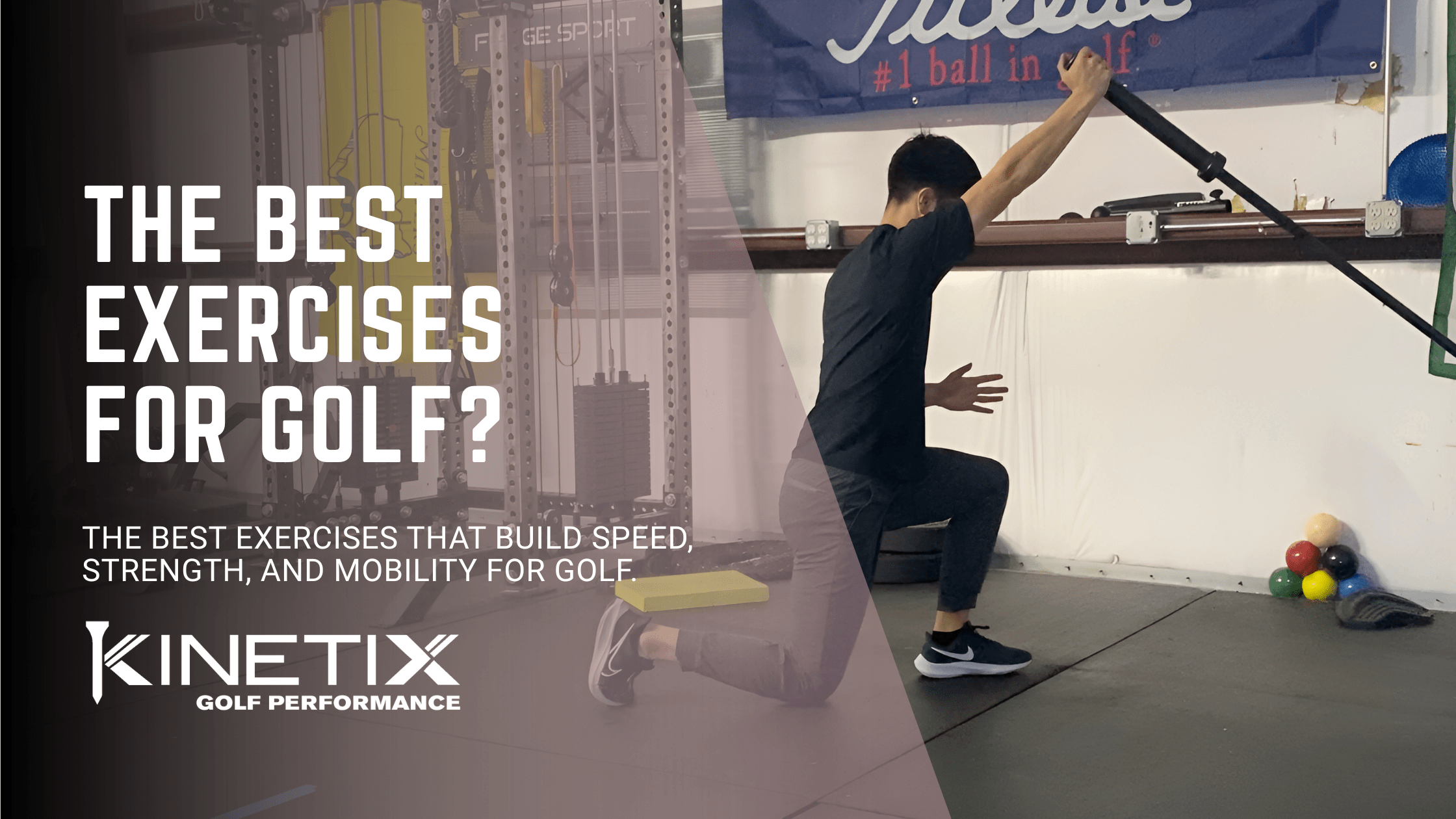
What Are the Best Exercises for Golf?

We help answer the question, what are the best exercises for golf.

The 5 Training Buckets That Should Be in Every Golfer’s Program

If you’ve searched “what are the best exercises for golf”, you’re not alone—and you’re asking the right question.

But here’s the truth: There is no one-size-fits-all list of “best exercises.” Instead, the best approach is to train within five key movement categories, or buckets, that mirror the physical demands of golf. These buckets allow us to progress or regress movements based on fitness level, age, mobility, or training goals.

Whether you’re a weekend golfer looking to avoid injury, or a competitive player trying to add 10+ yards to your drive, these five categories form the foundation of any smart golf fitness program.


1. Jumping: Build Explosiveness from the Ground Up

Why it matters:
The golf swing starts from the ground. The better you are at producing and controlling force through the lower body, the more clubhead speed and ball distance you can generate.

Jumping exercises train your fast-twitch muscle fibers, build explosive power, and improve how you absorb force (which helps prevent injury).

Sample Jumping Exercises for Golf:

  • Broad jumps
  • Depth jumps + stick landings
  • Split stance jumps
  • Med ball overhead throws

Jumping focused exercises also teaches deceleration—a critical skill during the downswing when force must be redirected through your lead leg.


2. Hip Hinges and Squats: Strengthen Your Base

Why it matters:
Your hips are the engine of your swing. Without strong glutes, hamstrings, and quads, your swing won’t have the power—or stability—you need to repeat it consistently.

Hinge and squat patterns build the posterior chain and increase lower body strength. This also complements your jump work and helps transfer force into your upper body.

Best Exercises in This Bucket:

  • Trap bar deadlifts
  • Rear foot elevated split squats
  • Kettlebell goblet squats
  • Romanian deadlifts
  • Iso lunges (holds for resilience)

These aren’t flashy, “golf-y” exercises—but they work. And they scale easily across fitness levels.


3. Anti-Rotation: Train Stability to Unlock Speed

Why it matters:
Speed without control is a recipe for swing faults and back pain. That’s why anti-rotation exercises are essential for golfers.

They build core stability, improve low back control, and help maintain posture throughout the swing.

And here’s the kicker—when the core is trained to resist rotation, it actually improves your ability to rotate efficiently through the thoracic spine and hips.

Key Anti-Rotation Golf Exercises:

  • Pallof press (standing or half kneeling)
  • Dead bug variations
  • Bird dog holds or reach + pull
  • Cable anti-rotation holds with stepping
  • High Bear pull-throughs

Think of this bucket as the glue holding everything together—protecting your spine while increasing rotational efficiency.


4. Push/Pull Patterns: Build Balanced Strength

Why it matters:
Golfers need strong shoulders, lats, legs and upper backs—but it’s not about being jacked. It’s about building unilateral strength, control, and balance across your pushing and pulling systems.

You need horizontal and vertical pulls, and yes, pushes too. This bucket should also include a rotational push/pull component that will compliment our mobility bucket.

Smart Push/Pull Movements for Golf:

  • Seated or half kneeling single-arm lat pulldowns
  • Face pulls (for shoulder external rotation)
  • Horizontal rows with mid-back rotation
  • Unilateral dumbbell presses (with opposing pulls)
  • Landmine presses + cable pulls

This bucket builds the neuromuscular coordination of your swing, especially when you match push and pull patterns across the midline.


5. Mobility: Own Your Range of Motion

Why it matters:
Mobility is more than flexibility. It’s the ability to control strength through full ranges of motion—especially in the joints critical to the golf swing.

The most important mobility areas for golfers:

  • Thoracic spine (mid back)
  • Hips (internal + external rotation)
  • Ankles (for ground contact + balance)
  • Shoulders (for swing plane and overhead control)
  • Neck + wrist (for fluid rotation + release)

Without mobility, your swing gets out of sequence. You compensate, lose posture, or overload other areas like the low back.

Best Mobility Exercises for Golfers:

  • 90/90 get-ups
  • Adductor rock backs
  • Thoracic mobility drills
  • Deep lunge with rotation

Mobility is a daily practice. It should be woven into your warmups, cooldowns, and recovery days.


How We Program This at Kinetix Golf Performance

Every golfer we work with—online or in person—gets a plan built on these five movement categories.

That’s how we built our 6-week golf performance program:

  • Mobility and activation in the A block
  • Strength and power in the B/C blocks
  • Finishers, contrast training, and recovery baked in
  • Adjusted for fitness level and equipment access

We don’t chase trends. We build repeatable athleticism for real-world golf performance.


Final Thoughts: The Best Golf Exercises Come from Smart Buckets

If you came here looking for a magic list of “Top 5 Golf Exercises”—you now know the real answer.

It’s not about finding one perfect exercise. It’s about training within the right buckets, in the right order, with the right level of progression for your body and goals.

Train smarter. Build capacity. Hit better shots.


Ready to Train Like a Golfer?

This exercise is just one of the dozens of targeted golf exercises in our PinSeeker Performance Program—a 6-week, lifetime-access golf workout program designed to build mobility, strength, and power exactly where you need it.

🏌️‍♂️ Swing with more rotation and less pain
🏋️‍♀️ Improve strength, flexibility, and balance
⛳️ Play more consistently, regardless of age or experience

✅ One-time purchase
✅ Lifetime access
✅ Golf-Specific workouts you can do anywhere

Train smarter, swing stronger, and see real gains on the course with PinSeeker!
our 6-week pinseeker performance program is the best online golf fitness program

Posted on — Leave a comment

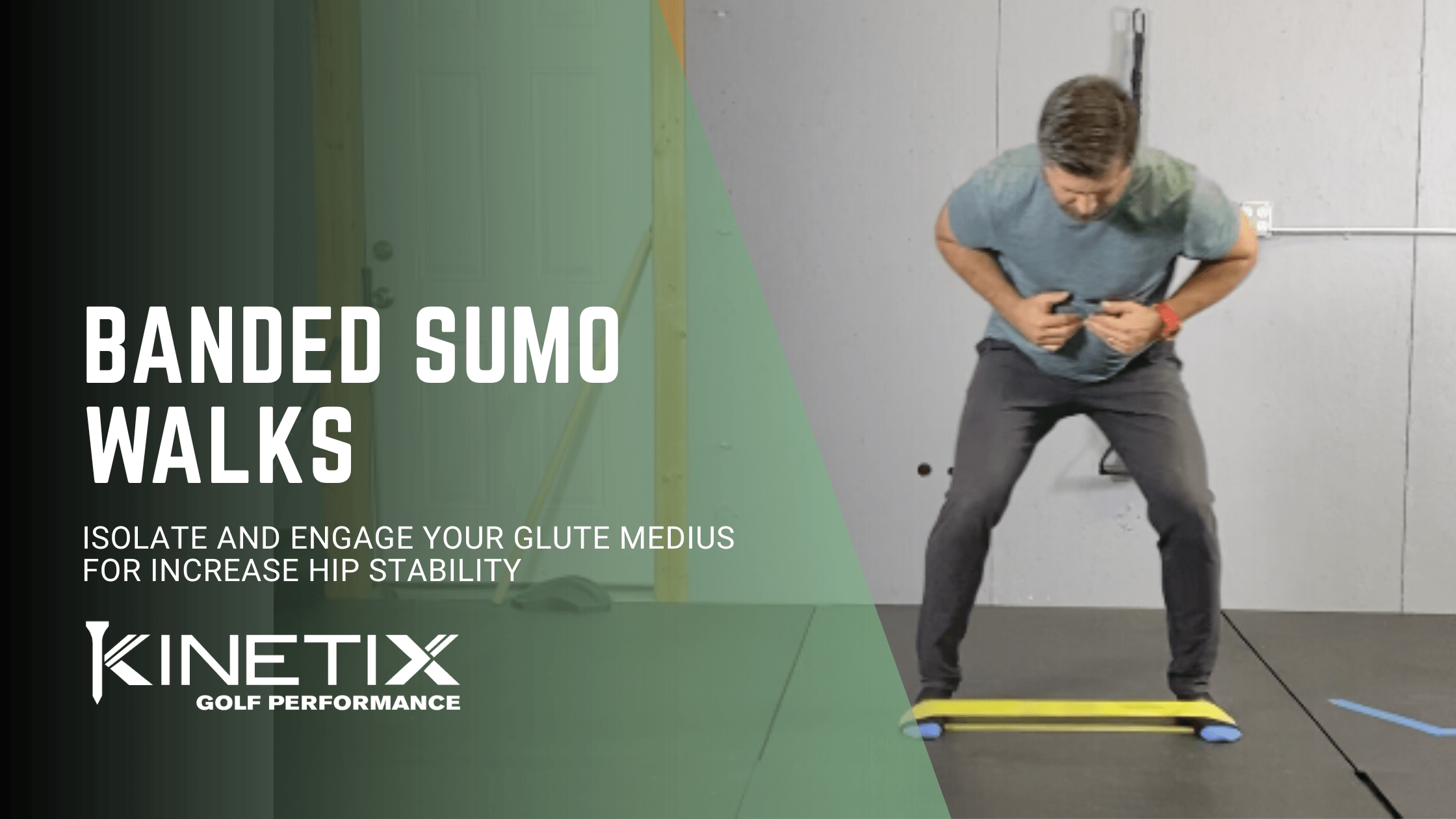
Golf Exercises for Glutes: Banded Sumo Walks for Hip Stability and Low Back Relief

banded sumo walks are a great golf exercise to build hip stability by isolating the glute medius muscle which will help you control the frontal plane movement in your golf swing.

Why Banded Sumo Walks Matter for Golfers

The golf swing is a rotational, lateral, and ground-reaction-based movement. Without strong hip stability—particularly from the glute medius—your swing power, consistency, and spinal health will suffer.

Enter the banded sumo walk, one of the most effective exercises for isolating and strengthening the glute medius, a key stabilizer in:

  • Lateral hip stability during your backswing and downswing
  • Posting up during the transition and finish
  • Reducing compensation from the TFL (tensor fascia latae) and low back

What Makes the Glute Medius Crucial in Golf?

  • Abduction (Concentric): As you shift weight laterally in your backswing, the glute medius activates to move and stabilize the hip.
  • Eccentric Control (Adduction): During the downswing and follow-through, it decelerates the opposite motion to allow efficient force transfer.
  • Postural Integrity: Strong glute medius activation helps keep the pelvis neutral, reducing low back strain and over-rotation through the lumbar spine.

How to Perform Banded Sumo Walks (Golf-Specific Setup)

Equipment: mini resistance band
Placement: Place the band around the balls of the feet (not ankles or knees)

  1. Get Into Position
    • Stand in a wide stance (sumo-like) with slight bend in knees and hips pushed back
    • Band around the balls of your feet, feet straight ahead
  2. Tension & Posture
    • Create tension in the band by taking a shoulder width wide stance, your feet will never get closer than this as we walk
    • Keep chest tall, ribs stacked, and core engaged with IAP
  3. Side Step Walks
    • Step sideways slowly and under control only about 1/4 of an inch.
    • Don’t let the trailing foot snap in—resist the band with every rep, again only taking 1/4 inch steps at a time.
    • Perform 10–12 steps each direction for 2–3 rounds

Key Tips:

  • Keep constant tension—don’t let the feet come together
  • Control the eccentric step inward for max glute medius recruitment
  • You should feel a deep burn in the side glutes, not the quads or TFL (although there may be some)

Why Band Placement Matters

  • Band Around the Feet (Best): Isolates glute medius by minimizing TFL/quad recruitment
  • Band at Ankles or Knees: Shifts more work to the TFL and vastus lateralis—less targeted for glutes
  • For golfers aiming for hip stability and better pelvic control, the feet placement wins every time.

Why This Matters for Your Golf Swing

  • Stronger Posting Leg: A stable lead leg (your post) helps transfer energy into the clubhead
  • Better Hip Control: Enhances ability to separate pelvis from torso
  • Reduced Low Back Load: Takes stress off lumbar spine by stabilizing the hips and pelvis

Many golfers with low back pain have underactive or weak glute medius muscles—this exercise corrects that and lays the foundation for more efficient, pain-free movement on and off the course.


Add This to Your Golf Workout Program

This exercise is just one of the dozens of targeted golf exercises in our PinSeeker Performance Program—a 6-week, lifetime-access golf workout program designed to build mobility, strength, and power exactly where you need it.

🏌️‍♂️ Swing with more rotation and less pain
🏋️‍♀️ Improve strength, flexibility, and balance
⛳️ Play more consistently, regardless of age or experience

✅ One-time purchase
✅ Lifetime access
✅ Golf-Specific workouts you can do anywhere

Train smarter, swing stronger, and see real gains on the course with PinSeeker!
our 6-week pinseeker performance program is the best online golf fitness program